

25 Mar 2026
Best Board for Furniture Manufacturing
Learn More >


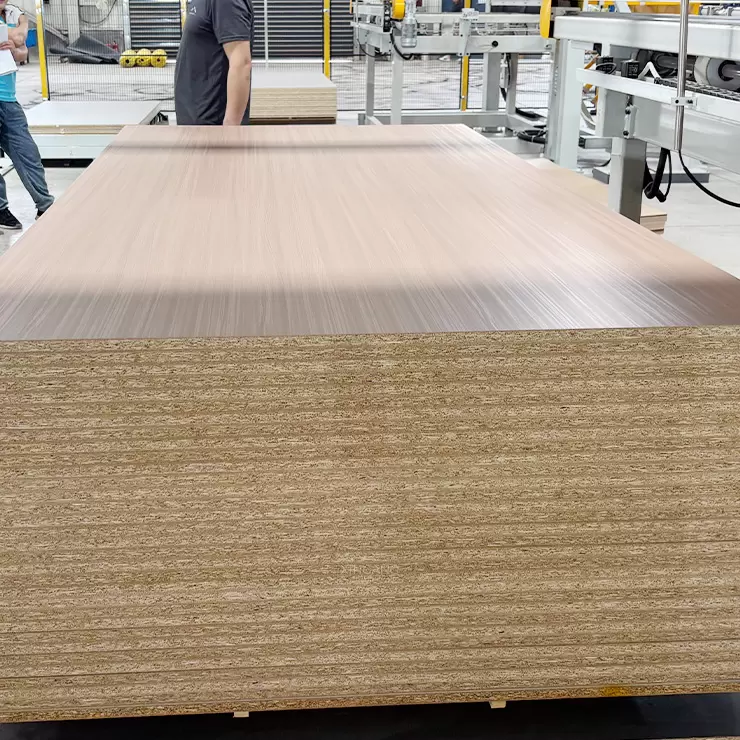
Particle board is generally better for cost-effective furniture like cabinets and wardrobes, while MDF is better for painted furniture requiring a smooth surface. For most modular furniture, melamine faced particle board is the preferred choice due to its balance of cost, strength, and decorative finish.
---Particle board is made from wood chips bonded with resin and compressed under high pressure. It offers stable structure, good screw holding, and is widely used in furniture manufacturing.
Medium Density Fiberboard (MDF) is made from fine wood fibers, creating a smoother and denser surface compared to particle board. It is ideal for painting and CNC machining.
---| Feature | Particle Board | MDF |
|---|---|---|
| Material | Wood chips | Wood fibers |
| Density | 680–720 kg/m³ | 700–850 kg/m³ |
| Cost | Lower | Higher |
| Screw Holding | Good | Moderate |
| Surface | Melamine ready | Very smooth (paintable) |
| Weight | Lighter | Heavier |
| Water Resistance | Moderate (MR grade available) | Lower |
If your focus is cost efficiency, durability, and large-scale furniture production, particle board is the better choice. If your focus is premium finishing and painting, MDF may be more suitable.
---For modern furniture manufacturing, melamine faced particle board is considered the most practical solution due to its ready-to-use surface, cost advantage, and reliable performance.
---Particle board has better screw holding strength, while MDF has higher density but is less suitable for fasteners.
Particle board is generally cheaper than MDF, making it ideal for mass furniture production.
No, MDF has lower moisture resistance unless specially treated.
Yes, especially melamine faced particle board, which is widely used in cabinets and wardrobes.
---Contact us to get samples, technical datasheets, and bulk pricing for your furniture projects.


