19 Jun 2025
Xingang Group Claims Gold Medal At Geneva International Exhibition Of Inventions
Learn More >


In modern furniture manufacturing and interior design industries, the performance of a custom mdf board is no longer defined only by density or cost. Instead, it is evaluated through a combination of structural stability, surface compatibility, environmental safety, and machining precision.
As global demand shifts toward sustainable, low-emission materials, MDF (Medium Density Fiberboard) has evolved from a basic substrate material into a highly engineered platform for customized structural and decorative applications.
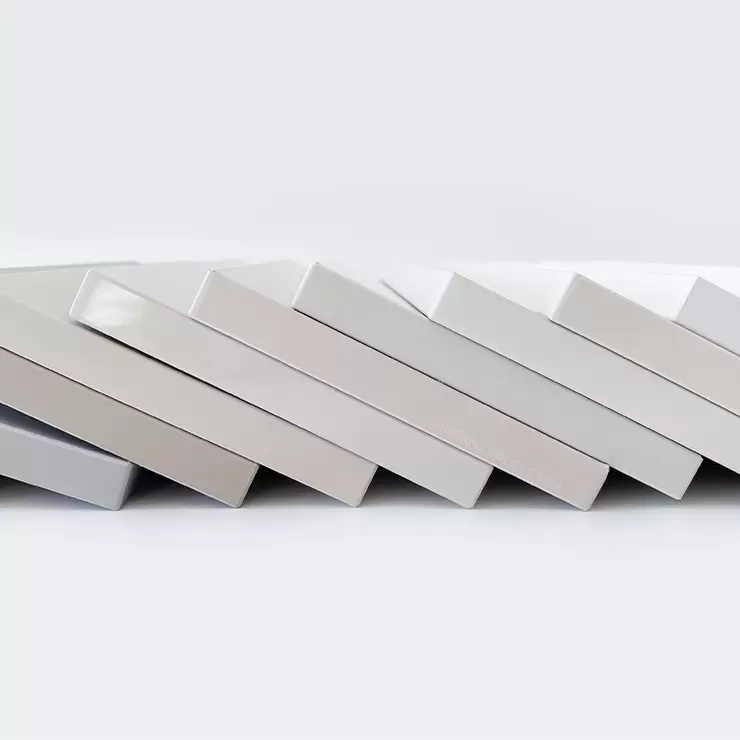
Today’s industrial buyers are not simply selecting MDF—they are specifying engineered board systems designed for CNC machining, edge stability, coating performance, and environmental compliance.
A high-quality custom mdf board is defined by its internal fiber distribution and resin bonding system. Unlike natural wood, MDF relies on controlled fiber geometry and adhesive chemistry to achieve uniform mechanical properties.
Key structural parameters typically include:
Uniform fiber dispersion is critical. Inconsistent fiber layering can lead to:
For CNC-based furniture production, dimensional stability is often more important than raw strength.
One of the most significant advancements in modern MDF production is the transition toward zero-formaldehyde or ultra-low emission adhesive systems.
Shandong Xingang Group Co., Ltd. has developed bio-based adhesive technology known as “bionic glue,” designed to eliminate formaldehyde, benzene, and other harmful substances at the material source.
This enables MDF products that meet:
Compared with conventional urea-formaldehyde MDF, bio-based custom mdf board systems provide:
This shift is not only regulatory-driven but also market-driven, as global furniture brands increasingly prioritize material sustainability.
In industrial furniture manufacturing, CNC machining performance is a key differentiator for MDF materials.
A high-performance custom mdf board must maintain:
Typical machining conditions include:
Boards with inconsistent density distribution often cause tool vibration, leading to edge burning or surface delamination.
Uniform internal bonding strength ensures predictable machining behavior across large production batches.
MDF is inherently sensitive to humidity variation. Therefore, moisture resistance engineering is a critical performance factor.
Standard industrial requirements include:
Custom MDF boards designed for interior applications must maintain dimensional stability in environments with:
Improper moisture control leads to:
Advanced resin systems and density gradient control are used to minimize these effects.
Surface quality determines the usability of MDF in decorative applications such as:
Key surface performance parameters include:
A stable surface layer ensures consistent bonding performance for PVC, melamine, veneer, and lacquer finishes.
In modern interior design, surface consistency is often as important as structural strength.
Unlike homogeneous materials, MDF boards can be engineered with density gradients to optimize performance.
Typical structure design includes:
This structure improves:
For custom mdf board applications, density gradient control is a key factor in balancing cost and performance.
Custom MDF boards are widely used in:
Each application requires different performance priorities:
The evolution of custom mdf board technology reflects a shift from basic wood-based panels to engineered material systems designed for precision manufacturing and environmental compliance.
Modern MDF performance is defined by:
With advancements in bio-based adhesives and structural optimization, MDF has become a core material for sustainable furniture manufacturing and modern interior design systems.