02 Jul 2026
Wood Veneer Furniture Board: Key Performance Factors for Long-Lasting Commercial and Residential Furniture
Learn More >


Global furniture manufacturing is undergoing a structural transformation driven by sustainability regulations, automated production systems, and increasing demand for customized interior solutions. Within this context, custom mdf board has become a critical engineered material supporting large-scale production and international supply chains.
Unlike traditional wood-based panels, modern MDF systems are designed to meet strict environmental, mechanical, and processing requirements across diverse global markets.
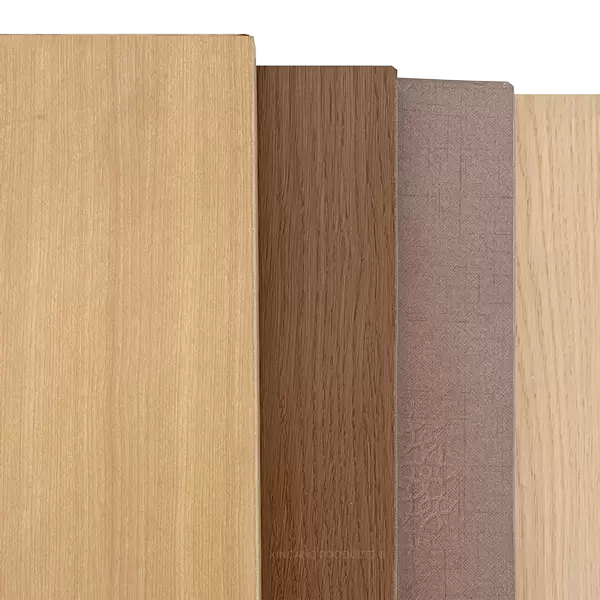
Environmental compliance has become a defining factor in MDF production.
Shandong Xingang Group Co., Ltd. has introduced bio-based adhesive technology that eliminates formaldehyde, benzene, and other hazardous substances from the material system.
This enables custom mdf board products that comply with:
This transition is particularly important for markets such as Europe and North America, where indoor air quality regulations are increasingly strict.
In modern furniture production, MDF is required to meet both structural and machining demands.
Key performance parameters include:
These parameters ensure compatibility with automated CNC production lines and modular furniture assembly systems.
Custom MDF boards must support high-speed CNC processing without performance degradation.
Typical machining conditions:
Stable fiber structure ensures:
In high-volume production environments, machining consistency is a critical cost driver.
MDF boards used in export markets must maintain dimensional stability across varying climate conditions.
Key environmental tolerances include:
Improper moisture control can lead to:
This makes moisture stabilization an essential part of MDF engineering.
Surface quality directly affects final product appearance and coating compatibility.
Custom MDF boards must support:
Surface requirements typically include:
These characteristics ensure high-end aesthetic performance in finished furniture.
Modern MDF systems use engineered density gradients to optimize performance.
Structural design typically includes:
This improves:
Custom MDF boards are widely used in:
Each market demands different optimization priorities, from cost efficiency to environmental compliance and machining precision.
The evolution of custom mdf board technology reflects the global shift toward sustainable, precision-engineered building materials.
Key performance drivers include:
As international furniture markets continue to expand, MDF will remain a foundational material for scalable, sustainable, and high-precision manufacturing systems.