04 Sep 2026
Melamine Particle Board for Furniture: Moisture, Strength and Durability
Learn More >


In industrial wood-based panel production, process control is the determining factor of final product consistency. For wide furniture board manufacturing, process stability becomes even more critical due to increased surface area and higher sensitivity to internal stress distribution.
Unlike standard boards, wide-format panels require tighter control over every stage—from fiber preparation to hot pressing and finishing calibration.
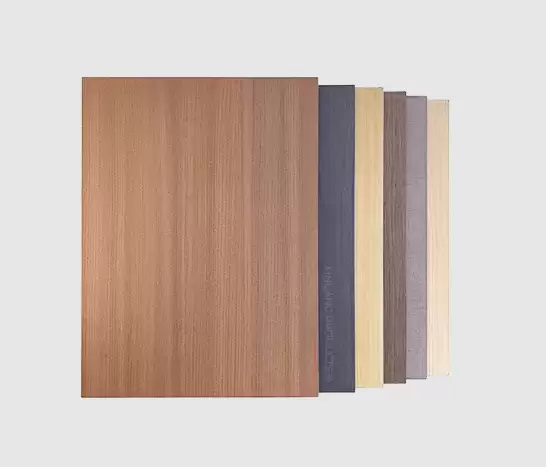
The foundation of wide furniture board quality lies in fiber consistency.
Key preparation parameters include:
Uniform fiber structure ensures consistent density across the entire panel width, preventing localized weak zones that may lead to bending or cracking.
Hot pressing is the most critical stage in wide furniture board production.
Typical industrial conditions:
For wide panels, multi-zone pressure control is often required to ensure uniform density distribution from edge to center.
Density deviation targets:
Without precise pressure balance, wide boards are prone to edge lifting or central sagging after cooling.
After hot pressing, internal stress must be gradually released to prevent deformation.
Controlled cooling systems regulate:
This step is particularly important for wide panels because uneven cooling can lead to latent warpage that only appears after cutting or installation.
Wide furniture boards undergo calibration sanding to achieve uniform thickness and surface smoothness.
Key parameters include:
This ensures compatibility with downstream lamination, coating, or CNC cutting processes.
Industrial-scale production requires full-process quality control systems including:
Shandong Xingang Group applies systematic traceability across production batches, ensuring consistent quality in large-scale orders exceeding thousands of sheets per production run.
Manufacturing a high-performance wide furniture board is a multi-stage engineering process requiring precise control over fiber preparation, pressing dynamics, cooling behavior, and surface calibration.
The reliability of the final panel is not defined by a single step but by the consistency of the entire production chain.
As demand for large-format furniture systems continues to grow, process stability and environmental material innovation will remain the core drivers of next-generation board manufacturing.