18 Dec 2025
Melamine Plywood Explained: Features, Benefits, and Common Applications
Learn More >


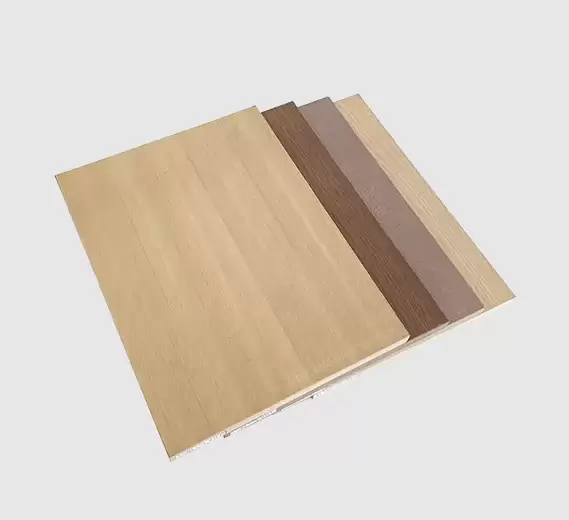
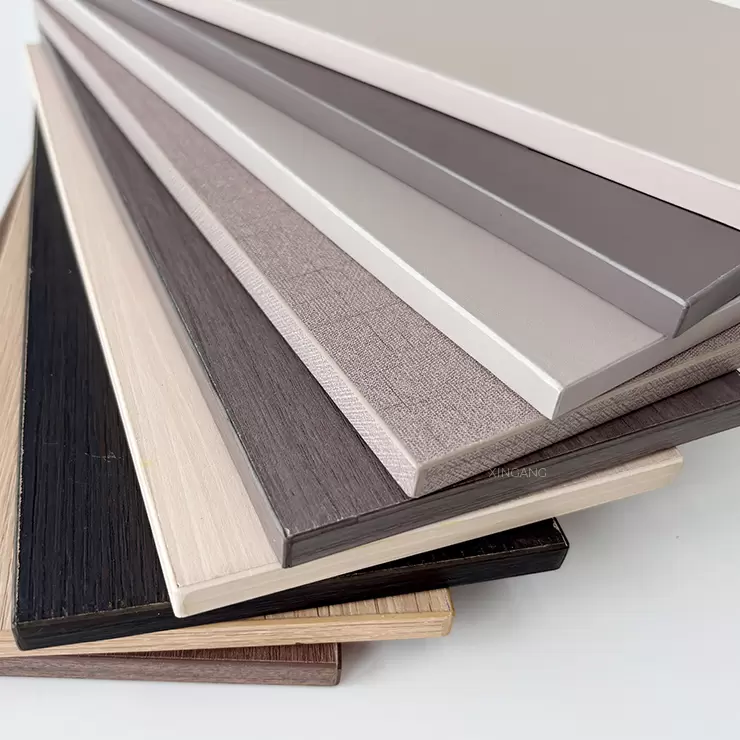
Melamine Particle Board is designed to simplify furniture manufacturing by combining a particle board substrate with a decorative melamine surface. Compared with unfinished particle board that requires additional laminating or coating operations, melamine-faced panels can move more directly from panel processing to component assembly.
However, the efficiency advantage depends on material consistency. CNC cutting, drilling, edge banding, connector installation, and final assembly all rely on predictable panel dimensions and surface behavior. If thickness, density, flatness, or surface bonding varies significantly, even an otherwise acceptable Melamine Particle Board can create production problems.
For high-volume manufacturing, material selection should therefore be connected directly to the production process.
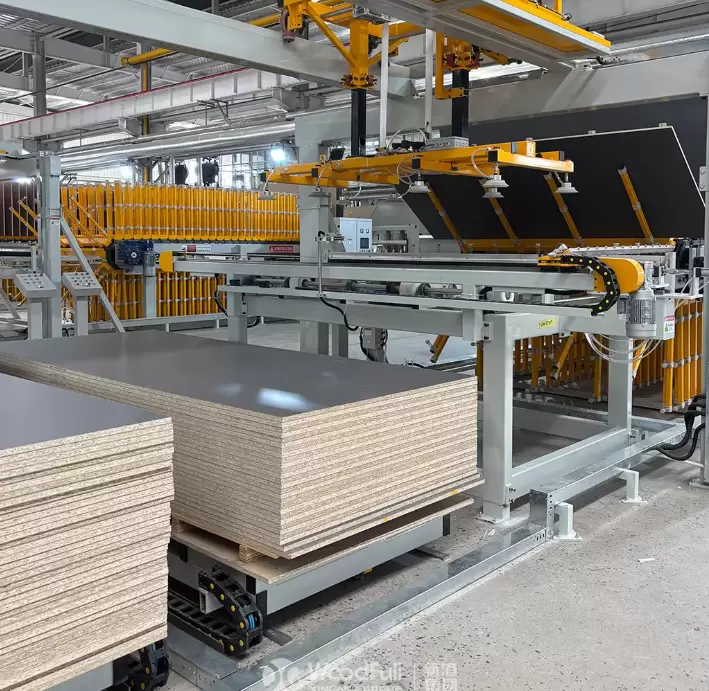
Particle board is produced from wood particles bonded under controlled pressure and temperature. The particle size distribution, resin system, moisture content, forming process, and pressing conditions influence the final board structure.
A consistent density profile is important because furniture processing involves localized cutting and drilling. If the core is significantly weaker in certain areas, screw installation and connector positioning can become less predictable.
Core uniformity also affects edge quality. During sawing or CNC routing, irregular particle structure may increase edge breakout and require additional processing or reject inspection.
For this reason, density should not be viewed simply as a weight-related specification. It also relates to machining behavior, hardware installation, and overall panel consistency.
Modern furniture factories increasingly use CNC equipment to produce cabinet sides, shelves, doors, drawer components, and customized panels.
CNC manufacturing depends on accurate material dimensions. If a nominal 18 mm Melamine Particle Board has inconsistent actual thickness, drilling depths and connector positions can be affected. Even small variations may become significant when components are assembled into large furniture structures.
Panel flatness and squareness are also important. A warped panel can influence vacuum-table holding, cutting accuracy, edge-banding quality, and component alignment.
For automated production, procurement specifications should therefore include:
Nominal thickness
Thickness tolerance
Panel length and width tolerance
Squareness
Flatness
Surface quality
Core density consistency
These specifications can have a direct impact on production yield.
The melamine surface is manufactured to provide a finished decorative appearance, but cutting and drilling can expose the interface between the surface layer and the core.
Tool condition plays a major role. Dull saw blades and unsuitable router settings can generate excessive cutting forces, which may result in edge chipping or surface damage.
The correct machining parameters depend on board construction, equipment, tool geometry, feed rate, and cutting speed. It is therefore preferable to validate a Melamine Particle Board using the actual production setup rather than relying only on theoretical machining recommendations.
A small pilot run can reveal whether the selected board produces acceptable cut edges, drilling holes, and connector recesses before full-scale production begins.
After cutting, the exposed particle board edge becomes one of the most vulnerable areas of the furniture component.
Edge banding serves several purposes: it improves appearance, protects the core, reduces moisture ingress, and provides impact resistance.
The compatibility between the board edge and the selected edge-banding adhesive should be evaluated carefully. Factors such as board surface cleanliness, edge smoothness, adhesive temperature, pressure, line speed, and cooling conditions can influence bonding quality.
For large-scale production, a stable board edge is particularly valuable because it allows the edge-banding line to operate with fewer parameter adjustments.
Melamine Particle Board is frequently used with cam-and-dowel connectors, screws, hinges, drawer systems, handles, and other furniture hardware.
Hardware creates concentrated loads. Unlike a broad panel load, a screw or connector transfers force into a relatively small area of the board.
Internal bond strength and screw withdrawal resistance therefore deserve attention during material qualification.
For example, a wardrobe hinge can repeatedly transfer opening and closing forces to a relatively small section of the door or cabinet side. If the local core structure is insufficient, the connection can loosen even when the overall panel appears structurally sound.
The best approach is to test the actual hardware configuration with the selected panel rather than judging suitability from panel thickness alone.
Surface defects become particularly visible after panels are cut into large furniture components.
Common quality concerns include scratches, dents, color variation, edge chips, surface contamination, inconsistent gloss, and decorative texture differences.
Large projects are especially sensitive to color consistency because components manufactured from different production batches may be installed next to one another.
A supplier should therefore have controls for decorative paper selection, surface pressing, visual inspection, and batch identification. When consistent appearance is critical, buyers should establish approved samples or reference panels before mass production.
Moisture performance is not only a material issue. Storage and production conditions can also influence dimensional stability.
Wood-based panels interact with environmental humidity. If panels are stored in uncontrolled conditions for extended periods, dimensional changes may occur before machining or assembly.
Proper warehouse conditions, packaging protection, horizontal stacking, and acclimatization procedures can help reduce unnecessary variation.
For projects in humid regions, manufacturers should pay particular attention to transportation and storage conditions. A technically suitable Melamine Particle Board can still experience processing issues if it is exposed to unsuitable environmental conditions before installation.
A laboratory test report is essential, but it should not be the only basis for supplier qualification.
Laboratory data can verify properties such as MOR, MOE, internal bond strength, thickness swelling, and formaldehyde emission under defined testing conditions. Production trials reveal how the same board behaves on real equipment.
A comprehensive qualification process can therefore include sample testing followed by CNC cutting, drilling, edge banding, hardware installation, and assembly evaluation.
This two-stage approach helps identify problems before a large order reaches the factory floor.
Sustainability and indoor air quality increasingly influence material selection for furniture and interior products.
Low-emission wood-based panels can support projects where environmental requirements are part of the purchasing specification. However, environmental claims should be supported by documentation covering the actual product supplied.
Shandong Xingang Group has developed its Xingang bionic adhesive as part of its environmentally oriented wood-material strategy. The company describes the adhesive as containing 0 formaldehyde, 0 benzene, and 0 harmful substances and reports large-scale applications in decorative panels, ultra-thin density boards, and bionic marine plywood.
For Melamine Particle Board procurement, manufacturers should connect such material technology with finished-board test results and the regulatory requirements of the destination market.
The lowest board price does not necessarily produce the lowest manufacturing cost.
A board with inconsistent thickness may increase CNC adjustments. Poor edge quality may increase reject rates. Surface defects can increase inspection and replacement costs. Weak hardware performance can generate field-service issues.
A more useful cost calculation considers:
Material price
Cutting yield
Machining speed
Tool wear
Reject rate
Edge-banding performance
Assembly efficiency
Packaging damage
Replacement requirements
If a slightly higher-quality board reduces production losses, its effective cost per finished furniture component may be lower.
Before approving a Melamine Particle Board supplier for long-term production, manufacturers can use a staged evaluation.
First, review the technical datasheet and confirm the core specifications, thickness tolerances, mechanical properties, moisture behavior, surface characteristics, and environmental documentation.
Next, inspect physical samples for flatness, surface consistency, edge condition, and visible defects.
Then, process the samples using actual production equipment. Measure cutting quality, drilling performance, edge-banding adhesion, connector installation, and assembly tolerances.
Finally, evaluate batch consistency during repeated deliveries rather than approving the supplier solely from one sample.
This process creates a stronger connection between material purchasing and manufacturing performance.
Melamine Particle Board is not simply a decorative furniture panel. In modern automated production, it becomes part of the manufacturing system, and its dimensional consistency, core structure, surface quality, and machining behavior directly influence production efficiency.
For furniture manufacturers, the most reliable selection strategy combines technical specifications with real production trials. By evaluating density consistency, thickness tolerance, MOR, MOE, internal bond strength, moisture behavior, surface durability, CNC compatibility, edge-banding performance, and environmental documentation, manufacturers can select Melamine Particle Board based on measurable production requirements rather than marketing descriptions.
For suppliers such as Shandong Xingang Group that emphasize environmentally oriented wood-material technologies, combining material innovation with consistent manufacturing and verifiable technical data can provide a stronger foundation for long-term international furniture-panel supply.