27 Nov 2025
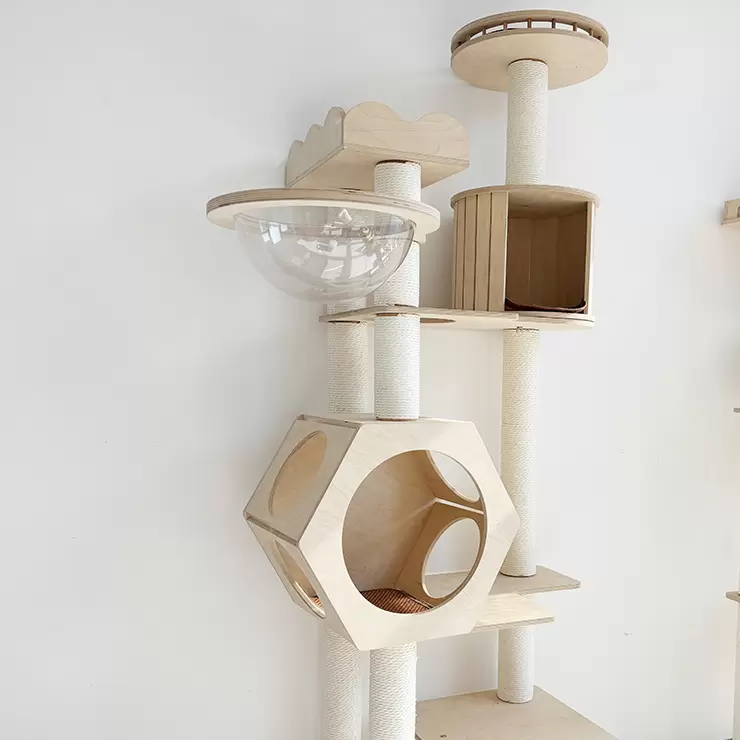
How Pet Furniture Made with Bio-Board Protects Pets from Harmful Viruses
Learn More >


Material selection in furniture and interior construction often involves a trade-off between cost, performance, and manufacturability. Among engineered wood products, melamine particle board, MDF, and plywood are the most commonly used materials. Each offers distinct advantages, but their suitability depends on specific application requirements.
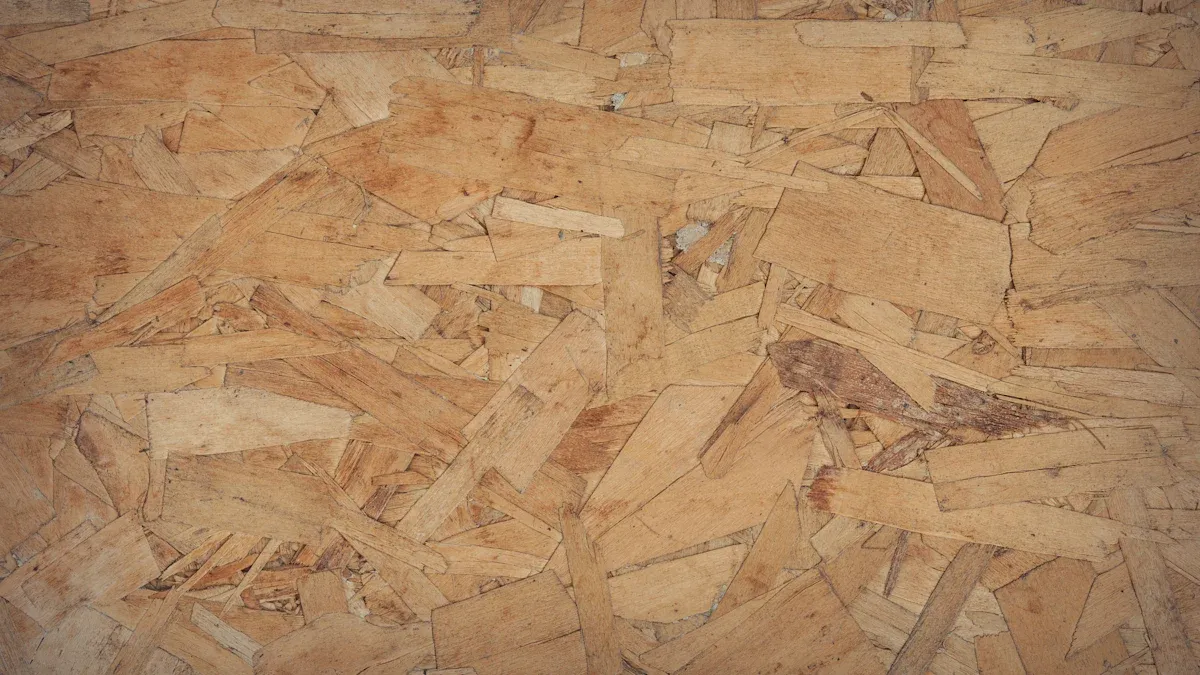
Melamine particle board stands out for its cost-performance balance. Compared with plywood, it offers significantly lower material cost, while providing a finished surface that eliminates the need for additional painting or veneering. Compared with MDF, it offers better screw-holding performance and lower density, making it more suitable for large furniture structures.
MDF, with its uniform fiber structure, provides excellent surface smoothness and is ideal for painting and CNC machining. However, its density, typically 700–800 kg/m³, makes it heavier than particle board, increasing transportation and handling costs. In addition, MDF tends to have lower screw-holding strength, which can be a limitation in load-bearing applications.
Plywood, on the other hand, offers superior structural strength due to its cross-laminated veneer construction. It performs well under dynamic loads and in high-humidity environments. However, its higher cost and inconsistent surface quality often require additional finishing processes, which increase production time and cost.
Melamine particle board occupies a middle ground. Its layered structure provides sufficient strength for most furniture applications, while the melamine surface delivers ready-to-use finishing. This reduces both processing steps and labor costs, making it particularly attractive for mass production.
In terms of dimensional stability, melamine particle board performs well under controlled indoor conditions. While it is less resistant to moisture than plywood, modern formulations with moisture-resistant additives significantly improve performance. For example, in standard interior conditions, thickness variation remains minimal, ensuring consistent assembly and alignment.
Surface durability is another area where melamine particle board excels. The melamine coating provides high resistance to abrasion and chemical exposure, outperforming painted MDF surfaces in many cases. This makes it suitable for environments with frequent use, such as office furniture and retail installations.
Environmental performance is increasingly becoming a decisive factor. Traditional particle board products have been associated with formaldehyde emissions due to adhesive systems. However, innovations such as Xingang’s zero-formaldehyde biomimetic adhesive redefine this category. By eliminating harmful emissions while maintaining bonding strength, these products align with global sustainability standards without compromising performance.
From a processing perspective, melamine particle board offers advantages in cutting, drilling, and edge banding. Its structure allows efficient machining with standard woodworking equipment, while the melamine surface reduces the need for secondary finishing. This improves production efficiency and reduces manufacturing variability.
In real-world applications, the choice between these materials depends on priorities. When structural strength and moisture resistance are critical, plywood may be preferred. When surface finishing flexibility is required, MDF is often selected. However, when the goal is to achieve a balance of cost, durability, and manufacturing efficiency, melamine particle board becomes the optimal choice.
This balance explains its widespread adoption in modern furniture manufacturing and interior systems, where performance must be achieved at scale without excessive cost.