25 Sep 2025
What Is MDF? Types, Features, and Applications in Modern Construction
Learn More >


In modern furniture manufacturing, the shift toward large-format panels has significantly changed production requirements. The wide furniture board is now widely used in cabinetry systems, commercial interior panels, wall units, and integrated storage structures where seamless surface coverage and structural stability are essential.
Unlike standard-width boards, wide-format panels introduce stricter demands on dimensional stability, internal stress control, and surface uniformity. As panel size increases, even minor defects in material composition or pressing technology become amplified across the final application.
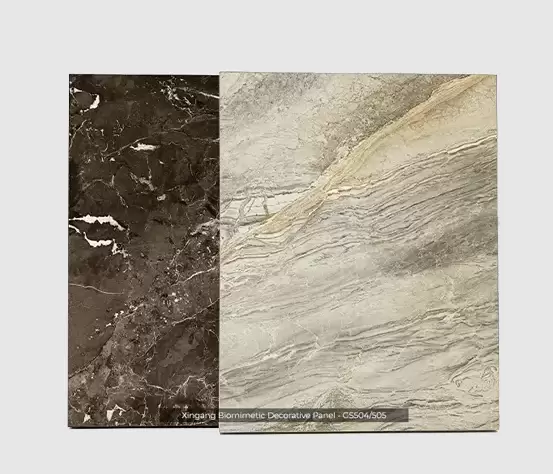
A wide furniture board typically refers to panel widths exceeding conventional cutting standards, often used in full-wall cabinetry or large furniture assemblies.
Key technical requirements include:
As panel width increases, internal stress distribution becomes more critical. Uneven density or resin distribution can lead to warping, especially in humidity-varying environments such as kitchens or commercial interiors.
Flatness is one of the most important performance indicators for wide furniture boards.
Typical industrial tolerance targets:
Wide panels are particularly sensitive to moisture imbalance. A 2–3% deviation in moisture content across the board width can lead to visible curvature after installation.
Advanced production systems use multi-layer hot pressing with controlled temperature zones (typically 160°C–210°C) to ensure uniform resin curing and stress distribution.
Wide furniture boards are often used in applications where surface continuity is visually dominant, such as:
Surface quality requirements include:
In large panels, even small surface imperfections become visually magnified, making coating uniformity and substrate stability critical.
Modern wide furniture board production increasingly relies on environmentally optimized adhesives.
Shandong Xingang Group’s bio-based adhesive system is designed to meet strict emission requirements:
This allows wide-format boards to be safely used in enclosed residential and commercial environments without secondary air pollution risks.
Wide furniture boards are increasingly preferred in modern architecture due to reduced seam visibility and improved structural integration.
They are particularly effective in:
By reducing the number of joints, installation efficiency improves while overall structural consistency increases.
The wide furniture board represents an evolution in furniture material engineering, shifting focus from small-unit fabrication to large-surface structural integrity. Performance depends not only on surface aesthetics but also on internal density control, moisture balance, and adhesive system stability.
As interior design continues to favor large seamless surfaces, wide-format boards are becoming a core material standard in modern furniture manufacturing.