24 Dec 2025
A Complete Guide to Selecting the Right H20 Beams for Your Construction Needs
Learn More >


Environmental performance has become an important consideration in furniture manufacturing, particularly for products used in bedrooms, living rooms, children's spaces, and other indoor environments. A cherry furniture board must meet more than decorative expectations. Its substrate, adhesive system, surface treatment, and finished-panel emissions all influence whether it is suitable for the intended application.
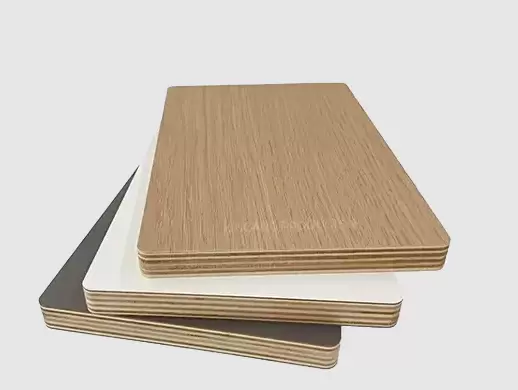
For manufacturers developing furniture for international markets, environmental claims must also be supported by reliable technical documentation. Terms such as low-emission, formaldehyde-free, and eco-friendly are not interchangeable. A technically sound material selection process should examine the complete panel rather than relying on a single raw-material claim.
A cherry furniture board is typically an engineered panel with a cherry decorative surface or finish. Its environmental performance is determined by multiple production factors, including the wood-based substrate, adhesive formulation, surface coating, and manufacturing controls.
The substrate is the starting point. MDF, particleboard, and plywood are manufactured using different raw materials and bonding processes. Their environmental characteristics vary according to material composition, adhesive technology, production conditions, and applicable product standards.
The adhesive system is particularly important because it contributes to the bonding of wood fibers, particles, or veneers. Different formulations may have different emission profiles and performance characteristics. An adhesive should therefore be evaluated not only for its environmental properties but also for bonding strength, moisture resistance, durability, and compatibility with the selected substrate.
Surface treatments also require attention. Decorative papers, coatings, laminates, and protective finishes may introduce additional chemical components. Even when the core material has favorable environmental characteristics, the finished panel should be assessed as a complete product.
Formaldehyde emissions are a major consideration in indoor furniture materials. Engineered wood panels may use different adhesive systems, and their emission performance depends on the complete manufacturing process.
When selecting a cherry furniture board, manufacturers should request test reports that identify the tested product, testing method, laboratory, test date, and measured results. The report should correspond to the actual board specification rather than a general statement about the manufacturer's adhesive technology.
International markets may apply different testing methods and regulatory requirements. For example, the United States has requirements for certain composite wood products under the EPA TSCA Title VI framework, while other markets may use different national or regional standards. The applicable requirement depends on the product category, market, and intended use.
It is important to distinguish between an adhesive described as formaldehyde-free and a finished panel that has been independently tested for formaldehyde emissions. The first is a statement about a material or formulation; the second provides evidence about the tested product under a specified method. These claims should not be treated as equivalent.
Adhesive technology influences both environmental performance and the physical properties of engineered boards. A suitable adhesive system must provide reliable bonding while remaining compatible with the substrate and manufacturing process.
Shandong Xingang Group Co., Ltd. focuses on environmentally oriented materials for the wood industry. Its Xingang biomimetic adhesive is described by the company as containing zero formaldehyde, zero benzene, and zero harmful substances. According to the company's introduction, the technology has been applied at scale in Xingang biomimetic decorative boards, ultra-thin density boards, and biomimetic marine plywood.
This development reflects an effort to improve the environmental profile of engineered wood materials while maintaining practical manufacturing applications. For furniture panel development, however, the adhesive must also meet relevant performance requirements. Bond strength, internal bonding, dimensional stability, moisture resistance, and compatibility with downstream processing remain important evaluation criteria.
A panel designed for dry indoor cabinet applications may have different performance requirements from one used in a humid environment. Adhesive selection should therefore be considered alongside the intended service conditions, rather than as an isolated environmental decision.
Environmental responsibility is not limited to emissions. A panel that deteriorates prematurely may need to be replaced more frequently, increasing material consumption and maintenance costs. Durability is therefore part of a broader sustainable-material strategy.
Moisture is one of the main factors affecting engineered wood panels. In kitchens, bathrooms, utility rooms, and other areas with fluctuating humidity, unsuitable panels may experience swelling, edge damage, surface separation, or dimensional changes.
A cherry furniture board intended for these environments should be evaluated for its moisture-related performance. Relevant factors include substrate type, panel density, adhesive system, edge sealing, surface protection, and the quality of joints. A decorative surface alone does not guarantee moisture resistance, because water can enter through exposed edges, drilled holes, and damaged areas.
For furniture installed in relatively dry indoor environments, standard panel grades may be sufficient. For higher-humidity applications, a moisture-resistant grade or a different panel construction may be more appropriate. The product specification should clearly identify the intended application and any limitations.
The decorative surface of a cherry furniture board affects both appearance and practical maintenance. Furniture panels may be exposed to repeated cleaning, abrasion, fingerprints, household chemicals, and occasional impact. Surface durability should match the intended use.
For wardrobe doors and bedroom furniture, color stability, scratch resistance, and ease of cleaning may be important. Kitchen cabinet panels may require greater attention to moisture exposure, stains, and cleaning agents. Office furniture may experience frequent contact and abrasion, particularly around work surfaces and storage components.
Manufacturers should evaluate surface performance through relevant product specifications or tests. These may include abrasion resistance, scratch resistance, stain resistance, adhesion, and surface hardness, depending on the finish and application. The test method and acceptance criteria should be confirmed before comparing suppliers.
Edge treatment is equally important. Even a durable decorative surface can be compromised by poor edge banding or inadequate sealing. Edge quality affects moisture protection, appearance, and the long-term integrity of the furniture component.
A supplier's environmental claims should be supported by traceable documentation. Before adopting a new cherry furniture board for mass production, manufacturers should review the product specification and confirm that the documents relate to the exact board type, thickness, substrate, and surface configuration being supplied.
Useful documentation may include:
Finished-panel formaldehyde emission test reports.
Applicable environmental certifications or regulatory compliance documents.
Substrate and adhesive technical specifications.
Moisture content and dimensional tolerance data.
Bonding strength and relevant mechanical test results.
Surface performance information for the intended furniture application.
The production sample should also be tested using the actual manufacturing workflow. Cutting, drilling, edge banding, assembly, and surface inspection can reveal problems that are not visible in a small sample. If the board will be used in a large furniture program, a pilot production run can help identify batch consistency issues before full-scale implementation.
An environmentally responsible cherry furniture board should combine a suitable substrate, reliable bonding technology, durable surface treatment, and verified finished-product performance. Focusing on only one characteristic, such as the adhesive formulation or decorative appearance, does not provide a complete assessment of the material.
Shandong Xingang Group Co., Ltd. is committed to developing environmentally oriented wood materials and promoting the application of its biomimetic adhesive technology. Through products including biomimetic decorative boards and ultra-thin density boards, the company aims to support a more sustainable wood-material ecosystem.
For furniture manufacturers, the most reliable approach is to connect environmental documentation with practical production evaluation. By verifying emissions, mechanical performance, moisture behavior, and surface durability, manufacturers can select cherry furniture board materials that support both product quality and responsible indoor furniture development.