17 Mar 2026
Maintenance Tips for Marine Plywood Decking to Ensure Durability and Performance
Learn More >


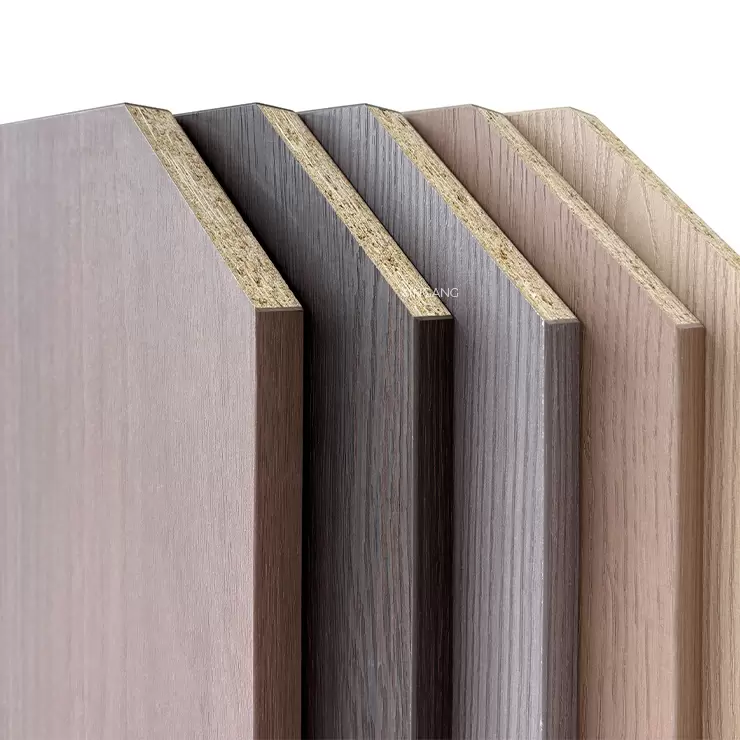
Cherry is a popular wood appearance in furniture design because of its warm color, recognizable grain, and ability to complement both traditional and contemporary interiors. However, furniture manufacturers do not always need solid cherry lumber to achieve this visual effect. A cherry furniture board can provide an alternative for projects that require consistent panel dimensions, efficient material utilization, and repeatable surface appearance.
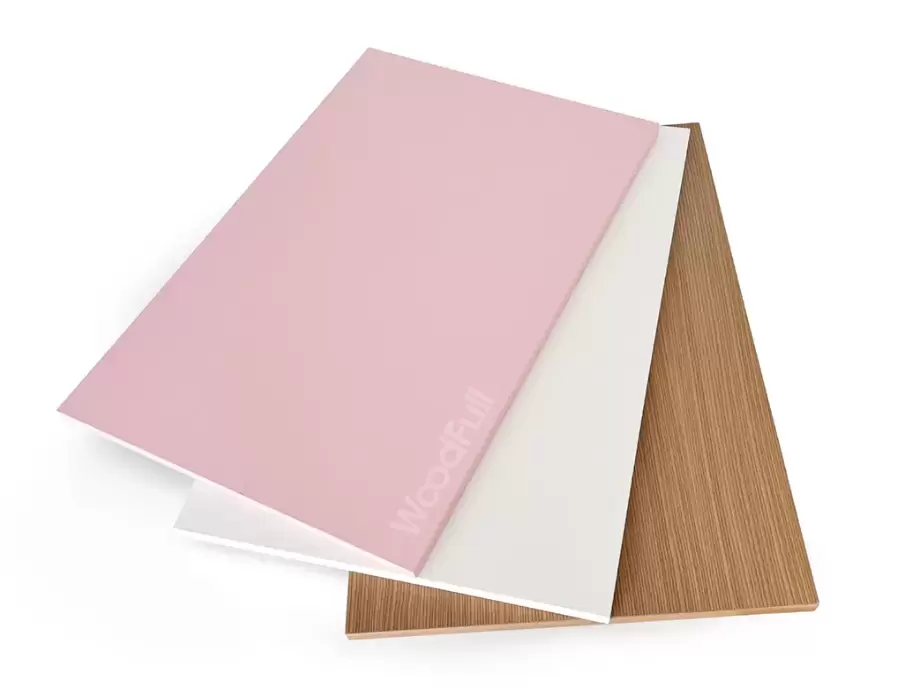
The choice between engineered cherry furniture board and natural cherry wood depends on the product's construction, structural requirements, budget, production process, and expected service conditions. Understanding their differences helps manufacturers select materials that meet both design and manufacturing objectives.
Natural cherry wood is a solid timber material. Its grain, color, density, and mechanical properties vary according to the tree, growing conditions, timber grade, and drying process. This natural variation gives solid cherry furniture its distinctive character, but it also introduces challenges in large-scale manufacturing.
A cherry furniture board generally uses an engineered panel substrate with a cherry decorative surface or finish. The substrate may be MDF, particleboard, plywood, or another engineered wood product. This construction allows manufacturers to specify panel dimensions and surface characteristics according to production requirements.
The distinction is important because a decorative cherry surface does not mean that the entire panel is made from cherry timber. Product descriptions should clearly identify whether the surface is natural cherry veneer, printed decorative paper, or another surface material.
For furniture lines that require consistent color and pattern across numerous panels, engineered boards can simplify batch management. Solid wood may be more suitable when natural grain variation and the material's full-thickness wood character are essential design features.
Solid cherry wood is hygroscopic, meaning it absorbs and releases moisture as environmental conditions change. This can lead to dimensional movement, including expansion, contraction, warping, and changes in joint alignment. Proper timber drying, conditioning, and construction design are therefore essential.
Engineered boards are manufactured using processed wood fibers, particles, or veneers bonded into a panel structure. Their dimensional behavior depends on substrate composition, adhesive system, panel density, moisture content, and manufacturing quality. They are not immune to moisture-related changes, but their engineered construction can offer more predictable panel properties when properly manufactured and stored.
This consistency is valuable in furniture production. Consider a wardrobe system with multiple doors, side panels, shelves, and partitions. If panel dimensions vary, even slightly, the manufacturer may experience alignment problems during assembly. Consistent thickness and flatness help maintain accurate drilling positions, edge-banding quality, and fitting alignment.
However, performance should always be assessed by substrate grade and technical data. A standard MDF board, moisture-resistant MDF, particleboard, and plywood should not be treated as interchangeable products.
Natural cherry wood has a unique grain pattern and color variation. Its appearance may change over time, often developing a deeper, warmer tone depending on light exposure and finishing conditions. This natural aging effect can be desirable in premium furniture, but it makes exact color matching across separate pieces more difficult.
A cherry furniture board can provide a more controlled decorative appearance, especially when manufactured with standardized surface materials. This is useful for projects requiring multiple identical cabinets, modular furniture, office storage systems, or coordinated interior panels.
The final appearance depends on the decorative material and surface process. Natural veneer provides real wood grain, while printed decorative surfaces can offer more repeatable patterns and potentially broader design flexibility. Surface texture, gloss level, and protective coating also influence the finished look.
When evaluating samples, manufacturers should check color under the lighting conditions expected in the final installation environment. A board that appears consistent under factory lighting may look different under warm residential lighting or daylight. For multi-panel projects, production samples should be compared side by side rather than individually.
Natural cherry lumber can be machined, shaped, and joined using conventional woodworking processes. However, its natural grain direction and local variations require appropriate cutting and machining practices. Solid wood components may also require additional design consideration to accommodate seasonal movement.
Engineered cherry furniture board is often suitable for standardized panel-processing workflows, including panel sizing, CNC drilling, edge banding, and hardware installation. Its machining performance depends on the substrate's density, internal structure, and surface construction.
For example, MDF can provide a uniform surface for routing and profiling, while particleboard is frequently used for cabinet carcasses and other panel furniture components. Plywood may be selected where its layered structure and mechanical characteristics better match the application.
Hardware installation deserves particular attention. Hinges, drawer runners, shelf supports, and cabinet connectors apply localized loads to the panel. Screw-holding strength, edge integrity, and the selected fastening system should be verified before mass production. If furniture is designed for repeated disassembly or flat-pack distribution, connector compatibility becomes even more important.
Environmental performance is an increasingly important consideration in furniture materials. Both solid wood and engineered panels require responsible sourcing and appropriate manufacturing controls, but engineered boards also require careful evaluation of the adhesives and binders used in production.
Shandong Xingang Group Co., Ltd. focuses on environmentally oriented wood materials and has developed Xingang biomimetic adhesive technology. The company describes this adhesive as containing zero formaldehyde, zero benzene, and zero harmful substances. It has been applied in products such as biomimetic decorative boards, ultra-thin density boards, and biomimetic marine plywood.
For a cherry furniture board, the environmental performance of the finished product should be confirmed through relevant product-specific testing. Important documents may include formaldehyde emission reports, applicable environmental certifications, and technical data identifying the substrate and bonding system. The adhesive's stated properties alone should not be used as a substitute for finished-panel verification.
Natural cherry lumber and engineered cherry furniture board have different cost structures. Solid wood pricing is influenced by timber grade, thickness, yield, drying, and the availability of suitable lumber. Manufacturing also needs to account for cutting losses and the selection of visually consistent components.
Engineered boards can support more standardized panel utilization. Their predictable dimensions and surface specifications may simplify nesting, cutting schedules, and repeat production. For large furniture programs, this can improve material planning and reduce the complexity of matching individual wood components.
Nevertheless, cost comparisons should consider the complete finished component. Surface material, substrate grade, edge treatment, hardware requirements, machining time, waste rate, and quality inspection all contribute to the final cost.
Natural cherry wood remains relevant for furniture where solid timber construction, natural grain variation, and traditional woodworking characteristics are central to the design. A cherry furniture board is often a practical option when the project prioritizes consistent panel appearance, repeatable dimensions, efficient processing, and scalable production.
Shandong Xingang Group Co., Ltd. contributes to the development of engineered wood materials through its focus on biomimetic adhesive technology and environmentally oriented decorative panels. When evaluating a cherry furniture board, manufacturers should look beyond the decorative surface and examine substrate properties, bonding quality, machining performance, and environmental test documentation.
The right choice is not simply a comparison between natural wood and engineered panels. It is a decision about which material structure can deliver the required appearance, manufacturing efficiency, and long-term performance for the intended furniture application.