09 Oct 2025
How to Choose the Right Melamine Chipboard for Your Interior Projects
Learn More >


As global manufacturing shifts toward low-carbon and environmentally responsible production systems, material selection is increasingly influenced not only by mechanical performance but also by environmental impact and regulatory compliance. MDF for CNC cutting is at the center of this transformation, serving as a widely used substrate in furniture, interior architecture, and industrial component manufacturing.
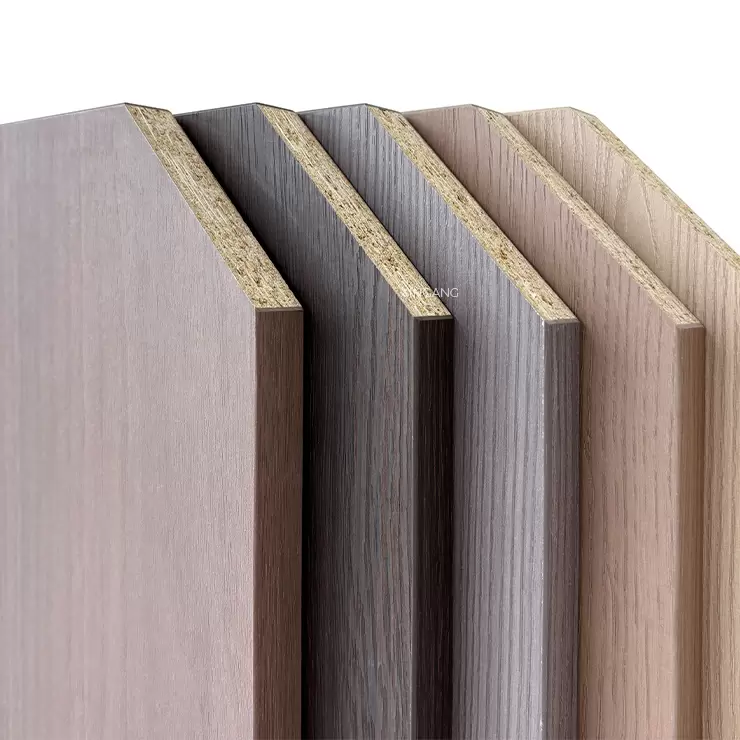
However, traditional MDF production has historically been associated with formaldehyde emissions and resource-intensive manufacturing processes. Modern advancements in bio-based adhesives and closed-loop production systems are reshaping the material’s environmental profile.
Emissions control and indoor air quality standards
One of the primary concerns in MDF usage is formaldehyde emission. Regulatory frameworks such as CARB Phase 2 and E0/E1 standards define strict limits on allowable emission levels.
In CNC-cut components, emission performance becomes even more critical because increased surface area exposure can amplify volatile release in enclosed environments such as residential interiors or commercial installations.
Advanced MDF for CNC cutting now increasingly utilizes formaldehyde-free or ultra-low emission adhesive systems. These systems replace conventional petrochemical binders with bio-inspired or modified natural polymer structures, significantly reducing VOC output while maintaining mechanical strength.
Shandong Xingang Group Co., Ltd. has developed bio-biomimetic adhesive technology that eliminates formaldehyde, benzene, and other hazardous compounds. This innovation improves indoor air quality performance while ensuring structural reliability in high-precision CNC applications.
Resource efficiency in MDF production
Sustainability in MDF manufacturing also depends on raw material utilization efficiency. Modern production systems increasingly rely on fast-growing plantation wood species and recycled fiber inputs.
High-efficiency fiber refining and pressing systems reduce material waste during production. In CNC-grade MDF, uniform fiber distribution ensures that more usable board area is available per raw material unit, improving overall yield efficiency.
Energy consumption during hot pressing is another key factor. Optimized press cycles with controlled temperature gradients reduce energy waste while ensuring consistent board density.
Lifecycle performance in CNC applications
From a lifecycle perspective, MDF used in CNC machining must balance machinability, durability, and end-of-life recyclability.
CNC-cut MDF components often serve in furniture systems, architectural panels, and modular interior structures. These applications require stable performance over long service periods without deformation or degradation.
Bio-based adhesive MDF improves lifecycle sustainability by reducing toxic emissions during both production and usage phases. Additionally, improved bonding uniformity reduces material failure rates, extending product lifespan and reducing replacement frequency.
At end-of-life, MDF can be processed into secondary fiber products or energy recovery systems, depending on regional waste management infrastructure.
Supply chain stability and industrial scalability
For manufacturers operating global CNC production networks, material supply consistency is as important as material performance. Variability in MDF quality can disrupt production schedules, increase scrap rates, and complicate CNC programming standardization.
Integrated production systems that control fiber sourcing, adhesive formulation, pressing technology, and quality inspection provide significant advantages in supply chain stability.
Xingang Group’s industrial approach combines material innovation with scalable production capacity, ensuring consistent MDF performance across large-volume shipments. This stability is particularly important for export-oriented CNC manufacturers who must maintain identical machining parameters across multiple facilities.
Environmental compliance as a competitive advantage
Sustainability is no longer a secondary consideration but a procurement requirement in many global markets. Projects in Europe, North America, and high-end Asia-Pacific sectors increasingly require verified low-emission materials.
MDF for CNC cutting that complies with strict environmental standards provides manufacturers with broader market access and reduced regulatory risk. In addition, improved environmental performance enhances brand positioning in industries where green certification is a procurement criterion.
Conclusion
The evolution of MDF for CNC cutting reflects a broader transformation in industrial manufacturing, where performance, sustainability, and compliance must coexist. Modern bio-based adhesive systems and controlled production processes are redefining what MDF can achieve in both machining precision and environmental responsibility.
For manufacturers, adopting environmentally optimized MDF is not only a compliance strategy but also an operational improvement in supply chain stability, production efficiency, and long-term cost control. As CNC manufacturing becomes more globally integrated, sustainable material innovation will continue to play a central role in shaping competitive advantage.