04 Mar 2026
Sustainable Innovations in the Manufacture of Particle Board: Trends Shaping the Industry
Learn More >


A circular furniture board is increasingly relevant to furniture manufacturers seeking to reduce material waste, improve product durability, and respond to growing demand for more sustainable interior products. Unlike a conventional material-selection approach that focuses mainly on purchase price, surface appearance, and basic mechanical performance, circular furniture design considers the entire material lifecycle—from raw material sourcing and board production to machining, furniture assembly, long-term use, repair, and eventual recovery or recycling.
For furniture manufacturers, sustainability must work alongside production efficiency. A board that contains recycled or renewable materials but cannot maintain dimensional stability, withstand routine machining, or meet indoor air quality requirements may create additional costs during manufacturing and service. Similarly, a durable board with difficult-to-separate coatings, adhesives, or mixed-material components may complicate end-of-life recovery.
The most practical approach is to evaluate circular furniture board materials according to their intended application, processing requirements, emissions performance, expected service life, and potential for reuse or material recovery. For manufacturers developing wardrobes, cabinets, shelving systems, office furniture, and residential interiors, this approach can support both environmental objectives and commercially viable production.
Circularity in furniture materials is not determined by a single ingredient or environmental claim. It depends on how efficiently a material uses resources, how long it remains functional, and what happens when the finished product reaches the end of its useful life.
A circular furniture board may incorporate recovered wood fibers, recycled feedstocks, responsibly sourced wood, or other resource-efficient raw materials. However, recycled content alone does not establish that a product is fully recyclable or suitable for repeated material recovery. The type of binder, surface finish, lamination, moisture exposure, and contamination introduced during use can all influence what recovery routes are technically and economically feasible.
For example, a cabinet panel made from wood-based material may be suitable for long-term use, but a heavily laminated panel bonded to several incompatible materials can be more difficult to separate and process. A furniture design that uses standardized panel dimensions, accessible fasteners, replaceable components, and compatible surface treatments can make repair and disassembly easier.
Manufacturers should therefore assess circularity at both the board and finished-product levels. Relevant questions include whether the material uses recovered resources, whether production waste can be reused, how long the panel is expected to perform, and whether the board can enter a suitable recovery stream after use. These questions provide a more reliable basis for material selection than relying on the term “eco-friendly” alone.
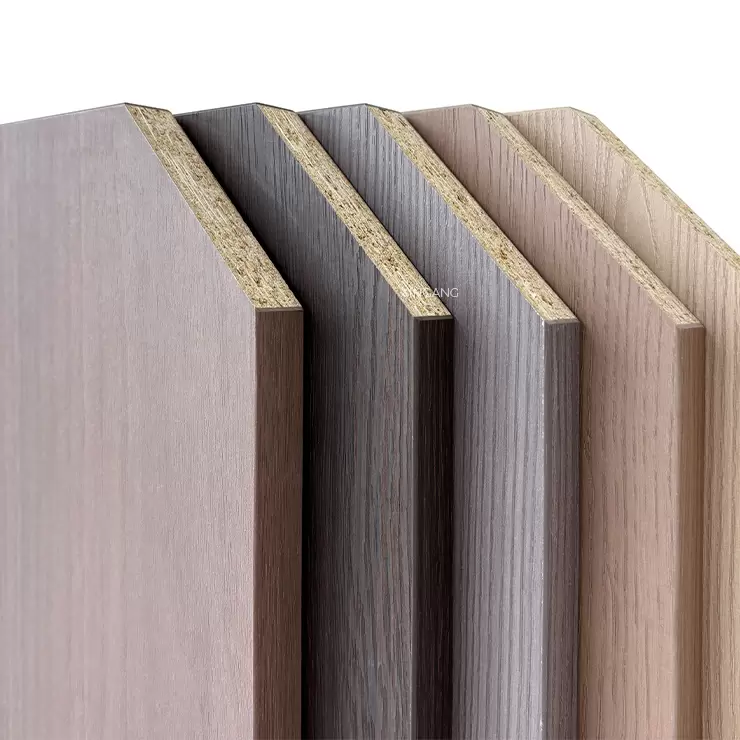
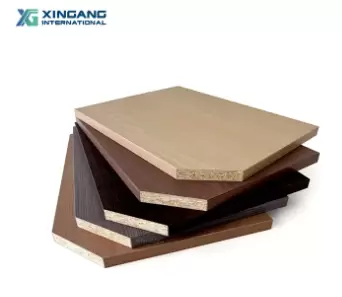
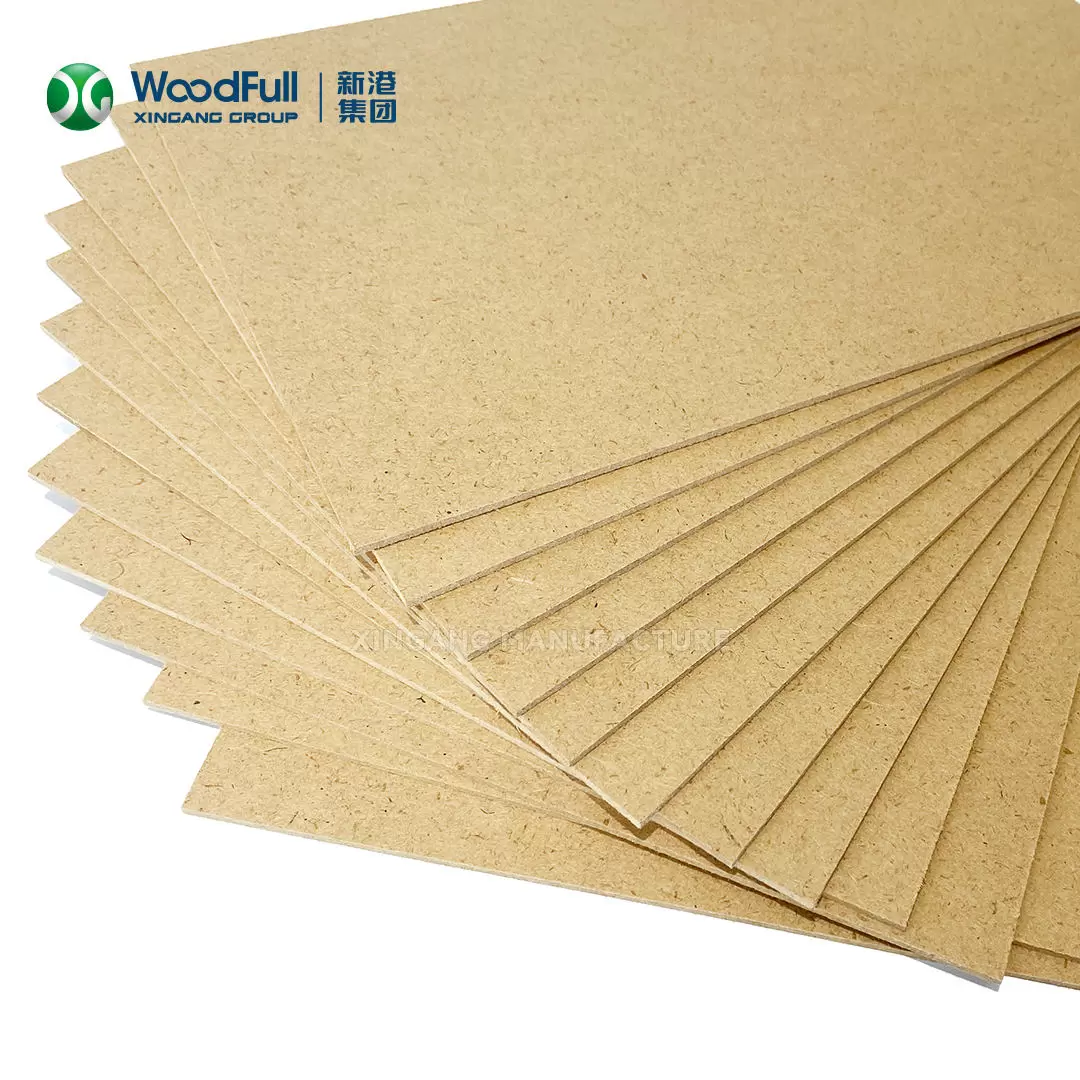
The composition of a furniture board determines many of its functional properties, including stiffness, surface quality, edge integrity, machining behavior, and moisture response. Medium-density fiberboard (MDF), particleboard, plywood, and other engineered wood products each have different structural characteristics and manufacturing requirements. The appropriate choice depends on the panel's intended load, thickness, finish, and operating environment.
Adhesive technology is particularly important because binders help hold wood fibers, particles, or veneers together. Their chemistry can influence emissions, bonding performance, manufacturing conditions, and the potential for material recovery. A sustainable board should not be evaluated solely by the raw material it contains; the binder system and surface treatments also matter.
Shandong Xingang Group Co., Ltd. focuses on environmentally oriented materials for the wood industry. Its Xingang biomimetic adhesive is described by the company as containing zero formaldehyde, zero benzene, and zero harmful substances, and has been applied at scale in biomimetic decorative boards, ultra-thin MDF, and biomimetic marine plywood. These product directions demonstrate how adhesive development can be integrated into engineered wood products rather than treated as an isolated chemical substitution.
For manufacturers assessing these materials, the next step is to review the technical documentation for the specific board grade. Claims about chemical composition and emissions should be supported by relevant test reports, clearly defined test methods, and information about the finished panel rather than the adhesive alone. Surface coatings, edge treatments, and other processing materials may also influence the final product's emissions profile.
A circular furniture board must remain functional throughout the expected life of the furniture. If a cabinet side panel swells, a shelf deflects excessively, or a screw connection loses holding strength, the resulting repair or replacement can undermine the environmental benefits achieved during material production.
Mechanical requirements vary by application. A decorative back panel may prioritize dimensional accuracy and surface quality, while a load-bearing shelf needs sufficient bending strength and stiffness. A kitchen cabinet panel may face intermittent moisture exposure, whereas a bedroom wardrobe panel may operate under relatively stable indoor conditions. These differences should be reflected in the board specification.
Thickness alone does not determine structural performance. Density profile, internal bonding, fiber or particle distribution, panel span, loading conditions, and edge support all influence how a board behaves in service. For shelving, engineers should evaluate expected load, unsupported span, permissible deflection, and long-term loading rather than selecting a panel only by nominal thickness.
Dimensional stability is another important consideration. Changes in humidity can affect wood-based panels, particularly where edges are exposed or where the board is installed near moisture sources. The relevant properties may include thickness swelling, moisture resistance, and dimensional change under specified test conditions. These values should be compared using consistent methods and appropriate product standards.
Extending the service life of furniture can reduce the frequency of replacement and the material, transportation, and manufacturing resources associated with new products. For this reason, a circular furniture board should be selected to meet the real mechanical and environmental demands of the furniture rather than the minimum requirements needed to complete assembly.
Furniture manufacturing creates material losses through panel cutting, drilling, edge trimming, defects, and design changes. A board with consistent thickness, predictable machining behavior, and a uniform surface can help improve manufacturing yield by reducing unnecessary rejects and rework.
Panel optimization is one of the most direct ways to improve resource efficiency. Cutting plans that align component dimensions with standard board sizes can reduce offcuts, while nesting software can improve material utilization for CNC manufacturing. However, optimization must account for grain direction where applicable, surface defects, machining allowances, and the orientation requirements of decorative finishes.
Board quality also affects tool performance and downstream finishing. Inconsistent density or internal structure may contribute to uneven machining, edge chipping, or variation in screw holding behavior. These risks are especially relevant for furniture lines that depend on automated drilling, CNC routing, and high-volume assembly.
Before introducing a new circular furniture board into mass production, manufacturers should run a controlled trial using their actual cutting tools, drilling parameters, edge-banding materials, and fastening systems. Useful indicators include usable panel yield, machining defect rate, tool wear, edge quality, assembly time, and finished-product rejection rate. This provides a practical way to compare material options without assuming that a sustainability-oriented board will automatically perform like an established production grade.
Production waste should also be tracked by type. Clean offcuts, sawdust, damaged panels, and contaminated waste may have different recovery options. Keeping waste streams separate can improve the feasibility of reuse or recycling, subject to local infrastructure and material acceptance requirements.
Indoor air quality is an important consideration for furniture installed in homes, offices, schools, hotels, and other enclosed environments. Engineered wood products may contain binders, coatings, decorative laminates, and edge materials that influence emissions from the finished furniture.
Formaldehyde is one relevant substance, but a comprehensive assessment should consider the specific emissions requirements of the target market and product category. Depending on the destination, buyers may need to review applicable regulations, emissions classifications, third-party certifications, or laboratory reports. Compliance requirements differ by jurisdiction, so a single general statement should not be assumed to establish suitability in every market.
A manufacturer's declaration about an adhesive is useful starting information, but finished-board testing is important because manufacturing processes and other materials can affect the final emissions profile. Documentation should identify the product grade, test method, test conditions, and date, making it possible to link the evidence to the material being supplied.
For projects where environmental performance is a selling point, traceability also matters. Technical data sheets, safety documentation where applicable, emissions test reports, and consistent product identification can support product qualification and reduce uncertainty during specification and production.
Supplier assessment should combine environmental evidence with manufacturing consistency. A board may appear competitive based on unit price, but differences in usable yield, processing losses, defect rates, and product durability can materially change its overall cost.
Start by defining the application, required dimensions, thickness, surface finish, load conditions, moisture exposure, and machining process. Then compare candidate materials against measurable performance criteria. Request technical data and relevant test reports, and confirm that the documents apply to the exact board grade under consideration.
Sampling should include more than a visual inspection. Check thickness consistency, surface defects, edge quality, cutting behavior, screw connections, and compatibility with the planned finishing process. Where structural performance or moisture resistance is important, conduct the appropriate tests before approving the material for production.
It is also useful to assess the supplier's ability to maintain consistent specifications across repeat orders. Variations in board dimensions, surface appearance, or processing behavior can create operational problems when production lines rely on standardized settings. A defined incoming-inspection procedure and agreed acceptance criteria can help manage this risk.
A circular furniture board should combine responsible material use with dependable mechanical performance, efficient processing, and a credible approach to end-of-life management. Recycled content or environmentally oriented adhesive technology can contribute to a more sustainable product, but neither replaces the need to assess durability, emissions, machining performance, and recovery feasibility.
For furniture manufacturers, the strongest approach is to evaluate the board as part of the complete product lifecycle. By combining material documentation, representative production trials, waste-reduction measures, and durable furniture design, manufacturers can improve resource efficiency while maintaining the performance and consistency expected in modern furniture production.
Shandong Xingang Group's work on environmentally oriented wood materials and biomimetic adhesive technology provides one example of how material innovation can support this direction. The final choice should be based on the specific board grade, verified performance data, and the demands of the intended furniture application.