14 Aug 2026
Thin MDF Board: How Thickness, Density, and Strength Affect Performance
Learn More >


In MDF production, discussions often focus on raw materials, adhesives, or emission standards. However, one of the most critical factors determining final board quality is often overlooked: density profile control.
For MDF Manufacturers, the ability to precisely control vertical density distribution within a board directly affects mechanical strength, machining behavior, and long-term stability.
Unlike homogeneous materials, MDF is a layered structure with intentional density variation. The outer layers are typically denser to provide surface hardness and machinability, while the core is less dense to reduce weight and material cost while maintaining structural integrity.
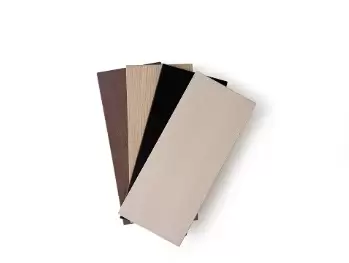
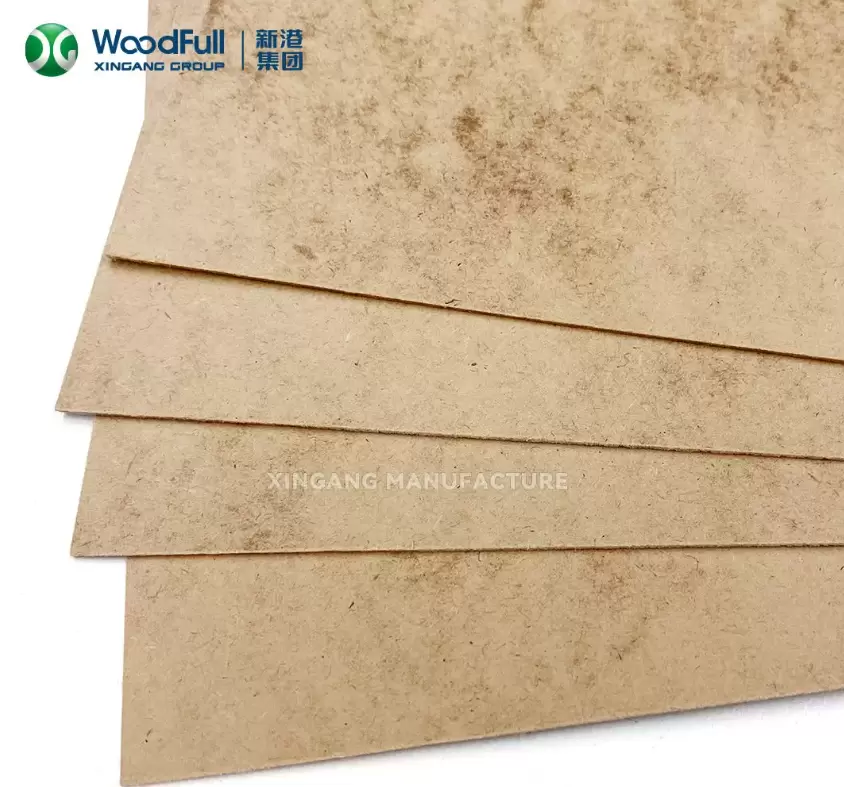
Two MDF boards with identical average density can perform very differently depending on how that density is distributed.
A well-structured board typically has:
Poor density control leads to:
For MDF Manufacturers, controlling density profile is essentially controlling product reliability.
The hot pressing stage defines the final density structure of MDF. During this stage, fiber mats are compressed under heat and pressure, while adhesive systems undergo curing reactions.
Key variables include:
Even small deviations in these parameters can result in significant variations in board quality.
With advanced adhesive systems such as those developed by Shandong Xingang Group, curing behavior becomes more stable but also more sensitive to thermal profile optimization.
High surface density is essential for:
Core density, on the other hand, influences:
MDF Manufacturers must carefully balance these two requirements to meet end-use specifications.
Excessively high surface density can lead to internal stress, while overly low core density can reduce structural performance.
Moisture content plays a critical role in density formation. It acts as both a heat transfer medium and a reaction facilitator for adhesive curing.
If moisture is too high:
If moisture is too low:
Optimizing this balance is essential for achieving stable density profiles.
When MDF Manufacturers adopt low-emission adhesive systems, density control becomes even more important.
Bio-based adhesives, such as those used by Shandong Xingang Group, interact differently with wood fibers compared to traditional resins. This affects:
As a result, press system calibration must be adjusted to maintain consistent density formation.
Density profile control transforms MDF manufacturing from a bulk production process into a precision engineering discipline.
Manufacturers that achieve stable density control benefit from:
For MDF Manufacturers, this capability is increasingly a competitive differentiator.