28 Aug 2025
Chipboard vs. MDF vs. Plywood: Which Material Should You Choose?
Learn More >


In modern interior and furniture applications, surface performance is no longer a purely aesthetic requirement. It is a functional engineering parameter that determines durability, maintenance cost, and lifecycle performance. Melamine Plywood achieves this through advanced surface engineering technologies that integrate decorative design with protective material science.
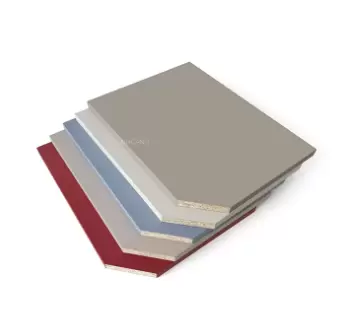
The melamine surface layer is created through controlled resin impregnation of decorative paper under high temperature and pressure conditions. Resin loading typically ranges between 120–180 g/m², depending on desired surface hardness and application environment.
This process determines:
Surface hardness level
Resistance to chemical cleaning agents
Color stability under UV exposure
Uniform resin distribution is essential to prevent surface inconsistencies such as gloss variation or localized wear.
Melamine surfaces are engineered to withstand daily mechanical wear in residential and commercial environments. Standard performance levels typically reach or exceed 2H pencil hardness, providing resistance against common abrasions such as utensils, tools, and sliding objects.
In high-traffic applications such as retail furniture and office systems, this surface durability significantly extends product lifecycle and reduces maintenance frequency.
Unlike untreated wood-based materials, Melamine Plywood offers enhanced resistance to moisture penetration due to its sealed resin surface structure.
In practical environments such as kitchens and bathrooms, exposure to water vapor and cleaning agents is continuous. Melamine surfaces prevent liquid absorption, reducing the risk of swelling, deformation, or microbial growth in the substrate.
Chemical resistance also allows the surface to withstand household detergents and mild solvents without visible degradation.
One of the key advantages of Melamine Plywood is its ability to maintain consistent decorative appearance over long-term use.
UV-resistant resin systems help reduce color fading, while controlled pressing processes ensure uniform pattern transfer across production batches.
This is particularly important in large-scale interior projects where panel replacement or color mismatch can significantly affect design consistency.
Modern Melamine Plywood production is increasingly focused on sustainability and indoor air safety. Advanced manufacturing systems now adopt zero-formaldehyde adhesive technologies, eliminating harmful emissions while maintaining structural integrity.
Shandong Xingang Group has developed bio-based adhesive systems that achieve zero formaldehyde, zero benzene, and zero toxic substance emissions. These innovations not only improve environmental performance but also align Melamine Plywood with global green building certification requirements.
Surface engineering is the defining factor that transforms Melamine Plywood from a structural board into a high-performance decorative and functional material.
Through controlled resin systems, precise pressing technology, and advanced environmental adhesive solutions, Melamine Plywood achieves a balance of durability, aesthetics, and safety that supports modern interior and furniture applications across global markets.