22 Jan 2024
Looking Back On 2023 - XINGANG GROUP
Learn More >


Particle board plays a vital role in modern furniture manufacturing and interior construction. Known for its cost efficiency, smooth surface, and versatility, it is widely used in cabinets, wardrobes, flooring substrates, and decorative panels. But behind every high-quality board lies a carefully controlled manufacturing process, advanced materials engineering, and strict quality standards.
In this article, we explore the complete manufacture of particle board—from raw materials to final inspection—while highlighting how environmentally responsible innovation, such as that practiced by Shandong Xingang Group Co., Ltd., is shaping the future of sustainable wood panels.
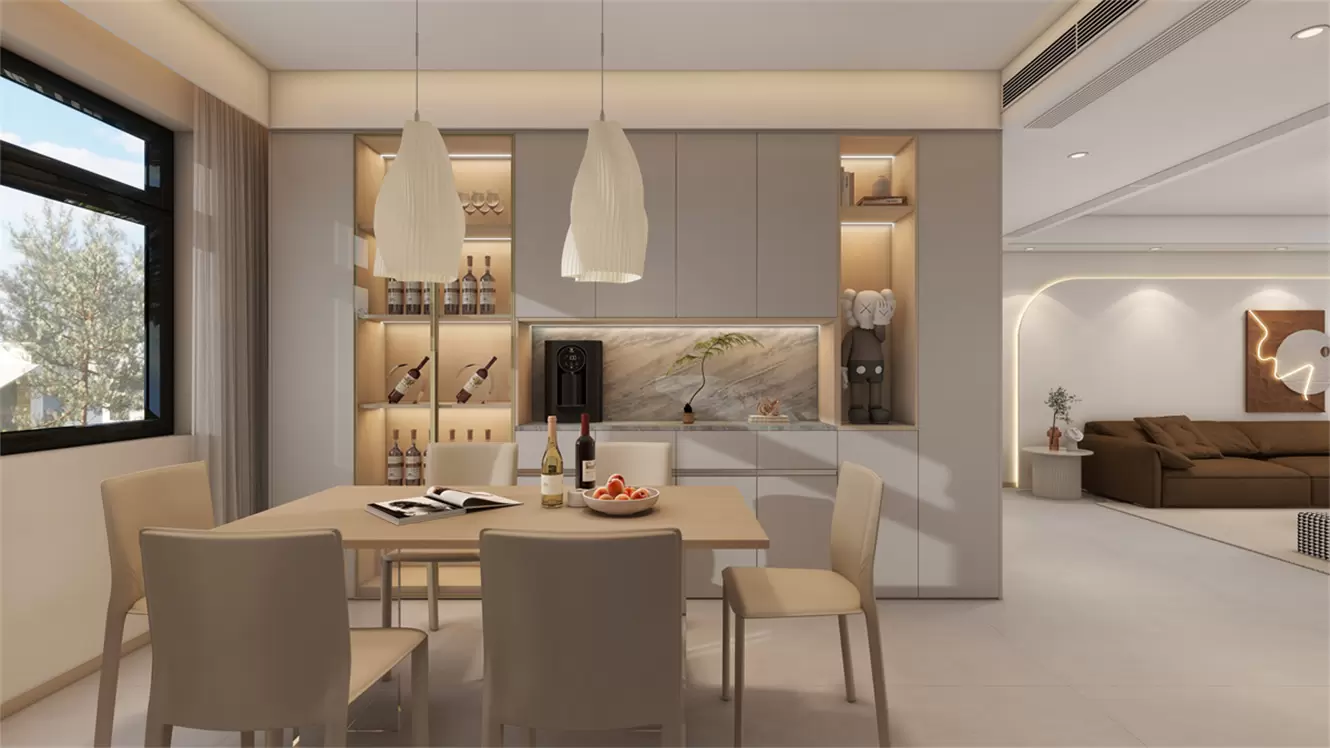
The manufacture of particle board begins with raw material selection. Typically, manufacturers use:
Wood chips
Sawdust
Wood shavings
Recycled wood residues
These materials are carefully sorted and cleaned to remove impurities such as metal fragments, bark, or dust. By utilizing wood by-products, particle board production supports resource efficiency and reduces waste in the timber industry.
Modern manufacturers increasingly prioritize sustainable sourcing and low-emission adhesives to meet growing environmental standards.
After sorting, the wood materials are processed into uniform particles using industrial shredders and refiners. Particle size consistency is critical because it directly affects board density and structural integrity.
The particles are then dried in rotary drum dryers to reduce moisture content to optimal levels (typically 2–5%). Proper moisture control ensures:
Strong adhesive bonding
Dimensional stability
Reduced risk of warping
Once dried, the wood particles are blended with resin adhesives and additives. This step determines much of the board’s strength, durability, and environmental performance.
Traditionally, urea-formaldehyde resins have been widely used. However, concerns about indoor air quality have driven innovation toward safer alternatives.
For example, Shandong Xingang Group has developed Xingang Biomimetic Adhesive, a groundbreaking solution featuring:
0 formaldehyde
0 benzene
0 harmful substances
This eco-friendly adhesive technology has been successfully applied at scale in biomimetic decorative boards, ultra-thin MDF boards, and marine-grade plywood. The result is particle boards that are not only green and environmentally friendly but also antibacterial, antiviral, and high-performance.
After blending, the adhesive-coated particles are evenly distributed onto a forming line to create a layered mat structure. Typically:
Fine particles form the surface layers for smoothness.
Coarser particles form the core for structural strength.
The mat then undergoes hot pressing under high temperature and pressure. During this stage:
The adhesive cures and bonds the particles.
The board achieves its final thickness and density.
Structural integrity is established.
Precise control of pressing temperature, pressure, and time is essential for consistent quality.
After hot pressing, boards are cooled to stabilize internal stresses. They are then:
Trimmed to standard sizes
Sanded to achieve a smooth and uniform surface
Inspected for surface defects
A smooth surface is crucial for lamination, veneering, or direct decorative applications.
High-quality particle board manufacturers implement strict quality control procedures, including:
Density testing
Internal bond strength testing
Bending strength and modulus testing
Thickness swelling evaluation
Emission testing for environmental compliance
With growing global regulations on indoor air quality, low-emission performance has become a major competitive advantage.
Shandong Xingang Group continues to invest in environmentally friendly material innovation, ensuring that its panel products not only meet but exceed modern green building standards.
The particle board industry is evolving beyond affordability and functionality. Today’s market demands:
Low-emission materials
Antibacterial and antiviral properties
Sustainable production processes
Circular economy integration
By focusing on eco-friendly new materials, Shandong Xingang Group is working with global partners to build a green home ecosystem. The company aims to create healthier and more sustainable living spaces for people worldwide.
The manufacture of particle board is a sophisticated process that combines resource efficiency, precision engineering, and advanced material science. From raw wood residues to finished decorative panels, each step plays a crucial role in determining board performance and environmental impact.
As sustainability becomes central to construction and furniture production, manufacturers that prioritize green innovation—such as Shandong Xingang Group—are leading the industry toward a future where durability, safety, and environmental responsibility go hand in hand.