14 May 2026
Birch Veneer Furniture Board: A Sustainable Material Choice for Modern Furniture Manufacturing
Learn More >


Modern furniture manufacturing has shifted toward high-speed, standardized production systems where material behavior must align with automated cutting, edging, and assembly processes. In this context, Melamine Plywood is not just a decorative board material but a process-critical input that directly affects manufacturing efficiency and yield rate.
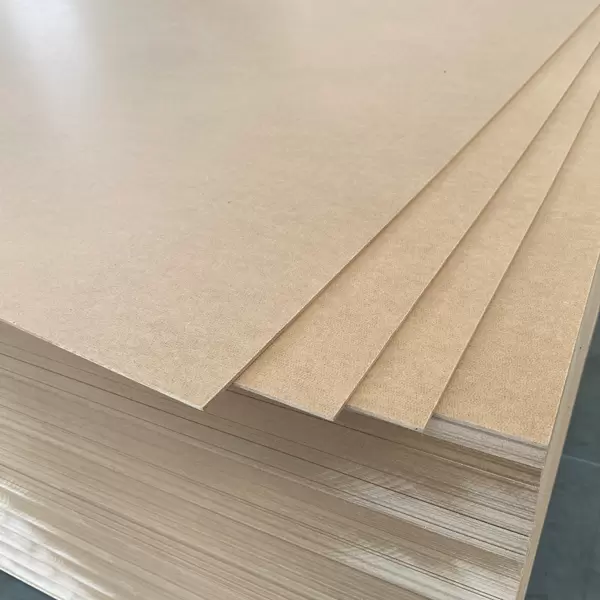
In automated production environments, Melamine Plywood is frequently processed using CNC cutting systems operating at feed rates between 8–25 m/min depending on blade type and board thickness.
Material stability during high-speed cutting depends on:
Internal bonding strength of the plywood core
Surface resin hardness and uniformity
Density consistency across board layers
Poor-quality boards often result in edge tearing, micro-chipping, or localized delamination, which increases post-processing requirements and reduces production efficiency.
High-grade Melamine Plywood maintains stable edge integrity even under high-speed carbide tool machining, reducing rework rates significantly.
Edge banding is one of the most sensitive steps in furniture production. Melamine Plywood must maintain stable surface energy characteristics to ensure proper adhesion of EVA or PUR adhesives.
Optimal bonding performance is typically achieved when surface moisture content remains between 6% and 10%, allowing consistent glue penetration without surface blistering.
Inconsistent board quality can lead to:
Edge lifting after thermal cycling
Adhesive failure under humidity exposure
Visible seam gaps in finished furniture
Stable Melamine Plywood substrates significantly reduce these risks in automated edge banding lines.
Industrial furniture systems rely heavily on modular assembly, where dimensional tolerances must remain within ±0.5 mm in many applications.
Melamine Plywood contributes to dimensional accuracy through:
Controlled thickness variation across sheets
Low internal stress deformation during storage
Stable response to humidity and temperature changes
When dimensional stability is maintained, downstream assembly processes such as drilling, dowel insertion, and panel alignment become significantly more efficient.
During transportation and on-site installation, furniture panels are exposed to abrasion, stacking pressure, and handling impacts.
Melamine surface layers provide:
Scratch resistance during packaging and shipping
Impact resistance against minor surface contact damage
Long-term color stability during storage and installation phases
This reduces product rejection rates and improves overall project delivery quality in large-scale furniture supply chains.
With increasing global focus on indoor air quality, Melamine Plywood production is shifting toward low-emission and environmentally safe adhesive systems.
Advanced manufacturing platforms, such as those developed by Shandong Xingang Group, incorporate bio-based adhesive technologies that eliminate formaldehyde and harmful volatile compounds while maintaining mechanical strength.
This aligns Melamine Plywood with modern green building standards and enhances its applicability in residential and commercial interior projects.
Melamine Plywood plays a critical role in industrial furniture production systems by ensuring machining efficiency, dimensional stability, and surface durability.
Its performance directly influences production yield, assembly efficiency, and final product quality. As manufacturing systems become increasingly automated, material consistency becomes a key determinant of operational success in large-scale furniture production environments.