18 Dec 2025
Why Melamine Plywood Is a Popular Choice for Furniture and Interior Design
Learn More >


In modern woodworking and manufacturing industries, CNC machining has become an essential technology for producing precise components, decorative panels, and customized designs. The quality of the material used directly affects machining accuracy, tool life, and the final product finish. Among many available materials, MDF for CNC cutting remains one of the most widely used options due to its consistency, smooth surface, and excellent machinability.
However, not all MDF boards perform the same in CNC applications. Manufacturers must consider several factors when selecting the right MDF to ensure optimal cutting performance and product quality. This guide explains the key aspects to evaluate when choosing the best MDF for CNC cutting.
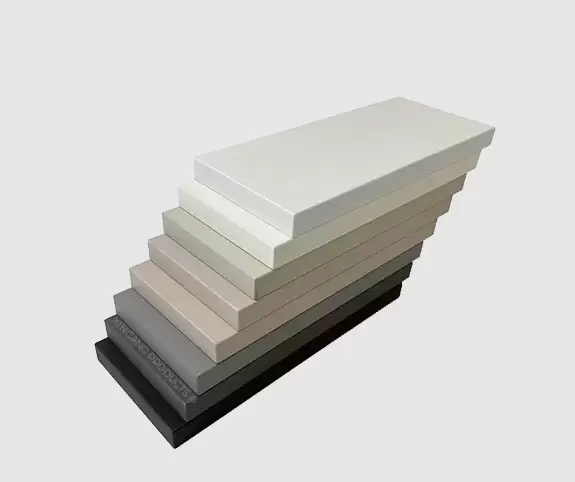
Density is one of the most important characteristics when selecting MDF for CNC machining. High-quality MDF should have a uniform internal structure and consistent density throughout the board. This ensures stable cutting performance and prevents unexpected tool resistance during machining.
When density is evenly distributed, CNC machines can produce smoother edges, cleaner grooves, and more precise shapes. In contrast, boards with uneven density may lead to rough edges, tool vibration, or inconsistent cutting depths.
Manufacturers should look for MDF products that are produced with advanced manufacturing processes to guarantee structural consistency.
Surface quality plays a critical role in many CNC applications, especially in furniture production, decorative panels, and signage manufacturing. A smooth and refined MDF surface reduces post-processing time and improves coating or lamination results.
MDF with fine fibers and stable bonding will provide better surfaces for painting, veneering, and laminating after CNC cutting. This helps manufacturers achieve high-end finishes while maintaining production efficiency.
When evaluating MDF panels, manufacturers should consider whether the board maintains surface integrity after machining, sanding, and finishing processes.
One of the major advantages of MDF for CNC cutting is its ability to produce clean and precise edges without splintering. Because MDF does not have natural wood grain like solid timber, it allows CNC tools to cut in any direction while maintaining stable performance.
For manufacturers producing complex designs, carvings, or decorative patterns, this feature is extremely valuable. High-quality MDF should allow intricate details to be machined without tearing or chipping.
Testing small samples before large-scale production can help verify how the MDF behaves during CNC processing.
In recent years, environmental protection and indoor air quality have become major concerns in the wood products industry. Traditional wood adhesives may release harmful substances, making eco-friendly MDF an important choice for manufacturers seeking sustainable materials.
Shandong Xingang Group Co., Ltd. has been committed to developing environmentally friendly new materials in the wood industry. The company has introduced its innovative Xingang biomimetic adhesive, which contains zero formaldehyde, zero benzene, and zero harmful substances.
This technology has already been applied on a large scale to Xingang biomimetic decorative boards, ultra-thin density boards, and biomimetic marine plywood. By integrating these advanced materials into panel production, Xingang boards not only offer strong performance but also provide antibacterial, antiviral, and environmentally friendly benefits.
For manufacturers who prioritize sustainable production and healthier indoor environments, these eco-friendly MDF solutions represent an important advancement.
Although MDF is primarily used for machining and finishing applications, its structural strength still matters. Boards with better bonding and fiber distribution will maintain stability during cutting, drilling, and assembly.
Durable MDF panels reduce breakage during machining and transportation, which helps manufacturers maintain consistent product quality. Stronger boards also improve long-term performance in finished products such as cabinets, wall panels, and furniture components.
Choosing MDF from reliable manufacturers ensures better durability and stable mechanical properties.
For large-scale production, manufacturers must also consider supply reliability. Consistent product quality and stable delivery are essential for maintaining efficient production schedules.
Working with experienced MDF manufacturers allows companies to access high-quality materials, technical support, and customized panel solutions tailored to specific CNC machining requirements.
Shandong Xingang Group continues to focus on innovation in environmentally friendly wood-based materials while expanding cooperation with global partners. By combining advanced technology with sustainable production practices, the company is helping build a greener home furnishing ecosystem and contributing to healthier and more sustainable living environments.
Selecting the right MDF for CNC cutting is a key step in ensuring precision machining, efficient production, and high-quality finished products. Manufacturers should carefully evaluate factors such as density consistency, surface smoothness, machining stability, environmental performance, and supplier reliability.
With continuous advancements in material technology, modern MDF solutions are becoming both higher performing and more environmentally responsible. Companies like Shandong Xingang Group are leading this progress by introducing innovative adhesive technologies and sustainable panel products.
By choosing high-quality MDF materials and working with trusted manufacturers, businesses can improve CNC machining performance while supporting greener and more sustainable manufacturing practices for the future.