10 Sep 2025
Maintenance and Longevity Tips for High-Quality Film Faced Plywood
Learn More >


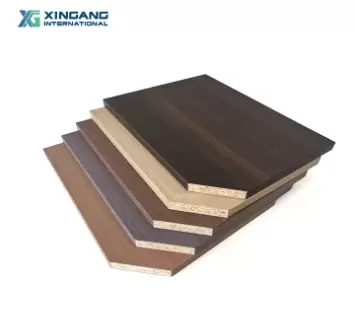
Selecting a dark oak furniture board is no longer simply about choosing a color or wood grain. As furniture products evolve toward higher quality, longer service life, and stricter environmental compliance, decorative panels have become an important engineering material rather than just a finishing component.
Whether designing wardrobes, kitchen cabinets, office furniture, hotel interiors, or retail fixtures, manufacturers need panels that maintain dimensional stability, deliver consistent machining performance, and meet increasingly demanding environmental regulations. A board that performs well in a residential bedroom may not necessarily withstand the heavy daily use of a commercial workspace. Understanding the technical characteristics behind a dark oak furniture board helps manufacturers choose materials that match both product positioning and long-term performance expectations.
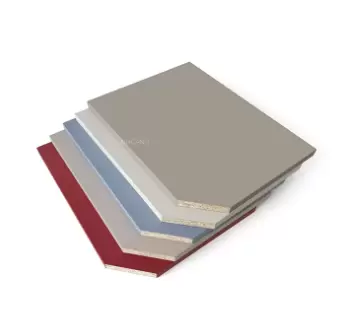
Many buyers initially focus on the decorative finish because it directly affects the appearance of the furniture. However, the substrate determines most of the board's structural performance.
Common substrates include MDF, particleboard, plywood, and specialty engineered panels. Each material offers different advantages depending on the intended application.
MDF provides an extremely smooth surface that is ideal for precision machining, painted finishes, and decorative laminates. Its homogeneous internal structure allows clean edge profiling and accurate CNC processing, making it widely used in customized furniture.
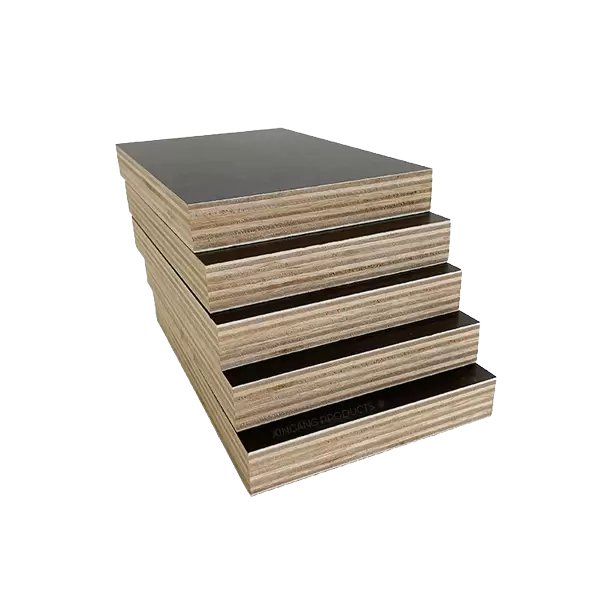
Plywood offers higher screw-holding strength and improved impact resistance because of its cross-laminated veneer construction. It is often selected for furniture requiring greater structural strength, including shelving systems and large cabinets.
Particleboard remains an economical solution for mass-produced furniture, particularly when combined with high-quality surface laminates and edge sealing technologies.
Choosing the correct substrate ensures that the decorative surface performs consistently throughout the product's service life instead of becoming compromised by internal deformation or insufficient mechanical strength.
The visual appeal of dark oak furniture depends not only on color consistency but also on surface durability.
Premium decorative surfaces reproduce the natural texture of oak while providing improved resistance to abrasion, household chemicals, moisture, and ultraviolet exposure. A realistic synchronized wood grain can closely replicate the appearance of solid timber while offering much greater production consistency.
For commercial interiors such as hotels, restaurants, and office buildings, furniture surfaces are exposed to continuous cleaning and frequent physical contact. Decorative layers with higher wear resistance maintain their original appearance for significantly longer periods, reducing maintenance costs and extending furniture replacement cycles.
Surface color consistency is equally important in large projects. Manufacturing batches with minimal color variation simplify installation and ensure visual uniformity across complete interior spaces.
Environmental certification has evolved from a competitive advantage into a fundamental purchasing requirement in many international markets.
Governments and consumers increasingly pay attention to formaldehyde emissions, volatile organic compounds, and indoor air quality. Furniture materials that fail to meet environmental standards may face restricted market access or reduced customer acceptance.
Shandong Xingang Group has invested extensively in environmentally friendly material innovation through its proprietary Bionic Adhesive Technology. Unlike conventional adhesive systems, this technology achieves zero formaldehyde, zero benzene, and zero harmful substances, providing a healthier foundation for decorative furniture panels.
The technology has already been successfully applied across Xingang's decorative boards, ultra-thin MDF, and marine plywood product lines, helping furniture manufacturers develop products that support green building initiatives and healthier indoor environments.
For export-oriented furniture producers, selecting environmentally responsible decorative boards also simplifies compliance with increasingly stringent international regulations while strengthening brand competitiveness.
Humidity is one of the primary causes of furniture failure.
In kitchens, bathrooms, apartments, hotels, and coastal environments, decorative boards are continuously exposed to changing humidity levels. Materials with poor moisture resistance may swell, warp, or experience surface delamination over time.
Although dark oak furniture boards are primarily intended for interior applications, advanced manufacturing processes significantly improve moisture resistance through optimized substrate density, high-quality decorative layers, and effective edge sealing.
Proper installation further enhances long-term performance. Fully sealed edges, accurate hardware installation, and adequate ventilation around furniture help prevent moisture from entering exposed panel sections.
When environmental conditions are considered during both material selection and product design, furniture maintains better dimensional stability throughout its service life.
Modern furniture production relies heavily on automated CNC equipment. Materials that produce inconsistent cutting quality increase tool wear, reduce production efficiency, and generate unnecessary waste.
A premium dark oak furniture board should support smooth routing, precise drilling, clean edge machining, and reliable edge banding without excessive chipping or fiber tearing.
Uniform internal density also contributes to stronger screw retention and more consistent assembly accuracy. This becomes particularly important for modular furniture systems where interchangeable components require tight dimensional tolerances throughout production.
Manufacturers processing thousands of identical panels each month benefit from stable machining performance because production schedules become more predictable while reducing rework and material loss.
Furniture materials are no longer evaluated solely by appearance and structural strength. Increasingly, designers seek multifunctional decorative panels that contribute to healthier and safer indoor environments.
Xingang has expanded the capabilities of traditional engineered wood by developing decorative boards with antibacterial and antiviral properties. These additional functions make the materials especially suitable for schools, healthcare facilities, hotels, offices, and residential environments where hygiene has become an important design consideration.
Instead of adding separate surface treatments after manufacturing, integrating functional properties directly into the decorative board provides longer-lasting performance while simplifying furniture production.
As expectations for healthier living environments continue to rise, multifunctional engineered wood products are likely to become standard across many furniture categories.
Furniture manufacturers increasingly seek long-term material partners rather than simply purchasing decorative panels from multiple suppliers.
Stable supply ensures consistent color matching, predictable lead times, and reliable quality across multiple production batches. This becomes particularly important for large commercial projects that may require thousands of identical panels delivered over several months.
Shandong Xingang Group has built its reputation through continuous investment in environmentally friendly wood-based materials and manufacturing technologies. Its expertise extends across decorative boards, ultra-thin density boards, and specialty engineered wood products, allowing customers to source multiple panel solutions from a single supplier.
This integrated manufacturing capability reduces supply chain complexity while providing greater consistency across large production programs.
The purchase price of a decorative board represents only a small portion of the total furniture manufacturing cost.
Material stability influences machining efficiency, production yield, transportation losses, warranty claims, customer satisfaction, and product lifespan. A lower-cost panel that creates higher rejection rates or shorter furniture life often increases overall manufacturing expenses.
Conversely, a high-quality dark oak furniture board with stable dimensions, environmentally friendly materials, durable decorative surfaces, and reliable machining performance contributes to lower lifecycle costs and stronger long-term product value.
Evaluating decorative boards based on total manufacturing efficiency rather than initial purchase price leads to more sustainable sourcing decisions.
Choosing the right dark oak furniture board requires balancing appearance, structural performance, environmental responsibility, machining efficiency, and long-term durability. As global furniture markets continue demanding healthier materials and higher product quality, engineered decorative boards have become a critical factor in successful furniture manufacturing.
Through continuous innovation in environmentally friendly materials, Shandong Xingang Group provides decorative board solutions that combine attractive dark oak finishes with advanced Bionic Adhesive Technology, delivering zero formaldehyde, zero benzene, zero harmful substances, as well as antibacterial and antiviral performance. These technologies enable furniture manufacturers to produce products that satisfy modern environmental standards while maintaining the durability, precision, and visual quality expected in today's competitive global market.