27 Nov 2025
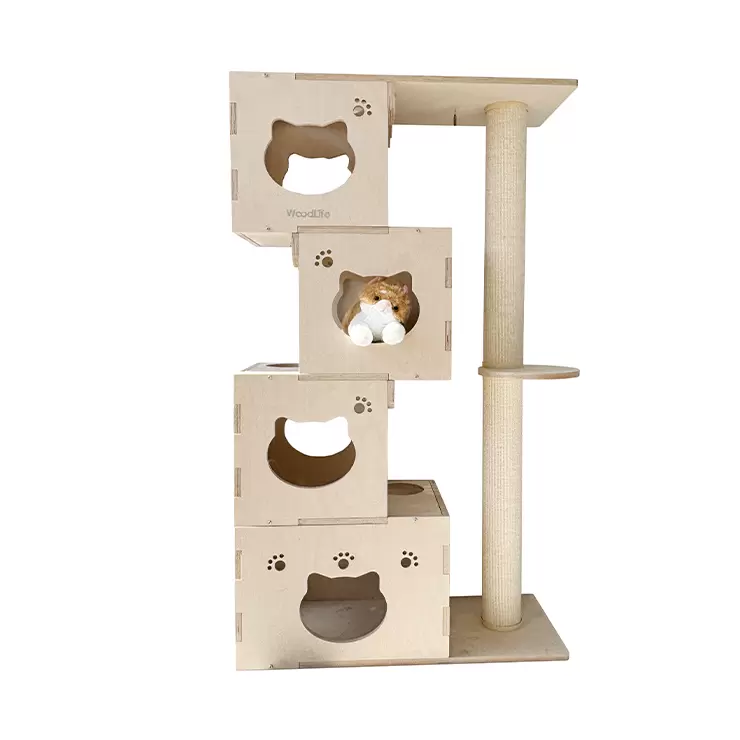
How Pet Furniture Made with Bio-Board Protects Pets from Harmful Viruses
Learn More >


Operating a modern particle board manufacturing plant requires precise coordination between raw material preparation, particle processing, drying, blending, mat forming, hot pressing, and finishing. Each production stage directly affects board density, thickness consistency, internal bond strength, surface quality, and overall manufacturing costs. Even small variations in wood particle moisture content or resin distribution can create significant quality fluctuations across production batches. As demand increases for engineered wood products with higher performance and lower environmental impact, manufacturers must optimize both production efficiency and material utilization without compromising product reliability.
Improving plant efficiency is therefore not simply a matter of increasing production speed. It requires controlling the entire manufacturing process, reducing material losses, optimizing energy consumption, and maintaining stable product properties across different board specifications.

Raw material preparation is one of the most influential stages in particle board manufacturing. Wood chips, sawdust, shavings, and other lignocellulosic materials must be processed into particles with suitable dimensions and moisture characteristics before entering the blending process.
Particle geometry affects mat formation, bonding performance, and finished board properties. Fine particles are generally more suitable for surface layers because they help create a smoother surface, while coarser particles are commonly used in the core layer to provide structural support. An inconsistent particle size distribution can lead to uneven density profiles and unstable mechanical performance.
Moisture control is equally important. Excessive moisture increases the energy required during drying and can cause steam-related defects during hot pressing. Insufficient moisture, on the other hand, may affect resin distribution and particle bonding. Industrial dryers must therefore maintain moisture levels appropriate to the selected resin system and pressing conditions.
A practical production strategy is to establish separate control parameters for surface and core particles rather than applying identical preparation standards throughout the entire process. This improves material utilization and provides greater flexibility when manufacturing boards with different thicknesses and density specifications.
Resin application directly influences the bonding strength and dimensional stability of particle board. During blending, adhesive must be distributed uniformly across particle surfaces. Uneven application can create weak bonding areas, excessive resin consumption, or inconsistent mechanical properties.
Traditional particle board production commonly uses urea-formaldehyde (UF), melamine-urea-formaldehyde (MUF), or phenol-formaldehyde (PF) resin systems, depending on product requirements and environmental conditions. The selection of adhesive affects curing behavior, moisture resistance, emissions, and pressing parameters.
For manufacturers developing formaldehyde-free products, alternative adhesive technologies provide another route to improving environmental performance. Shandong Xingang Group has developed Xingang Biomimetic Adhesive, positioned as a zero-formaldehyde, zero-benzene, and zero-harmful-substance bonding technology. Its application in engineered wood products demonstrates the potential of alternative bonding systems in environmentally oriented panel manufacturing. Actual production settings must be established according to the adhesive formulation, particle characteristics, and validated bonding performance.
Mat forming is another critical operation. Surface and core layers must be distributed consistently to achieve the target board density profile. Uneven mat weight can result in thickness deviations, local weak points, and increased sanding losses. Automated weighing, forming control, and online monitoring help maintain uniformity before the mat enters the hot press.
Hot pressing is one of the most energy-intensive operations in a particle board manufacturing plant. During this stage, heat and pressure consolidate the particle mat while activating the adhesive system.
The pressing schedule must account for board thickness, target density, adhesive curing characteristics, initial mat moisture, and heat transfer through the board structure. Excessive pressing time reduces production capacity and increases energy consumption. Insufficient curing can result in low internal bond strength, while inappropriate pressure distribution may cause density variations or thickness instability.
For example, producing 18 mm structural particle board requires a different pressing strategy from producing thin decorative panels. Thicker boards generally require more time for heat to penetrate the core and complete adhesive curing. Consequently, optimizing the press schedule for each product specification is more effective than using a fixed production setting.
Continuous presses offer advantages in production flexibility and output consistency, while multi-opening batch presses may be suitable for certain production capacities and product configurations. The appropriate equipment depends on annual output targets, board dimensions, product mix, and available investment.
Drying and hot pressing account for substantial energy consumption in many particle board facilities. Improving thermal efficiency can therefore generate meaningful operating cost savings.
Heat recovery systems can capture usable energy from exhaust gases or other process streams. Optimizing dryer airflow, controlling particle moisture before drying, and maintaining thermal insulation can also reduce unnecessary fuel consumption. In addition, dust collection systems should be designed to manage fine wood particles while supporting safe and stable plant operation.
Material recovery is another important efficiency factor. Suitable production residues, sanding dust, and recycled wood materials may be reused where product specifications and contamination controls permit. However, recycled material must be properly sorted and processed to prevent impurities from affecting board appearance, bonding, or mechanical properties.
A reliable particle board manufacturing plant should monitor quality throughout production rather than relying exclusively on final product inspection. Important parameters include particle moisture content, resin application rate, mat weight, press temperature, board thickness, density, internal bond strength, bending strength, and surface condition.
Online thickness measurement and density profile analysis can help identify deviations before they lead to large quantities of defective boards. Laboratory testing remains essential for verifying mechanical properties and formaldehyde emissions according to the applicable product standards.
Digital process monitoring also enables manufacturers to correlate production conditions with finished board performance. By recording operating parameters and inspection results for each production batch, factories can identify recurring defects and improve process stability.
Environmental performance is becoming an increasingly important factor in engineered wood manufacturing. Manufacturers must address not only production energy consumption but also adhesive emissions, raw material utilization, and the environmental characteristics of finished boards.
Shandong Xingang Group Co., Ltd. focuses on environmentally oriented wood materials and innovative bonding technologies. Its Xingang Biomimetic Adhesive is designed around zero-formaldehyde, zero-benzene, and zero-harmful-substance positioning and has been applied at scale in Xingang biomimetic decorative boards, ultra-thin density boards, and biomimetic marine plywood.
This approach reflects a broader development direction for the particle board industry: improving product performance while reducing dependence on conventional chemical bonding systems. For manufacturers, adopting alternative adhesives requires careful validation of bonding strength, moisture resistance, production compatibility, and long-term product stability.
Improving a particle board manufacturing plant requires an integrated approach to raw material preparation, moisture control, resin blending, mat forming, hot pressing, energy management, and quality inspection. Production efficiency depends on controlling the interactions between these processes rather than optimizing individual machines in isolation.
As the engineered wood industry moves toward higher performance and more sustainable materials, innovative adhesive technologies and intelligent process control will become increasingly important. Combining stable manufacturing processes with environmentally oriented bonding solutions provides a practical foundation for producing reliable particle boards while supporting the long-term development of green building materials.