The MDF industry has reached a turning point where product performance alone is no longer sufficient to define competitiveness. For modern MDF Manufacturers, environmental compliance, indoor air safety, and long-term regulatory stability have become equally important as mechanical strength and production efficiency.
Traditionally, MDF production has relied on urea-formaldehyde (UF) resin systems. These adhesives provide strong bonding at relatively low cost, but they also introduce persistent challenges: formaldehyde emissions, long-term off-gassing, and increasing regulatory pressure across Europe, North America, and high-end Asian markets.
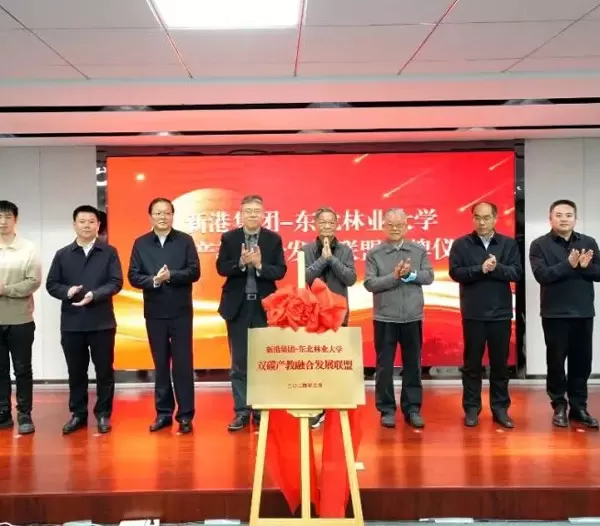
In response to these constraints, a new generation of binding systems has emerged. One of the most notable directions is bio-based or bio-mimetic adhesive technology, such as the “0 formaldehyde, 0 benzene, 0 harmful substance” adhesive system developed by Shandong Xingang Group. This type of material fundamentally changes the chemical logic of MDF production by removing toxic emission sources at the bonding stage rather than relying on post-treatment.
For MDF Manufacturers, this shift is not just a material substitution—it is a structural redesign of product value.
Why emission control is no longer optional in MDF production
In many global markets, formaldehyde emission standards have tightened significantly. What was once considered “low emission” is now often classified as insufficient for residential or high-end commercial applications.
The practical implications are clear:
- E2-level MDF is increasingly restricted or banned in many regions
- E1 is becoming a baseline rather than a competitive grade
- E0 or ultra-low emission certification is required for premium markets
This regulatory pressure directly impacts MDF Manufacturers in two ways: market access and pricing structure.
Boards that fail to meet emission standards are forced into low-margin commodity channels. In contrast, compliant low-emission MDF can enter furniture, interior decoration, and export-grade construction material markets.
This is where zero-formaldehyde adhesive systems change the equation.
Bio-based adhesives: changing the chemistry of MDF bonding
Traditional UF resin relies on formaldehyde-based polymerization to create bonding strength between wood fibers. While effective, this process inherently generates volatile emissions.
In contrast, bio-mimetic adhesive systems modify the bonding mechanism at a molecular level. Instead of relying on formaldehyde reactions, they use naturally derived or engineered polymer structures that form stable fiber adhesion without volatile byproducts.
Shandong Xingang Group’s adhesive system demonstrates this approach by achieving:
- Zero formaldehyde release
- Zero benzene content
- No detectable harmful volatile substances
This fundamentally shifts MDF production from a chemically reactive system to a structurally engineered material system.
For MDF Manufacturers, this means emission control is achieved at the material level rather than through secondary processing or coatings.
Process adaptation in MDF manufacturing lines
Switching from UF resin to bio-based adhesives is not a direct plug-and-play substitution. It requires process-level adjustments across multiple stages of MDF production.
Fiber preparation behavior changes due to differences in adhesive viscosity and distribution characteristics. This affects how uniformly resin coats wood fibers during blending. If mixing systems are not adjusted, uneven bonding can occur, leading to weak internal structure or density inconsistency.
Hot pressing parameters also require recalibration. Bio-based systems often have different curing kinetics, which affects:
- Temperature ramp profiles
- Pressing duration
- Moisture interaction behavior
- Internal gas release dynamics
In many industrial implementations, press cycle optimization becomes a critical step to ensure consistent board density and structural integrity.
For MDF Manufacturers, this means adopting more adaptive production control systems rather than fixed parameter recipes.
Mechanical performance under emission-free systems
A common concern when transitioning away from UF resin is whether mechanical strength is compromised. However, modern bio-based adhesive systems are designed to maintain structural performance while eliminating toxic emissions.
Key performance indicators include:
- Internal bond strength suitable for furniture-grade applications
- Stable modulus of rupture under load conditions
- Surface machining quality compatible with lamination and coating
- Dimensional stability under humidity variation
In practice, properly optimized zero-emission MDF can meet or exceed conventional performance benchmarks while offering significantly improved environmental compliance.
Market positioning impact for MDF Manufacturers
The adoption of zero-formaldehyde MDF changes not only production processes but also market positioning.
Manufacturers can shift from commodity-grade supply to value-added product categories such as:
- Green building certified materials
- High-end furniture substrates
- Export-grade interior panels
- Health-conscious residential construction materials
This transition allows MDF Manufacturers to move away from price-sensitive markets and toward specification-driven procurement channels where environmental compliance is a purchasing requirement rather than an optional feature.
Industry direction: MDF production as a material engineering discipline
The MDF industry is gradually evolving from a cost-driven manufacturing sector into a material engineering discipline. Adhesive chemistry is no longer a supporting factor—it is becoming the defining element of product differentiation.
Bio-based systems like those developed by Shandong Xingang Group illustrate a broader trend: MDF is being redefined as a health-oriented engineered material rather than a purely structural board.
For MDF Manufacturers, this represents a long-term shift in how competitiveness is built: not through incremental efficiency gains, but through fundamental material innovation.