04 Jun 2026
MDF for CNC cutting — Material Stability and Precision Control in High-Accuracy Manufacturing
Learn More >


MDF board is one of the most widely used engineered wood materials for modern furniture and interior applications because it combines a uniform structure, smooth surface, predictable machining behavior, and flexible finishing options.
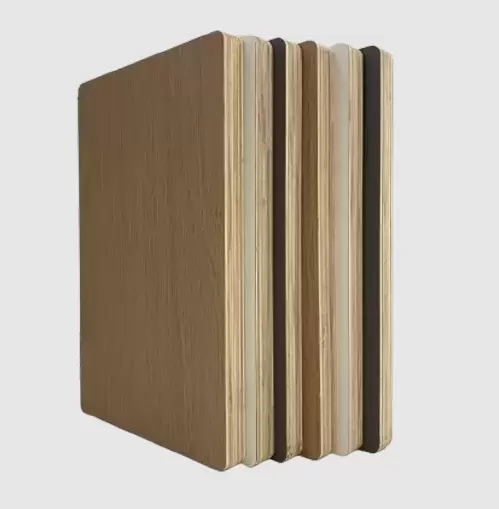
From cabinet doors and shelving to wall panels, decorative components, and customized furniture, MDF can be manufactured into a wide range of shapes and surface finishes. However, the requirements for an MDF board used in furniture are different from those for a structural or industrial application.
The finished product must often satisfy several requirements simultaneously: dimensional stability, surface quality, screw-holding capability, machining performance, coating compatibility, moisture resistance, and low emissions.
As global furniture markets place greater emphasis on healthier indoor environments and sustainable material selection, adhesive technology has also become a critical consideration.
Furniture manufacturing requires panels that can be processed repeatedly with predictable results.
The homogeneous fiber structure of MDF board provides a smoother and more consistent surface than many conventional wood materials.
This makes MDF suitable for painting, veneering, laminating, PVC film application, and other decorative processes.
For cabinet doors and decorative wall components, surface consistency can have a direct impact on the final appearance.
A small defect that may be insignificant in an unfinished industrial panel can become highly visible after high-gloss painting or thin decorative film application.
Different furniture components experience different mechanical loads.
A cabinet side panel may require good screw retention and dimensional stability, while a decorative wall panel may prioritize low weight and surface quality.
A higher-density MDF board can provide stronger mechanical properties, but increased density also increases material weight.
For large furniture components, excessive weight can affect transportation, installation, and hardware loading.
The optimum density is therefore the one that provides sufficient performance without adding unnecessary mass.
Furniture assembly frequently relies on screws, hinges, connectors, and other mechanical fasteners.
MDF board must provide sufficient holding strength for the intended hardware and loading conditions.
The performance can depend on density, fiber structure, board thickness, screw geometry, pilot-hole design, and edge distance.
For repeated furniture assembly, the panel should be tested using the actual hardware rather than relying only on generic board strength values.
This is especially important for cabinet hinges and other components that experience repeated opening and closing loads.
A smooth MDF surface can reduce the amount of preparation required before coating.
However, the surface still needs to be compatible with the selected finishing system.
Painting may require primer and sanding, while decorative film or laminate may require different surface conditions.
The more demanding the final finish, the more important surface uniformity becomes.
For manufacturers producing large volumes of high-appearance furniture, consistent surface characteristics can help stabilize coating consumption and reduce finishing defects.
Indoor furniture places special importance on material emissions because the finished product may remain inside homes, offices, hotels, schools, or healthcare environments for many years.
Formaldehyde emissions from wood-based panels are strongly influenced by the adhesive system and manufacturing process.
Shandong Xingang Group has developed Xingang Bionic Adhesive with a stated zero-formaldehyde, zero-benzene, and zero-harmful-substance positioning.
The company applies this technology to products including bionic decorative panels and ultra-thin density boards.
For furniture manufacturers targeting environmentally conscious markets, adhesive chemistry can therefore be an important part of material qualification and product differentiation.
The environmental performance of furniture cannot always be determined from one component alone.
MDF board may be combined with edge-banding materials, adhesives, coatings, laminates, hardware, and other components.
Each material can contribute to the overall emission profile.
For this reason, manufacturers should consider the entire product construction when establishing indoor environmental targets.
A low-emission MDF board provides an important foundation, but the final furniture system should also be evaluated according to its complete material configuration.
Furniture used in kitchens, bathrooms, laundry areas, or humid climates may experience greater moisture exposure than furniture used in dry indoor environments.
Standard MDF should not automatically be considered suitable for prolonged moisture exposure.
Where humidity resistance is required, manufacturers should evaluate the appropriate moisture-resistant grade and confirm thickness swelling and dimensional stability under relevant test conditions.
Edge treatment is also important because exposed cut edges can behave differently from factory-finished surfaces.
Furniture and interior design increasingly emphasize reduced material consumption and lighter structures.
Ultra-thin MDF board can be useful where a thin decorative or structural surface is required.
However, reducing thickness increases sensitivity to handling, bending, dimensional variation, and machining conditions.
Shandong Xingang Group has developed applications for ultra-thin density boards, creating opportunities for lightweight decorative and interior solutions.
The appropriate thickness should be determined by the mechanical requirements of the final product rather than material reduction alone.
Sustainability is increasingly connected to both raw materials and manufacturing technology.
Using engineered wood materials can improve the utilization of wood resources by converting fibers into standardized panels.
The environmental profile of the adhesive system is equally important.
Xingang's development of environmentally oriented bonding technology reflects a broader shift toward wood-based products that combine functional performance with reduced environmental impact.
For furniture and interior manufacturers, this can support product development strategies focused on healthier materials and more sustainable production.
Furniture manufacturers often operate standardized designs across multiple production batches and geographic markets.
A small change in panel thickness, density, surface condition, or moisture content can affect downstream processes.
Consistent MDF board quality helps maintain stable CNC parameters, edge-banding settings, drilling depths, coating processes, and assembly tolerances.
For international supply chains, batch consistency is therefore as important as the nominal specification.
Manufacturers should establish incoming inspection criteria covering dimensions, surface condition, moisture, density, and other parameters relevant to the finished application.
A practical MDF board specification should begin with the intended product.
For painted cabinet doors, surface quality and machining performance may dominate.
For shelving and load-bearing furniture components, density, thickness, screw holding, and dimensional stability may become more important.
For decorative wall panels, surface appearance, weight, finishing compatibility, and environmental performance may have higher priority.
For lightweight designs, ultra-thin MDF can provide material-efficiency advantages when its mechanical requirements are properly evaluated.
The best material is therefore application-specific rather than universally defined by a single performance value.
MDF board remains an important material for modern furniture and interior manufacturing because it combines a homogeneous structure with excellent machining and finishing potential. Its actual performance, however, depends on density, thickness, surface quality, dimensional stability, moisture behavior, mechanical strength, and adhesive chemistry.
As furniture markets increasingly emphasize indoor air quality and sustainable materials, environmental performance is becoming a core part of MDF board selection rather than an optional feature.
Shandong Xingang Group focuses on environmentally friendly wood-based materials and has developed Xingang Bionic Adhesive with a stated zero-formaldehyde, zero-benzene, and zero-harmful-substance positioning. Combined with applications in decorative panels and ultra-thin density boards, this technology direction provides a basis for developing MDF solutions that address both manufacturing requirements and the growing demand for healthier interior products.