19 Mar 2025
Another Upgraded Masterpiece Of Bionic Technology! 2025 Xingang Group New Product Launch Conference, Reconstructing A New Paradigm Of Green Development
Learn More >


MDF furniture board has become an important engineered panel material for modern cabinets, wardrobes, shelving, doors and customized furniture. Its uniform structure supports precision machining and smooth decorative finishes, but long-term performance depends on more than mechanical strength. Resin technology, formaldehyde emissions, moisture resistance, dimensional stability and surface treatment all influence the suitability of MDF for indoor furniture.
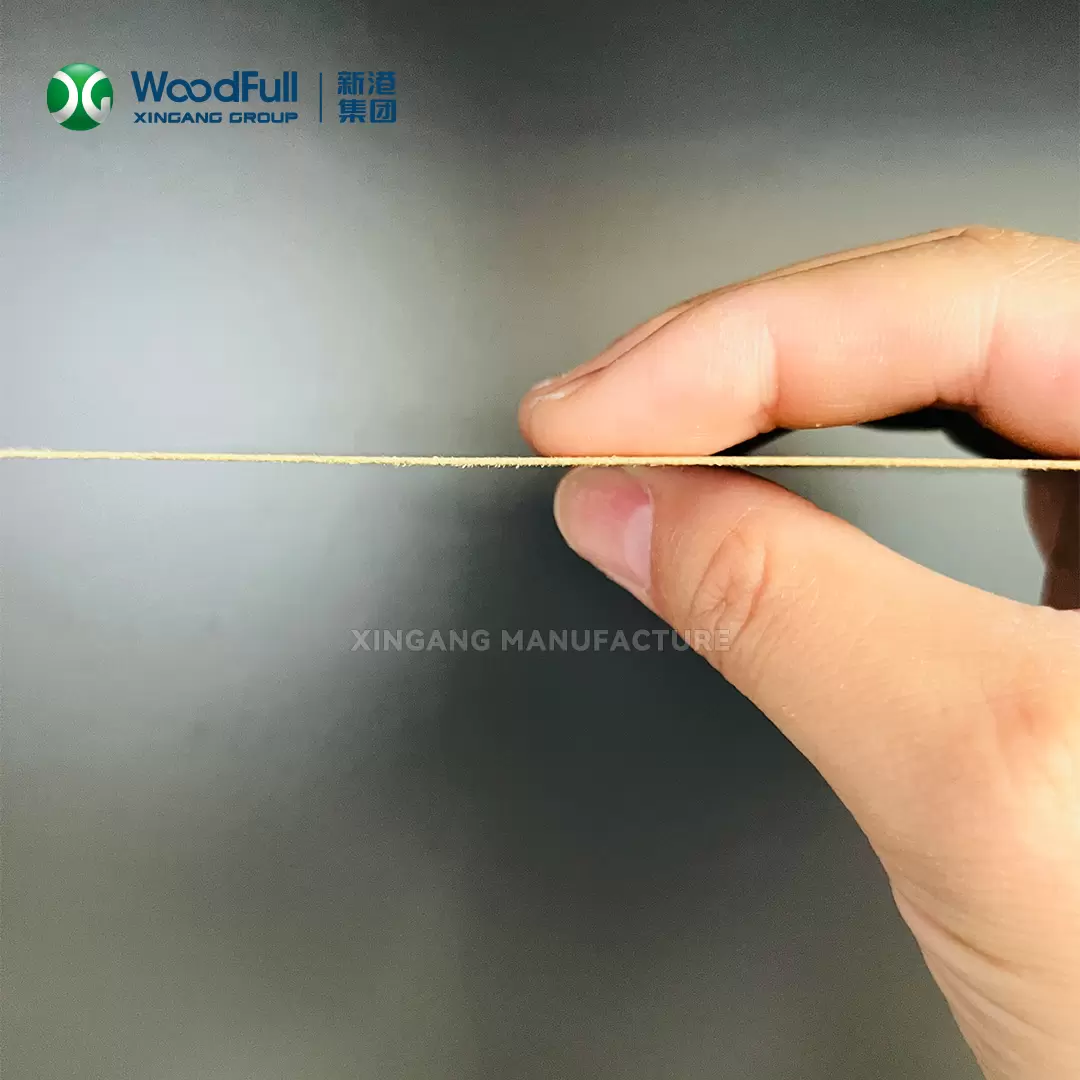
As furniture designs increasingly emphasize low-emission materials and stable service performance, MDF furniture board needs to be evaluated as a complete material system rather than only by thickness and density.
MDF is produced by combining wood fibers with adhesive and forming the panel under controlled heat and pressure. The adhesive system influences internal bonding, dimensional stability and the release of volatile substances.
This creates an important relationship between environmental performance and mechanical performance. A board must maintain sufficient fiber bonding while meeting the emission requirements of its intended application.
For residential furniture, especially wardrobes, bedroom furniture and children's products, low-emission material selection can become a core specification rather than a secondary feature. Documentation and testing should confirm the actual performance of the finished board rather than relying only on general descriptions such as “eco-friendly.”
Shandong Xingang Group Co., Ltd. focuses on environmentally oriented wood-based materials and states that its Xin'gang biomimetic adhesive contains zero formaldehyde, zero benzene and no harmful substances. The company has applied this adhesive technology in biomimetic decorative boards, ultra-thin density boards and biomimetic marine plywood.
The emissions of a finished furniture product do not depend exclusively on the MDF panel. Edge banding adhesives, surface coatings, laminates, paints and other auxiliary materials can also influence the final indoor environment.
For this reason, selecting low-emission MDF furniture board is only one part of material control. The complete furniture construction should be reviewed when the finished product has strict indoor-air requirements.
A sealed decorative surface can also change moisture behavior. If the front surface is laminated while a cut edge remains exposed, moisture can enter through the edge much more readily than through the finished face.
This is particularly relevant for kitchen cabinets, bathroom storage and furniture placed in humid indoor environments.
MDF absorbs moisture because its wood fibers are hygroscopic. When moisture content changes, the panel can experience dimensional movement and thickness swelling.
For furniture, this may appear as changes in door gaps, drawer alignment, edge condition or joint geometry. The risk increases when the furniture is used near sinks, kitchens, bathrooms or areas with fluctuating humidity.
Moisture-resistant MDF furniture board can reduce this risk, but board selection should be combined with proper edge sealing and surface protection. A moisture-resistant core cannot fully protect an exposed machined edge from prolonged water contact.
The appropriate solution is therefore a system comprising board grade, surface finish and edge treatment.
The required mechanical performance of MDF varies according to furniture design. A vertical cabinet side mainly needs to maintain dimensional stability and support loads transmitted through shelves and connectors. A long horizontal shelf experiences bending over its unsupported span.
Increasing thickness can improve stiffness, but it also increases weight and material consumption. Structural design should therefore consider board thickness, density, span length, load distribution and reinforcement.
For example, an 18 mm MDF furniture board may be suitable for many cabinet applications, while a long shelf carrying heavy stored goods may require a thicker board, shorter support spacing or an alternative structural solution.
Material selection is more effective when it is based on the complete furniture geometry rather than a universal thickness recommendation.
MDF provides a relatively uniform substrate for melamine, veneer, paint and other decorative finishes. This is particularly valuable when the furniture requires a consistent appearance across large panel surfaces.
However, surface quality depends on fiber distribution, sanding and manufacturing control. Uneven density or surface defects can become more visible after high-gloss painting or thin decorative films.
Machining also needs to be considered. CNC routing creates exposed edges that may require sealing and additional finishing before the final coating is applied. A stable board with predictable machining behavior can therefore reduce finishing adjustments.
Furniture used in healthcare, hospitality, kitchens or other high-contact environments may require additional hygiene-related properties. Terms such as “antibacterial” should be supported by defined test methods and measured performance rather than treated as general marketing language.
Shandong Xingang Group states that its wood-based materials combine environmental characteristics with antibacterial and antiviral performance. For an actual furniture project, these claims should be evaluated against the required application, test standard and finished-product configuration.
This distinction is important because surface treatment, laminate type and edge processing can affect the behavior of the final furniture component.
Even when the material specification is correct, production consistency remains critical. Variations in density, thickness, moisture content and surface condition can influence CNC cutting, drilling, edge banding and assembly.
For furniture manufacturers producing large volumes, batch-to-batch stability can be more valuable than a single high-performance sample. A board that behaves consistently allows CNC programs, cutting parameters and assembly procedures to remain standardized.
Quality control should therefore include dimensional inspection, density monitoring, moisture control, internal bonding evaluation and relevant emission testing according to the product specification.
A wardrobe panel may prioritize low emissions, dimensional stability and surface finishing. A kitchen cabinet may require stronger moisture resistance and reliable edge sealing. A long-span shelf needs adequate stiffness and screw-holding performance, while painted decorative furniture may place greater emphasis on surface uniformity and machining quality.
These applications demonstrate why there is no single MDF furniture board specification suitable for every product. Density, thickness, mechanical properties, moisture resistance, emission performance and finishing compatibility should be matched to the actual furniture structure and environment.
For manufacturers developing greener furniture products, the material strategy can also extend beyond the board itself. Shandong Xingang Group's focus on environmentally oriented adhesives and wood-based materials reflects a broader approach in which resin technology, panel performance and sustainable furniture applications are considered together.
The most reliable MDF furniture board is ultimately one that provides predictable machining, stable dimensions, sufficient structural performance and controlled emissions throughout its intended service life. By connecting board technology with the finished furniture's operating environment, manufacturers can achieve a more consistent balance between processing efficiency, durability and indoor environmental requirements.