18 Dec 2025
Melamine Plywood vs Traditional Plywood: Key Differences You Should Know
Learn More >


The global furniture industry is shifting toward materials that combine premium aesthetics with measurable performance. Consumers are no longer satisfied with furniture that simply looks attractive—they also expect durability, environmental safety, dimensional stability, and long-term value. As a result, manufacturers are placing greater emphasis on engineered decorative panels that deliver consistent quality while meeting increasingly stringent environmental standards.
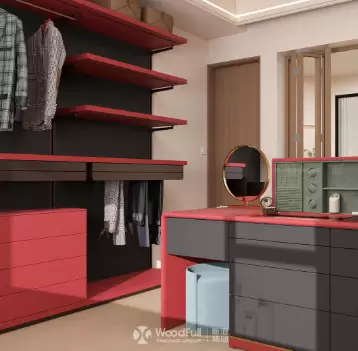
Among these materials, the dark oak furniture board has become a preferred choice for residential furniture, commercial interiors, hospitality projects, and customized cabinetry. Its deep wood grain, warm natural appearance, and compatibility with modern manufacturing processes make it suitable for both contemporary and classic designs. More importantly, advances in substrate technology and eco-friendly adhesives have transformed dark oak furniture boards from decorative materials into high-performance engineered products capable of supporting sustainable furniture manufacturing.
Oak has long been recognized as one of the most desirable wood species in furniture manufacturing because of its distinctive grain pattern and timeless appearance. Dark oak finishes further enhance these characteristics by creating richer color depth while maintaining the natural texture of the wood.
Unlike painted surfaces that may appear artificial after years of use, dark oak decorative finishes provide visual consistency even under varying lighting conditions. The darker tone also helps conceal minor scratches and everyday wear, making furniture suitable for high-traffic environments such as hotels, offices, restaurants, and public buildings.
From a design perspective, dark oak furniture boards integrate well with a wide range of materials including glass, aluminum, stainless steel, marble, and engineered stone. This versatility allows designers to create coordinated interior spaces without limiting future renovation options.
Traditional solid wood furniture offers natural beauty, but it is also susceptible to moisture expansion, shrinkage, cracking, and color variation. These characteristics increase manufacturing complexity and make quality consistency difficult to achieve in large-scale production.
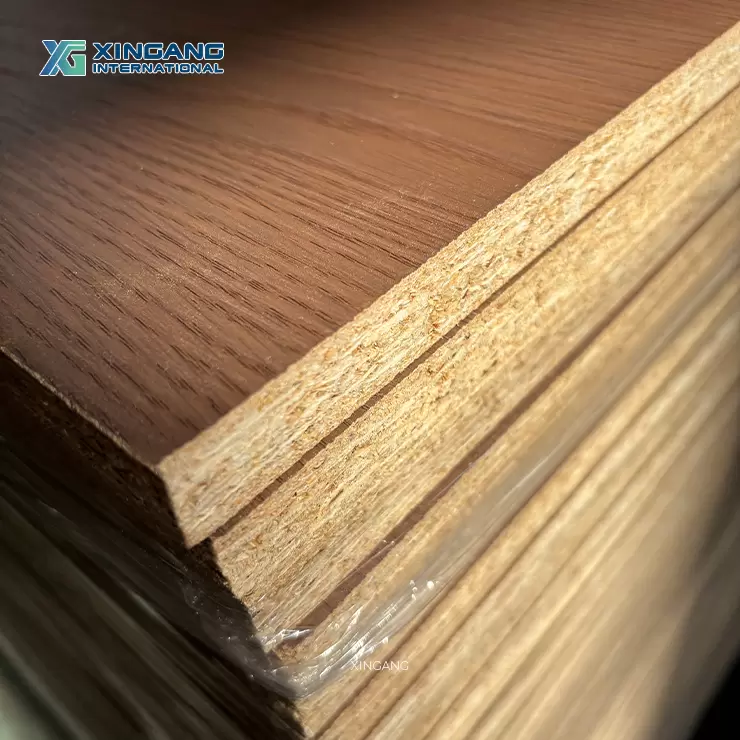
A high-quality dark oak furniture board combines decorative surfaces with engineered substrates such as MDF, plywood, or particleboard. This multilayer construction significantly improves dimensional stability while maintaining the appearance of natural oak.
Engineered boards also provide more predictable machining performance. CNC cutting, drilling, edge banding, and routing can be completed with higher accuracy because the internal structure remains uniform across the entire panel. This consistency reduces material waste and improves assembly precision, especially for modular furniture and customized cabinet systems.
For manufacturers producing thousands of identical furniture components, dimensional consistency directly contributes to higher production efficiency and lower overall manufacturing costs.
Indoor air quality has become one of the most important considerations in furniture selection. Regulations across Europe, North America, and many Asian markets continue to tighten limits on formaldehyde emissions from wood-based panels.
Conventional adhesive systems may release formaldehyde and volatile organic compounds (VOCs) over time, affecting indoor environmental quality and making compliance with green building standards more difficult.
Shandong Xingang Group addresses this challenge through its proprietary Bionic Adhesive Technology, which is designed with zero formaldehyde, zero benzene, and zero harmful substances. Instead of treating environmental performance as an optional upgrade, the company integrates environmentally friendly adhesive technology throughout its decorative board product portfolio.
This technology has already been successfully applied to Xingang decorative boards, ultra-thin MDF, and marine plywood, enabling furniture manufacturers to develop healthier interior products while meeting increasingly demanding environmental requirements in international markets.
Furniture experiences continuous mechanical wear throughout its service life. Tabletops, cabinet doors, wardrobes, office furniture, and retail fixtures are frequently exposed to scratches, impacts, moisture, cleaning chemicals, and temperature changes.
A premium dark oak furniture board must therefore provide more than decorative appeal.
High-quality decorative surfaces are engineered to resist abrasion while maintaining color consistency after prolonged use. Stable surface structures also improve resistance to moisture penetration around the decorative layer, reducing the likelihood of bubbling, delamination, or edge deformation under normal indoor conditions.
For commercial projects where furniture remains in service for many years, these performance characteristics significantly reduce maintenance costs and preserve the original appearance of the finished product.
Modern furniture production depends heavily on automated manufacturing equipment. CNC nesting machines, edge banders, drilling centers, and robotic assembly systems all require materials with consistent thickness and stable dimensions.
Engineered dark oak furniture boards provide this manufacturing consistency because their internal structure is designed to minimize deformation caused by seasonal humidity changes.
Compared with natural solid wood, engineered boards maintain flatter surfaces and more stable dimensions during storage, transportation, and installation. This stability improves machining accuracy while reducing assembly adjustments on production lines.
Manufacturers producing modular kitchens, wardrobes, office furniture, and customized storage systems particularly benefit from this consistency because interchangeable components require tight dimensional tolerances throughout the manufacturing process.
Furniture is increasingly used in environments where hygiene has become a priority. Educational facilities, healthcare institutions, hotels, offices, and residential buildings all place greater emphasis on healthier interior materials.
Through continuous material innovation, Xingang has developed decorative boards with antibacterial and antiviral properties, expanding the functional value of traditional furniture panels beyond appearance and structural performance.
Although decorative surfaces cannot replace routine cleaning or sanitation procedures, incorporating hygienic material technology provides an additional layer of protection for frequently touched furniture surfaces, particularly in shared public environments.
As healthy building concepts continue to develop worldwide, multifunctional furniture materials are expected to become increasingly important in future interior design projects.
Environmental responsibility has become an essential part of furniture manufacturing rather than simply a marketing feature.
International buyers increasingly evaluate the complete lifecycle of furniture materials, including raw material sourcing, manufacturing emissions, indoor environmental performance, recyclability, and long-term durability.
Engineered decorative boards contribute to sustainability by improving raw material utilization compared with solid timber production. At the same time, environmentally friendly adhesive technologies further reduce emissions during manufacturing and product use.
By combining advanced engineered wood technology with green adhesive innovation, Xingang supports manufacturers seeking to develop furniture products aligned with global sustainability objectives while maintaining competitive product performance.
Even the highest-quality decorative design cannot compensate for inconsistent manufacturing quality.
Reliable furniture board suppliers invest not only in decorative technologies but also in substrate production, adhesive development, quality control, and continuous research into new materials.
Shandong Xingang Group has focused on environmentally friendly wood-based materials for many years, continuously expanding its expertise in decorative panels, ultra-thin density boards, and marine plywood. Its vertically integrated material development capabilities enable the company to control product quality from adhesive formulation through finished board production.
This comprehensive approach allows customers to obtain stable product quality, consistent decorative finishes, and environmentally responsible materials from a single manufacturing partner, reducing supply chain complexity while supporting long-term product development.
A dark oak furniture board offers far more than an elegant wood appearance. Its combination of dimensional stability, machining consistency, durable decorative surfaces, and environmental performance makes it one of the most practical materials for premium furniture manufacturing.
As international markets place greater emphasis on indoor air quality, sustainable materials, and product reliability, manufacturers must evaluate decorative boards based on measurable performance rather than appearance alone. Through innovations such as zero-formaldehyde, zero-benzene, and zero-harmful-substance Bionic Adhesive Technology, together with antibacterial decorative materials and advanced engineered wood manufacturing, Shandong Xingang Group provides furniture manufacturers with solutions that meet both modern environmental expectations and industrial production requirements.
For companies seeking to build healthier, longer-lasting, and more sustainable furniture products, selecting a high-quality dark oak furniture board is not simply a material decision—it is a strategic investment in product quality, manufacturing efficiency, and long-term market competitiveness.