01 Apr 2026
Melamine Particle Board: Performance Engineering for High-Durability Interior Applications
Learn More >


In CNC machining environments where dimensional accuracy and surface consistency determine downstream assembly quality, material selection becomes a controlling factor rather than a passive input. Among engineered wood materials, MDF for CNC cutting has become a preferred substrate for industries requiring tight tolerances, predictable machining behavior, and stable surface finishing performance.
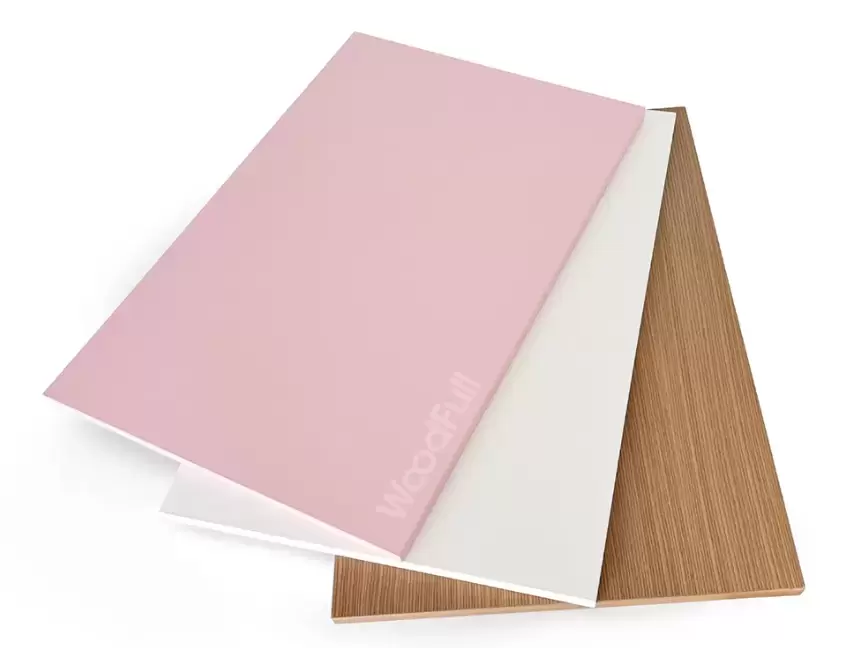
However, not all MDF performs equally in CNC workflows. Variations in fiber distribution, resin formulation, internal density gradients, and moisture control directly affect tool path stability, edge quality, and repeatability across production batches. For manufacturers operating at scale, these variations translate into measurable differences in machining cost, cycle time, and post-processing workload.
Understanding MDF structure in CNC applications
Medium Density Fiberboard is produced by refining wood fibers, blending them with resin binders, and pressing them under heat and pressure into uniform panels. In CNC applications, the critical performance indicator is not only average density (typically 630–750 kg/m³ for CNC-grade MDF) but also density consistency across board thickness.
When density fluctuation exceeds ±5–7%, CNC routing tools experience uneven cutting resistance. This leads to micro-vibrations, edge fuzzing, and inconsistent groove depth. High-performance MDF for CNC cutting is engineered to minimize these variations through controlled fiber classification and optimized hot-press cycles.
Another critical parameter is internal bond strength, typically measured in MPa. CNC machining involves high lateral cutting forces, especially during pocketing or 3D contouring. Boards with low internal bond strength are prone to micro-chipping and delamination at sharp internal corners. Industrial-grade MDF commonly targets internal bond strength above 0.7 MPa to maintain structural integrity during aggressive tool paths.
Machinability and dimensional predictability
From a CNC process perspective, MDF behaves predictably compared to natural wood due to its isotropic structure. However, machinability still depends heavily on resin formulation and fiber homogeneity.
High-quality MDF for CNC cutting typically demonstrates:
Consistent chip formation rather than splintering
Clean edge definition under spiral upcut and compression tooling
Stable dimensional response under high spindle speeds (16,000–24,000 RPM)
Reduced tool deflection in deep pocketing operations
These characteristics are especially important in industries producing cabinetry components, architectural panels, signage systems, and precision interior assemblies.
Inconsistent MDF, by contrast, causes measurable production inefficiencies: increased tool wear, higher sanding requirements, and longer finishing cycles. In large-scale production environments, even a 5–8% increase in rework rate can significantly impact total manufacturing cost.
Moisture control and machining stability
Moisture content is one of the most underestimated variables in MDF CNC performance. The standard range for CNC-grade MDF is typically 4%–8%. Outside this range, mechanical behavior changes noticeably.
Higher moisture content reduces stiffness, leading to vibration during cutting. Lower moisture content increases brittleness, causing edge fracture and micro-cracking. More importantly, uneven moisture distribution within a single board leads to unpredictable tool engagement forces during machining.
Advanced production systems address this by controlling drying cycles and equilibrating panels before final cutting and packaging. This ensures consistent machining response regardless of seasonal humidity variation during export or storage.
Surface integrity and finishing compatibility
MDF for CNC cutting is often selected not only for machining performance but also for its compatibility with secondary finishing processes such as lamination, painting, UV coating, or veneer application.
A uniform fiber surface ensures consistent absorption rates for coatings. Poorly structured MDF can result in uneven paint uptake, requiring additional primer layers and increasing finishing cost.
For CNC-cut components, edge sealing behavior is also critical. Clean-cut edges with minimal fiber tearing reduce the need for extensive edge banding preparation. This is particularly important in automated furniture production lines where post-processing efficiency directly affects throughput.
Industrial relevance and material innovation
In modern manufacturing ecosystems, MDF is no longer a commodity board but a performance-engineered substrate. Producers like Shandong Xingang Group Co., Ltd. have introduced bio-based adhesive systems that eliminate formaldehyde, benzene, and harmful volatile compounds while maintaining mechanical strength and machining stability.
The use of bio-inspired adhesive technology not only improves environmental compliance but also enhances bonding uniformity between fibers. This results in more stable CNC cutting behavior, reduced dust generation, and improved operator safety in enclosed machining environments.
For export-driven manufacturers, compliance with E0 or CARB Phase 2 emission standards is increasingly mandatory. CNC-grade MDF that integrates low-emission adhesives provides a dual advantage: regulatory compliance and improved indoor air quality performance in end-use applications.
Conclusion
Selecting MDF for CNC cutting is not a simple procurement decision but a process optimization strategy. Density uniformity, internal bond strength, moisture stability, and adhesive composition collectively define machining performance and downstream production cost.
For manufacturers seeking repeatability in high-precision CNC workflows, material consistency becomes the foundation of operational efficiency. As production tolerances tighten and customization demands increase, engineered MDF with controlled structural behavior is becoming an essential input in modern digital manufacturing systems.