16 Sep 2026
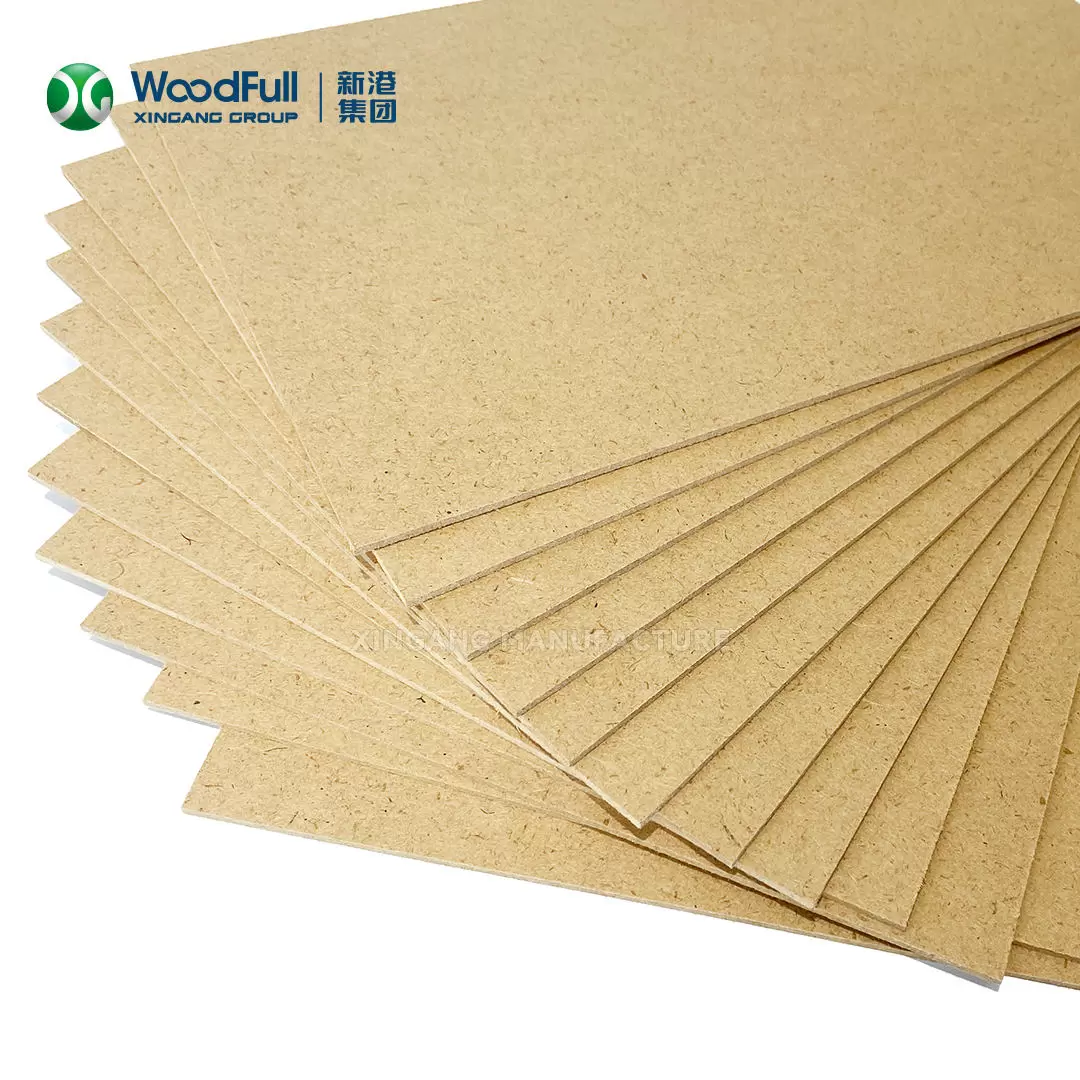
MDF Furniture Board for CNC Cutting and Furniture Manufacturing
Learn More >


As global demand for sustainable furniture and interior materials continues to grow, manufacturers are placing greater emphasis on engineered wood panels that combine durability, environmental performance, and production efficiency. Among these materials, PET Chipboard has become an increasingly popular choice for kitchen cabinets, wardrobes, office furniture, retail fixtures, and residential interiors.
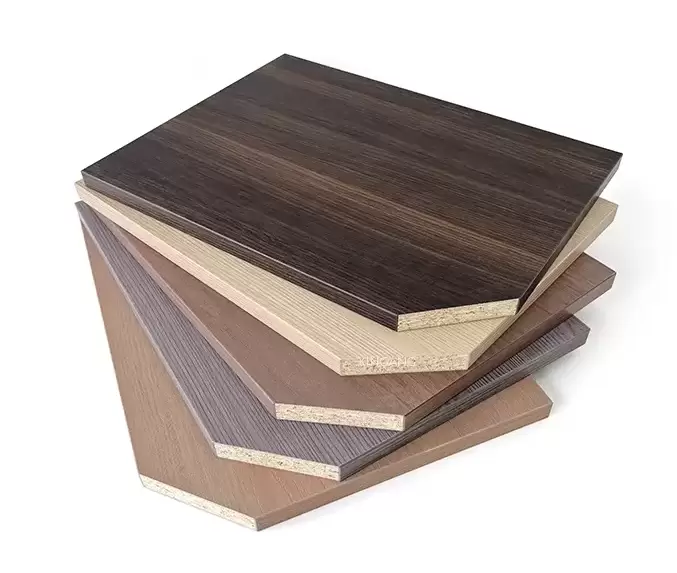
However, not all PET Chipboard products deliver the same level of quality. Two panels may appear nearly identical on the surface but perform very differently after months or years of use. Problems such as surface delamination, edge chipping, warping, poor screw holding, or inconsistent color often originate during manufacturing rather than during installation.
Understanding how PET Chipboard is produced—and which manufacturing factors influence its performance—helps furniture manufacturers, distributors, and project developers select materials that offer consistent quality throughout the product lifecycle.
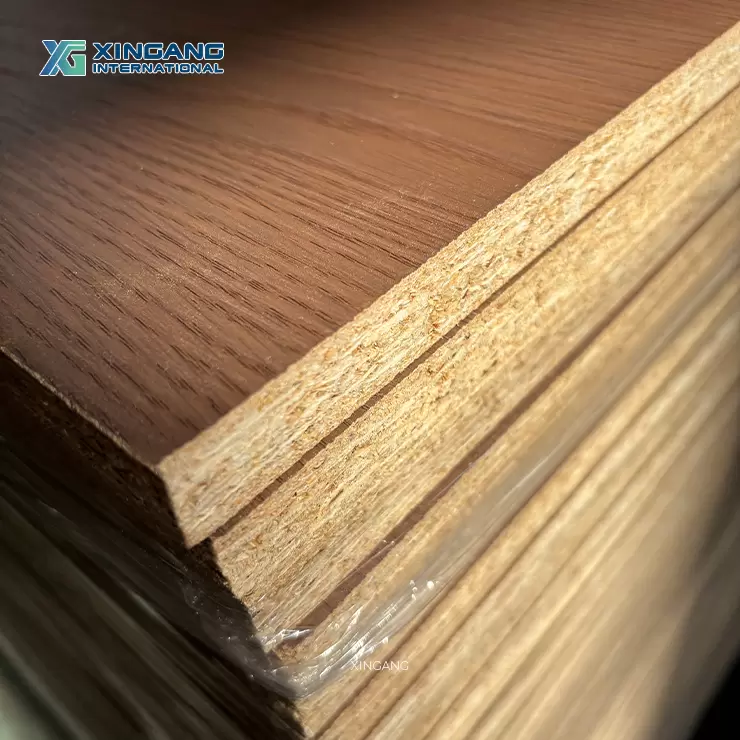
Every PET Chipboard begins with the particleboard core. Although the PET decorative film receives most of the attention, the substrate determines much of the panel's structural performance.
Wood particles should have consistent size distribution and controlled moisture content before pressing. Oversized particles can reduce internal bonding strength, while excessive fine particles may increase resin consumption and affect density distribution.
Uniform particle grading also improves dimensional stability, reducing the risk of localized weak points that may lead to edge damage during machining.
In addition to wood quality, moisture control is equally important. Excess moisture can interfere with adhesive curing and create internal stress after hot pressing, increasing the likelihood of deformation during long-term use.
Modern manufacturing facilities continuously monitor these parameters to maintain stable production quality across large batches.
Density is one of the most important technical indicators for PET Chipboard.
If density is too low, the panel may exhibit poor screw holding strength, reduced bending resistance, and inadequate internal bonding.
Excessively high density, however, increases panel weight, machining resistance, and production cost without necessarily improving practical performance.
A well-balanced density profile provides several advantages:
Strong mechanical strength for furniture assembly.
Reliable screw retention for hinges, drawer slides, and connectors.
Stable dimensional accuracy during CNC machining.
Improved resistance to transportation damage.
More importantly, density should remain consistent across the entire board rather than varying between the surface and core.
Advanced production lines use automated pressing systems to ensure even density distribution throughout each panel, resulting in greater consistency during downstream processing.
The PET decorative layer is far more than an aesthetic finish. It serves as the primary protective barrier against everyday wear.
Achieving reliable lamination requires precise control of several manufacturing parameters.
Pressing temperature must be carefully optimized to ensure complete bonding without damaging the PET film.
Pressure must remain uniform across the entire board to eliminate localized bonding defects.
Lamination speed also affects adhesive curing and overall production stability.
When these parameters are properly controlled, the finished PET Chipboard offers excellent surface performance, including:
High scratch resistance for daily furniture use.
Smooth and uniform texture.
Excellent color consistency between production batches.
Strong adhesion that minimizes the risk of delamination over years of service.
For premium furniture manufacturers, these characteristics contribute directly to product quality and brand reputation.
Environmental regulations continue to influence the global wood panel industry.
Many countries have introduced increasingly strict requirements regarding formaldehyde emissions and volatile organic compounds (VOCs), encouraging manufacturers to adopt cleaner production technologies.
Traditional adhesive systems may still contain chemical components that contribute to indoor emissions.
To address these challenges, Shandong Xingang Group has developed proprietary biomimetic adhesive technology featuring:
This innovative adhesive has already been successfully applied to decorative panels, ultra-thin fiberboards, and marine plywood, demonstrating both environmental performance and industrial scalability.
When integrated into PET Chipboard production, this technology allows manufacturers to improve indoor air quality while maintaining strong bonding performance and long-term panel stability.
For furniture brands focused on green building certifications and healthier indoor environments, environmentally responsible adhesive systems have become an increasingly valuable competitive advantage.
Modern furniture production depends heavily on automated processing equipment.
CNC machining centers, edge banding machines, drilling equipment, and robotic assembly systems all require highly consistent panel dimensions.
Even small variations in thickness or flatness can create cumulative production problems.
Precision manufacturing minimizes these risks through strict process control during:
Raw material preparation.
Hot pressing.
Board calibration.
Surface sanding.
PET lamination.
Finished product inspection.
Consistent thickness improves machining accuracy while reducing adjustment time during furniture production.
Flat panels also improve edge banding quality and simplify final assembly, helping manufacturers increase productivity while reducing material waste.
Consumers often evaluate furniture by its appearance long before considering its structural performance.
A high-quality PET Chipboard should therefore provide both visual consistency and functional durability.
Surface defects such as bubbles, wrinkles, scratches, or uneven gloss not only reduce aesthetic value but may also indicate underlying manufacturing problems.
Modern PET decorative surfaces offer several practical advantages:
Their dense structure makes routine cleaning easier.
They resist stains generated during daily household use.
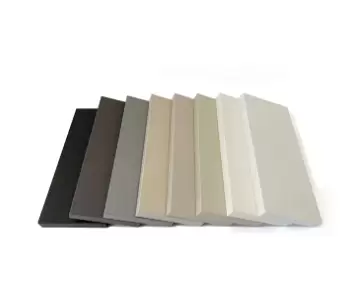
Matte finishes reduce visible fingerprints, making them especially suitable for contemporary kitchens and wardrobes.
Excellent color stability ensures consistent appearance across multiple production batches, an important consideration for large commercial projects requiring identical furniture components.
These characteristics contribute to lower maintenance requirements and improved customer satisfaction throughout the product's service life.
Manufacturing efficiency has become just as important as material performance.
Furniture producers increasingly seek panel materials compatible with automated production while minimizing secondary finishing operations.
PET Chipboard satisfies these requirements through its factory-finished decorative surface.
Unlike painted panels, PET-laminated boards eliminate multiple coating and drying processes, reducing production time and lowering labor requirements.
The material also performs well during:
Precision cutting.
Edge banding.
Hole drilling.
Hardware installation.
Panel assembly.
Stable machining performance reduces production interruptions and helps manufacturers achieve more consistent product quality.
For high-volume furniture production, even small improvements in process efficiency can generate substantial long-term cost savings.
Material specifications alone do not guarantee product quality.
The manufacturer's engineering capability, production equipment, quality management system, and environmental technology all influence the final performance of PET Chipboard.
An experienced manufacturer should offer:
Consistent raw material sourcing.
Advanced pressing and lamination equipment.
Comprehensive quality inspection.
Stable production capacity.
Technical support throughout product development.
Shandong Xingang Group has focused on environmentally friendly wood-based materials for many years, continuously investing in sustainable manufacturing technologies and product innovation.
Its vertically integrated production capabilities, combined with proprietary biomimetic adhesive technology, enable the company to provide PET Chipboard solutions that balance environmental responsibility with industrial performance.
This commitment helps customers develop furniture products that meet today's increasingly demanding quality and sustainability standards.
High-quality PET Chipboard is the result of carefully controlled manufacturing rather than a single material innovation.
From raw material selection and density control to PET lamination technology and environmentally friendly adhesive systems, every production stage influences the finished panel's strength, appearance, durability, and environmental performance.
As furniture manufacturers continue pursuing higher production efficiency, longer product life, and greener materials, PET Chipboard offers a comprehensive solution that supports these evolving requirements.
By partnering with manufacturers that combine advanced production technology with sustainable material innovation—such as Shandong Xingang Group—companies can improve product consistency, enhance environmental performance, and build furniture designed for long-term success in global markets.