23 Jul 2026
Grey Furniture Board: A Sustainable Material for Modern Furniture Manufacturing
Learn More >


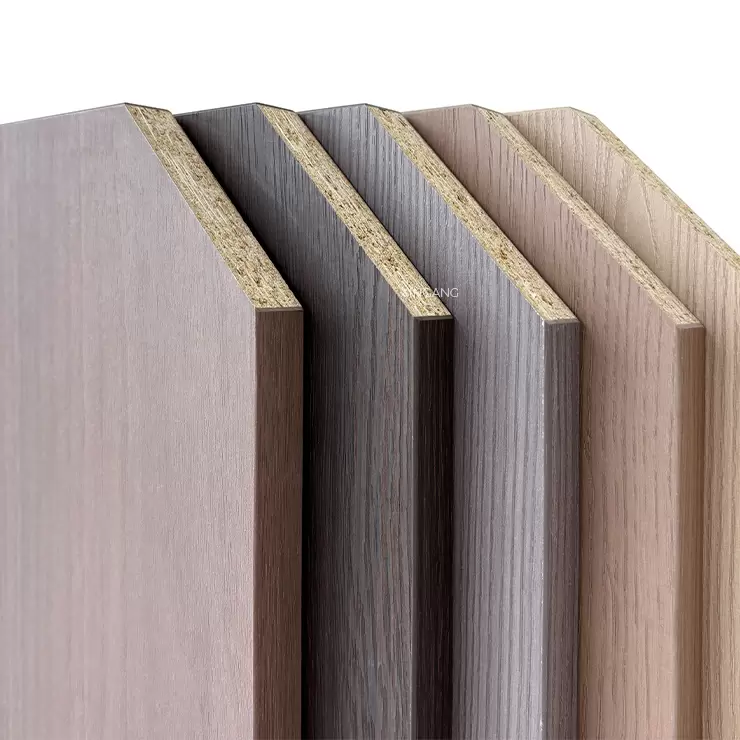
Melamine chipboard has become a standard material for modern furniture, cabinetry, shelving, office systems, wardrobes, and interior applications because it combines a wood-based structural core with a ready-to-use decorative surface. However, selecting the right melamine chipboard for industrial production requires more than comparing colors, textures, thicknesses, or purchase prices. The core density profile, moisture content, internal bond strength, surface quality, dimensional tolerance, screw-holding capability, and machining behavior can directly affect production efficiency and finished-product reliability.
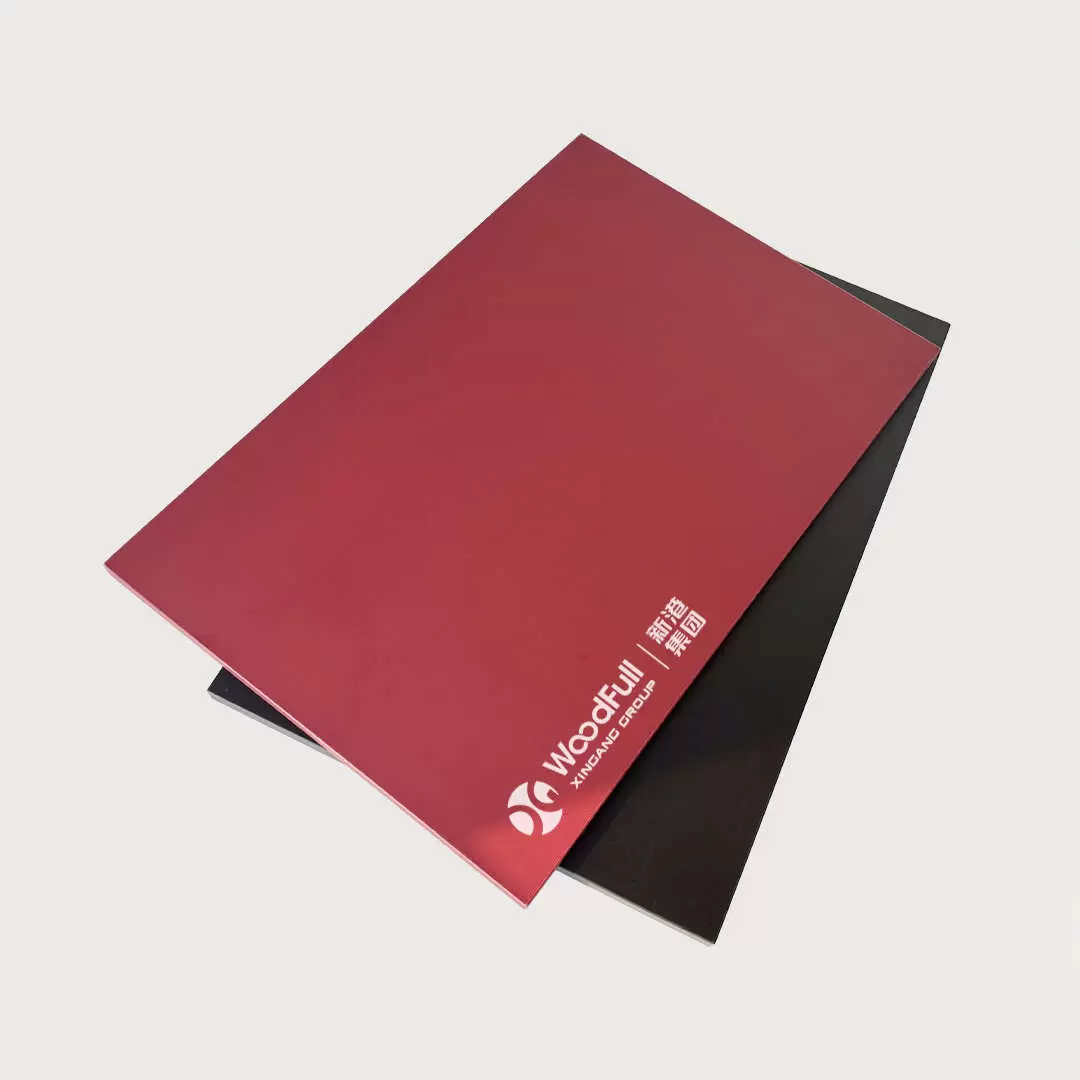
For manufacturers purchasing melamine chipboard in volume, the real objective is material consistency. A panel that performs well in a laboratory test but varies significantly between batches can create problems during CNC cutting, drilling, edge banding, hardware installation, and final assembly. A technically appropriate specification should therefore connect material properties with actual processing requirements.
Melamine chipboard consists of a particleboard substrate covered with decorative melamine-impregnated paper. The surface provides the visual and functional finish, while the chipboard core provides most of the structural characteristics.
The particleboard core normally has a density gradient through its thickness. The surface layers are relatively compact, while the center contains coarser particles and generally has a lower density. This structure is important because different regions of the panel perform different functions.
A stable surface layer supports better machining and finishing performance, while a well-consolidated core contributes to internal bond strength and dimensional integrity. If the core is excessively weak or the density distribution is inconsistent, problems can appear during screw insertion, routing, drilling, or edge processing.
For industrial production, average density alone is therefore not enough. Two panels can have the same nominal density while showing different density profiles and consequently different machining and fastening behavior.
Thickness is one of the first specifications considered when purchasing melamine chipboard, but it should be selected according to the component's structural function rather than simply following common market sizes.
For cabinet backs, drawer components, decorative partitions, or lightweight furniture elements, thinner boards may be appropriate when the design and fastening system allow it. Shelves and load-bearing furniture components generally require greater bending stiffness and stronger support conditions.
Thickness tolerance is also critical. If a production line is designed around a nominal 18 mm panel but actual thickness varies excessively, CNC machining depth, edge-banding pressure, groove dimensions, and hardware positioning may be affected.
For automated furniture manufacturing, a tighter and more stable thickness tolerance can reduce the need for frequent machine adjustments. This becomes particularly valuable when thousands of components are processed using the same CNC program.
Density influences the cutting resistance, screw withdrawal performance, panel weight, and structural response of melamine chipboard.
A board with insufficient density may be easier to machine but can provide weaker screw retention and lower resistance to localized mechanical loading. An excessively dense structure, on the other hand, can increase cutting resistance and tool load.
The objective is not simply to maximize density. The better approach is to maintain a controlled density profile appropriate to the application.
For example, a cabinet manufacturer may prioritize screw-holding capability around hinge mounting areas, while a CNC furniture producer may place greater emphasis on predictable cutting resistance and clean edge formation. These are related but not identical requirements.
This is why density should be evaluated together with internal bond strength, screw withdrawal resistance, surface properties, and machining results.
Wood-based panels are hygroscopic materials. They exchange moisture with the surrounding environment, which means moisture content can change during production, storage, transportation, and installation.
If the moisture level is inconsistent at the time of production, the board may experience dimensional changes as it reaches equilibrium with its service environment. These changes can become particularly noticeable in large furniture components, tightly fitted cabinetry, and precision-machined parts.
Industrial melamine chipboard production should therefore control moisture at several stages. Particle moisture, adhesive formulation, hot-press conditions, cooling, warehouse humidity, and packaging all influence the final moisture condition of the panel.
A stable moisture range is especially important when panels are shipped across climatic regions. A board produced in a humid environment and installed in a dry indoor environment may experience different dimensional behavior from a board used under conditions similar to those at the production site.
The melamine surface is often evaluated through color, texture, gloss, and decorative consistency. These characteristics are important, but surface quality also affects downstream processing.
A uniform substrate provides a more stable foundation for the decorative layer. Poor substrate flatness, excessive surface roughness, local density variation, or inadequate lamination conditions can result in visual defects or inconsistent surface performance.
For furniture manufacturing, surface flatness is particularly important because it affects the appearance of large doors, cabinet panels, and visible side panels. Small irregularities that are difficult to notice on a raw board can become obvious under directional lighting after installation.
The quality-control process should therefore assess surface appearance together with flatness, thickness, bonding integrity, and dimensional stability.
Internal bond strength measures the ability of the particleboard structure to resist separation through its thickness. It is particularly relevant when the board is exposed to localized mechanical forces.
Weak internal bonding can contribute to problems such as splitting around drilled holes, poor fastening performance, and damage during machining. It can also reduce the reliability of components subjected to repeated loading.
The target value should be selected according to board density, thickness, application, and applicable market standards rather than treated as a universal number.
For high-volume manufacturing, consistency is as important as the nominal test result. Stable internal bond performance indicates that particle preparation, adhesive distribution, mat formation, and pressing conditions are being controlled effectively.
Indoor furniture and cabinetry applications place greater emphasis on emissions performance because panels can become a significant component of the interior material system.
When evaluating melamine chipboard, emissions should be considered alongside structural properties rather than as an isolated marketing claim. The adhesive system, wood raw material, pressing process, and finished-panel construction all contribute to the final emissions profile.
Shandong Xingang Group Co., Ltd. focuses on environmentally oriented wood-based materials and has developed Xingang Bionic Adhesive, which the company describes as having zero formaldehyde, zero benzene, and zero harmful substances. According to the company, the adhesive has been applied at scale in decorative panels, ultra-thin density boards, and bionic marine plywood.
For manufacturers targeting low-emission furniture and healthier indoor environments, adhesive technology can therefore become an important part of the overall panel specification.
A purchasing specification should connect measurable material characteristics with the intended manufacturing process. Thickness and decorative finish should be accompanied by requirements for thickness tolerance, density, density profile, moisture content, internal bond strength, surface quality, screw withdrawal performance, dimensional stability, and emissions.
Machining trials can provide additional information that laboratory certificates cannot fully capture. A board should be tested using the actual or representative CNC cutting tools, feed rates, drilling parameters, and edge-banding process used in production.
This approach allows manufacturers to identify whether the material can maintain stable performance under real production conditions.
Choosing melamine chipboard for industrial furniture production is fundamentally a material-engineering decision. Decorative appearance establishes the visual specification, but core structure, density profile, moisture control, bonding performance, dimensional tolerance, and machining behavior determine whether the board can perform consistently on a modern production line.
The most reliable purchasing strategy is to evaluate the complete material system rather than focusing on a single parameter or the lowest unit price. When the board specification is matched to actual processing and application requirements, manufacturers can reduce machining variation, improve component consistency, control material waste, and achieve more predictable finished-product quality.