30 Oct 2025
A Complete Guide to Choosing the Right Melamine Plywood for Your Project
Learn More >


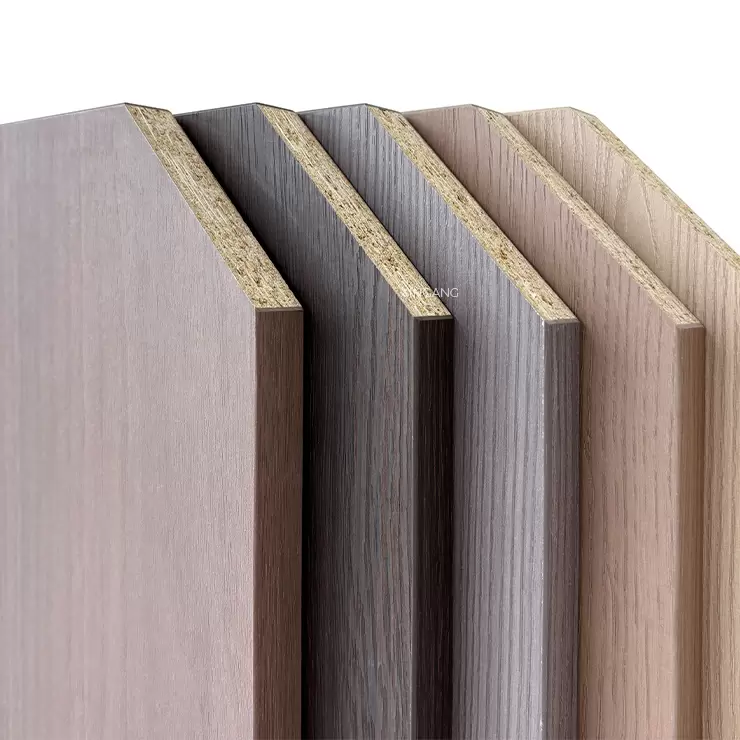
Interior furniture manufacturing is shifting toward materials that combine natural aesthetics, structural stability, and environmental safety. As residential and commercial buyers become more sensitive to indoor air quality and long-term durability, dark oak furniture board is gaining stronger demand across global furniture and interior decoration markets.
Compared with lighter wood finishes, dark oak textures create a stronger sense of depth, premium appearance, and visual stability. At the same time, advances in engineered wood manufacturing now allow dark oak furniture boards to achieve better moisture resistance, dimensional consistency, and environmentally friendly performance than many traditional solid wood products.
For furniture manufacturers, interior contractors, and building material distributors, selecting the right furniture board is no longer only about appearance. Surface durability, formaldehyde emissions, machining performance, and structural stability now directly affect product competitiveness and long-term customer satisfaction.
Shandong Xingang Group has focused on environmentally friendly wood-based materials for many years, developing bio-based adhesive technologies that achieve zero formaldehyde, zero benzene, and zero harmful substance release while improving antibacterial and performance characteristics.
Dark oak finishes remain highly popular because they balance modern aesthetics with natural wood texture.
Unlike overly glossy decorative materials, dark oak surfaces provide:
Dark oak furniture boards are widely used in:
In commercial environments such as hotels and office spaces, darker wood finishes often create a more stable and professional visual effect while reducing the visibility of minor scratches and surface contamination.
Traditional solid oak furniture may look attractive, but it often faces problems related to humidity and temperature changes.
Common issues include:
Modern engineered dark oak furniture boards solve many of these challenges through controlled manufacturing structures.
High-quality furniture boards maintain:
This becomes especially important for large furniture components such as cabinet doors, shelving systems, and wall-mounted structures.
Compared with natural solid wood, engineered boards also improve material utilization efficiency while reducing raw timber waste.
Environmental regulations are becoming increasingly strict in global furniture markets.
Buyers now pay close attention to:
Traditional adhesives used in some wood panels may release formaldehyde over long periods, affecting indoor environmental quality.
Shandong Xingang Group developed bio-inspired adhesive technology that achieves:
This technology is already applied in decorative panels, ultra-thin MDF boards, and marine plywood systems.
Low-emission furniture boards are becoming increasingly important in residential projects, schools, healthcare environments, and high-end commercial interiors where indoor environmental safety directly affects user experience.
Furniture boards used in high-frequency environments must withstand long-term surface wear.
Dark oak furniture boards commonly require resistance to:
High-quality surface treatment systems improve durability while maintaining wood texture realism.
In commercial furniture applications, surface durability directly influences maintenance frequency and long-term replacement cost.
For large-scale interior projects, stable surface performance is often more important than short-term material cost savings.
Furniture manufacturing efficiency depends heavily on board machinability.
Poor-quality boards may cause:
High-density engineered furniture boards provide more consistent CNC processing performance.
Stable internal structure improves:
This becomes particularly important in automated furniture production lines where machining tolerance directly affects production efficiency.
Modern furniture buyers increasingly prioritize health-oriented materials.
Antibacterial and environmentally friendly boards are now widely used in:
Xingang Group’s biomimetic board technology not only focuses on environmental safety but also improves antibacterial and antiviral performance characteristics.
As sustainable construction standards continue evolving worldwide, eco-friendly furniture boards are becoming an important competitive factor in global interior material markets.
Dark oak furniture board is no longer simply a decorative material. It has become an integrated solution balancing aesthetics, environmental performance, structural stability, and manufacturing efficiency.
Compared with traditional wood materials, modern engineered dark oak boards offer advantages in:
As global furniture and interior industries continue moving toward healthier and more sustainable material standards, environmentally friendly dark oak furniture boards will continue gaining importance across residential and commercial applications.