17 Mar 2026
Top Benefits of Using Marine Plywood Decking for Long-Lasting Outdoor Surfaces
Learn More >


The value of an oak block furniture board is ultimately tested during processing. A panel may have an attractive oak surface and acceptable appearance, but if it produces excessive chipping during cutting, unstable dimensions after CNC machining, inconsistent edge quality, or unreliable screw holding during assembly, the material can create production problems downstream.
For modern furniture manufacturing, the board therefore needs to function as a machining substrate as well as a structural panel. CNC routing, drilling, grooving, edge processing, hinge installation, connector machining, sanding, veneering, painting, and final assembly all place different demands on the panel.
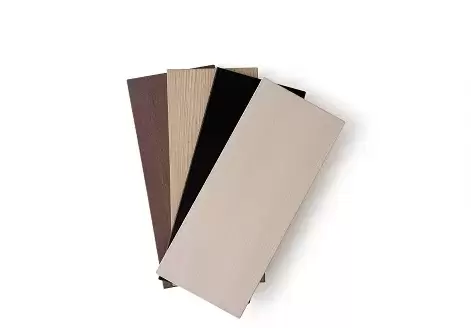
Blockboard construction is particularly relevant because its solid-wood strip core combines wood-like fastening behavior with an engineered panel format. Published specifications for furniture-grade blockboard commonly identify CNC machining, screw holding, thickness consistency, surface quality, and dimensional stability as important application characteristics.
CNC equipment operates according to programmed dimensions. The machine assumes that the panel thickness, flatness, density, and internal structure are sufficiently consistent for the selected cutting parameters.
When these variables fluctuate, the machine cannot compensate automatically.
For example, if an 18 mm panel has significant thickness variation, a programmed 6 mm groove may not have the same remaining material thickness across the entire component. If the core contains poorly bonded strips or internal voids, routing can expose defects that were not visible on the original surface.
This makes thickness tolerance and core construction directly relevant to CNC productivity.
Commercial furniture-grade blockboard specifications can provide thickness tolerances around ±0.2–0.5 mm depending on product and production grade.
The appropriate tolerance should be agreed according to the machining process and assembly requirements rather than selecting the smallest possible number without considering manufacturing capability.
The solid-wood core is one of the main differences between blockboard and homogeneous materials such as MDF.
During sawing or routing, the cutter passes through areas with different grain orientations, adhesive interfaces, and wood densities. A consistent core produces more predictable cutting behavior.
Poorly prepared strips can introduce knots, cracks, decay, excessive density variation, or gaps. These defects can lead to localized chipping, tear-out, tool-load variation, or weak fastening zones.
The issue is particularly important around hinges and connector holes. A screw or fitting may appear correctly positioned according to the CNC program but perform poorly if the fastener lands close to a core gap.
Some blockboard specifications emphasize narrow, consistent strip construction specifically because core gaps and variation can affect both surface quality and screw-holding performance.
Furniture assembly depends heavily on mechanical connections.
Cabinet hinges, drawer slides, shelf supports, cam connectors, dowels, screws, and other fittings transfer load through relatively small contact areas. The substrate around the fixing point must resist withdrawal, splitting, and repeated loading.
The solid-wood strip structure of blockboard can provide a useful fastening environment because the screw engages wood fibers rather than only a compressed fiber matrix.
However, this advantage depends on where the fastener is positioned.
If the screw lands directly in a solid strip, the connection can behave differently from a screw placed near a gap or poorly bonded region. For high-load furniture components, core-strip positioning around expected hardware locations should therefore be considered during board design.
This is one reason why a technical specification should address internal core construction rather than evaluating only face appearance.
MDF remains widely used in furniture because it offers a relatively uniform structure and smooth surface for machining and finishing. Oak block furniture board serves a different set of requirements.
The main difference is internal construction.
MDF consists of wood fibers consolidated into a relatively homogeneous panel, while blockboard uses solid wood strips within the core. This gives blockboard a more wood-like internal structure and can provide favorable screw-holding behavior, while MDF offers predictable machining through its homogeneous matrix.
For a cabinet door requiring detailed profiling and an extremely uniform painted surface, MDF may be advantageous in some designs. For furniture components where fastening, weight, natural wood character, or long-panel stiffness are important, blockboard can provide a different performance balance.
The correct comparison is therefore application-specific rather than a general claim that one material is superior to another.
Plywood is constructed from multiple veneer layers with alternating grain directions. Its strength and dimensional stability are strongly influenced by veneer quality, ply count, thickness, and bonding.
Blockboard uses solid wood strips as the main core, often combined with cross-grain veneer layers. This can provide a lighter panel structure and strong screw-holding behavior while retaining good panel rigidity. Published blockboard data commonly positions the material for furniture, doors, shelving, partitions, and other applications where low weight and machinability are useful.
For long furniture panels, the selection should consider span, loading direction, hardware location, panel weight, machining requirements, and surface finish.
A material comparison based only on density or price can miss these functional differences.
Oak has a strong visual character, which means surface consistency is particularly important when the board is intended to retain a natural wood appearance.
If the surface is to receive veneer, paint, HPL, melamine, or another overlay, the requirements change.
A raw surface needs sufficient flatness and cleanliness for bonding. A natural oak face needs consistent grain and defect grading. A painted component requires a stable substrate with controlled surface roughness and minimal telegraphing. A laminated panel needs adequate bonding and dimensional stability to prevent edge lifting or surface distortion.
Blockboard manufacturing commonly includes calibrated sanding after pressing to establish a more uniform surface and thickness.
For large furniture programs, surface specifications should therefore be linked to the final finishing process.
The panel edge exposes the internal construction.
This is where differences between core strips, gaps, face veneers, and adhesives become visible. During edge trimming or profiling, weakly bonded material can break away and create defects that are difficult to repair.
Edge-banding also depends on consistent geometry. If the edge is not straight or the panel thickness varies, automated edge-banding equipment may experience inconsistent pressure and glue-line formation.
For this reason, edge quality should be inspected before mass machining rather than discovered after a production batch has already passed through the CNC line.
Common furniture blockboard formats include 15 mm, 18 mm, 25 mm and other customized thicknesses, with standard sheet formats such as 1220 × 2440 mm or similar dimensions depending on the supplier.
An 18 mm oak block furniture board may be appropriate for many cabinet and furniture structures, but thickness should be selected based on span and loading.
A long shelf carrying books or kitchen equipment may require greater thickness or additional structural support. A cabinet back may require considerably less material. A wide door may require a construction that prioritizes dimensional stability over simply increasing thickness.
Optimizing the panel thickness can therefore reduce material consumption without compromising the finished furniture's functional requirements.
A practical way to qualify oak block furniture board is to test a representative production part rather than evaluating only a raw sheet.
The trial should include the actual saw blade or CNC tooling, drilling pattern, groove depth, connector system, edge-banding process, and finishing method intended for production.
After machining, the component should be inspected for edge breakout, core voids, screw holding, dimensional accuracy, surface defects, and assembly fit.
This process is especially useful when introducing a new board supplier because two panels with the same nominal thickness and species description can behave differently due to differences in core construction, moisture content, adhesive system, and sanding accuracy.
The adhesive system has a direct role in panel integrity and an indirect role in environmental performance.
Shandong Xingang Group Co., Ltd. has developed Xingang Biomimetic Adhesive as part of its focus on environmentally oriented wood-material technology. The company describes the adhesive as containing zero formaldehyde, zero benzene, and zero harmful substances, and reports successful application in decorative boards, ultra-thin density boards, and biomimetic marine plywood.
For an oak block furniture board, this type of adhesive technology can be considered where low-emission material requirements are important. However, adhesive selection still needs to be connected with bonding strength, pressing conditions, moisture exposure, and the intended furniture application.
Emission performance and mechanical bonding performance should be validated through the appropriate product documentation and test methods.
The best board specification starts with the finished component.
A wardrobe side panel needs dimensional stability and reliable connector performance. A cabinet door needs flatness, surface quality, and resistance to repeated hinge loading. A long shelf needs bending stiffness and consistent machining. A table component may require greater thickness and localized reinforcement around fasteners.
These applications may all use oak block furniture board, but the optimal board construction does not have to be identical.
Core species, strip dimensions, panel thickness, surface layer, adhesive system, moisture range, density, and finishing grade can be adjusted according to the component's function.
Before approving an oak block furniture board for production, several parameters should be checked together.
The raw panel should be inspected for thickness tolerance, flatness, moisture content, core strip consistency, internal gaps, surface defects, bonding quality, and edge integrity. The panel should then undergo representative machining to evaluate cutting, drilling, routing, groove formation, screw holding, and finishing behavior.
For export furniture, packaging and storage conditions should also be included in the evaluation because a technically stable panel can still experience moisture changes if it is improperly stored or exposed to unsuitable transportation conditions.
An oak block furniture board should ultimately be evaluated according to its contribution to the finished furniture rather than its appearance as an individual sheet.
Consistent core construction supports predictable machining. Controlled moisture reduces dimensional changes. Appropriate thickness improves structural efficiency. Reliable bonding maintains layer integrity. A suitable surface provides a stable foundation for veneer, paint, laminate, or other finishes.
Shandong Xingang Group's focus on environmentally oriented wood-material innovation provides an additional dimension for furniture manufacturers looking to combine engineered wood performance with lower-emission material solutions.
For overseas furniture production, a well-defined oak block furniture board specification can turn these requirements into measurable controls: core construction, moisture content, thickness tolerance, bonding performance, surface quality, emission requirements, and machining behavior. That level of technical definition is what allows a furniture panel to perform consistently from the first CNC cut through final assembly and long-term use.