02 Jul 2026
Wood Veneer Furniture Board: How Material Structure Determines Strength, Stability, and Service Life
Learn More >


Sapele Plywood is an option for furniture manufacturers seeking a distinctive hardwood appearance combined with the dimensional benefits of an engineered panel. Its reddish-brown face veneer and characteristic grain can suit cabinet doors, wardrobes, shelving, desks, decorative wall panels, and custom furniture. However, the right product depends on the relationship between surface quality, panel construction, mechanical requirements, machining yield, and total production cost.
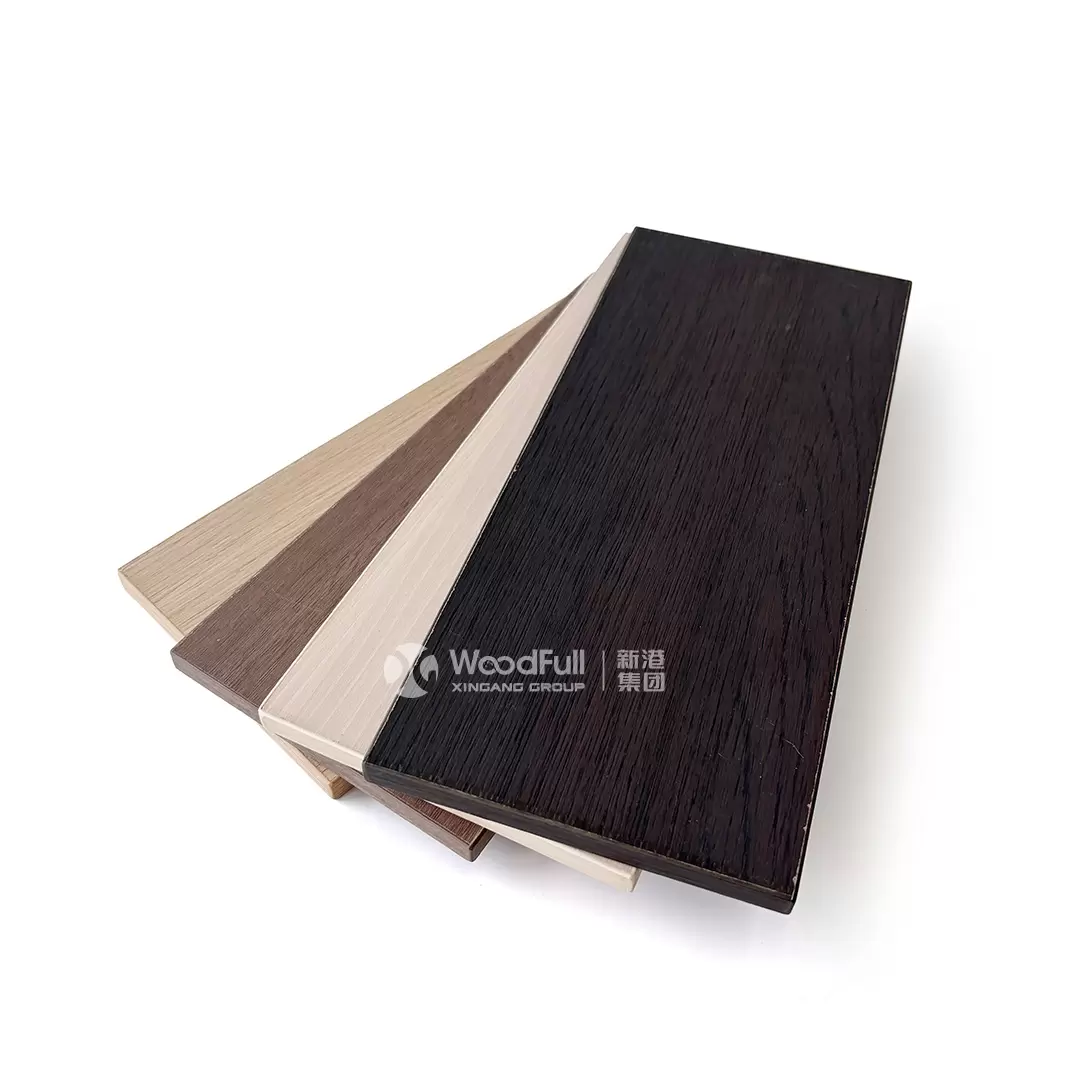
A furniture project may use the same plywood in several different ways. A visible cabinet door needs a consistent decorative face, while an internal shelf may prioritize stiffness and load capacity. A CNC-machined component may require predictable thickness and a uniform core, whereas a veneered decorative panel may be selected primarily for appearance. Applying one specification to every component can increase cost without improving the finished product.
For a manufacturer, the practical goal is to define which properties matter most at each stage of production. This makes it easier to compare Sapele Plywood products on a like-for-like basis and determine whether a premium face grade, a different thickness, or a more controlled core construction will deliver a measurable benefit.
The face veneer is often the main reason to choose Sapele Plywood. Sapele is valued for its warm color and distinctive grain, which can contribute to a premium appearance without requiring every part of a furniture assembly to be made from solid hardwood. An engineered panel also offers a format that can be cut into repeatable components for production.
Nevertheless, natural veneer is not a perfectly uniform decorative film. Color, grain figure, and texture vary according to the timber source, cutting method, and individual veneer leaf. Some panels may exhibit relatively straight grain, while others show more pronounced patterns. These differences are part of the material’s character, but they need to be managed when the design requires visual consistency.
For cabinet fronts or furniture installed in a coordinated group, veneer selection should be discussed before production. If matching is important, the specification should clarify whether panels must be matched within each unit, across a complete furniture set, or across multiple delivery batches. These requirements can affect veneer selection, yield, and price.
The intended finish also changes the importance of face quality. A clear coating preserves much of the natural appearance and may emphasize color differences or repaired areas. A dark stain can alter the visual effect but may also reveal uneven absorption. An opaque finish reduces the importance of grain matching, although surface defects and sanding quality still matter.
A representative finished sample is therefore more informative than a raw veneer photograph. It allows the surface to be assessed under the actual lighting and coating conditions expected in the final application.
Thickness affects panel stiffness, edge appearance, hardware compatibility, and the amount of material consumed per component. Common nominal plywood thicknesses include 12, 15, and 18 mm for various furniture applications, with thinner or thicker panels used where the design requires them. These are common market examples, not universal requirements for Sapele Plywood.
An 18 mm panel may be suitable for many cabinet carcasses and shelves, but its suitability depends on span, loading, support arrangement, and connection design. A long shelf carrying heavy objects may deflect even if the panel meets its nominal thickness specification. The solution could involve increasing thickness, reducing the unsupported span, adding a support, or selecting a different structural design.
Core construction influences how the panel behaves during machining and use. Veneer layers need to be bonded consistently, and internal voids or poorly consolidated areas can become a problem when cutting grooves, drilling holes, or creating exposed edges. A uniform core helps produce cleaner machining results and more predictable fastening behavior.
Thickness tolerance is particularly important in repeatable furniture production. If panel thickness varies beyond the acceptable range, CNC settings, edge banding, connector installation, and groove depth may require adjustment. These small variations can accumulate across an assembly, creating gaps or alignment issues. The agreed tolerance should reflect the actual equipment and assembly method rather than being selected solely because it appears stricter on paper.
Flatness should also be verified when panels are intended for large doors, broad shelves, or visible surfaces. A warped panel can be difficult to clamp and may remain distorted after installation if the assembly cannot restrain it properly. Storage, moisture conditions, core construction, and manufacturing consistency all contribute to the result.
Furniture panels experience different loads depending on their function. Shelves carry distributed or localized loads; cabinet sides transfer loads through connectors and fasteners; table components may experience bending and repeated movement. The plywood specification should reflect these load paths instead of assuming that all furniture parts need the same mechanical properties.
For shelves, span and thickness are central factors affecting deflection. For cabinet joints, screw withdrawal resistance, edge distances, pilot holes, and connector design influence joint integrity. For moving furniture or products assembled and disassembled repeatedly, the durability of fastening points may be more important than the panel’s general strength.
Plywood construction can provide useful dimensional stability because adjacent veneer layers are arranged with different grain directions. However, performance varies with core material, veneer quality, adhesive integrity, and manufacturing controls. A product description that simply states “strong plywood” does not provide enough information to predict how the panel will perform in a specific furniture assembly.
Where the component carries a critical load, use appropriate engineering calculations or physical testing based on the panel construction and expected service conditions. For routine commercial furniture, a practical trial using the actual fasteners, edge distances, and assembly process can identify weaknesses before full-scale production.
Production efficiency depends heavily on how consistently Sapele Plywood can be processed. Cutting, drilling, routing, sanding, and edge finishing can generate substantial waste when panels have uneven thickness, poor core integrity, or inconsistent face quality.
For CNC machining, the program should be validated using the actual panel specification. Tool sharpness, feed rate, cutting direction, workpiece support, and extraction conditions influence edge quality. If veneer chipping occurs at the entry or exit of a cut, adjustments to tooling, cutting strategy, or panel support may be required. Internal voids can also become visible when routing channels or producing narrow components, so edge and core quality should be evaluated during sample processing.
Sanding requires particular care because the face veneer may be relatively thin. Excessive material removal can expose the underlying layer or create an uneven surface. A controlled sanding process should be matched to the veneer condition and coating system, with a test piece used to establish suitable settings.
Edge banding and lipping are often required when the plywood core will remain visible. The edge preparation must be compatible with the chosen adhesive and finishing method. Poorly prepared edges can lead to weak bonding, visible gaps, or inconsistent appearance. For exposed-edge designs, the core layers should be reviewed as part of the aesthetic specification rather than treated as a secondary detail.
Machining yield should be considered during material selection. A slightly more expensive panel that produces fewer rejected components may deliver a lower effective cost per usable part. Conversely, paying for a premium decorative face on components that will be concealed may not provide meaningful value.
The adhesive system affects the bond between veneer layers and the suitability of the plywood for its intended environment. A panel used in dry interior furniture may have different bonding requirements from one exposed to sustained humidity or more demanding conditions. The correct specification should identify the required bonding classification and relevant standard rather than relying on general descriptions such as “moisture resistant.”
Bond durability depends on both adhesive formulation and process control. Veneer moisture, adhesive application, assembly time, pressing conditions, and curing all influence the finished bond. Poor bonding can lead to delamination during machining or service, even when the panel initially appears acceptable.
Indoor environmental requirements are a separate consideration. Formaldehyde emissions, other volatile substances, and applicable regulatory requirements should be evaluated according to the destination market and the intended use. If a project requires low-emission plywood, request product-specific reports that identify the tested construction, method, and relevant limit. A general statement about a manufacturer’s adhesive technology is not a substitute for documentation covering the exact panel being purchased.
Shandong Xingang Group Co., Ltd. describes its bionic adhesive technology as free from formaldehyde, benzene, and harmful substances and has incorporated the technology into several engineered wood products. For a specific Sapele Plywood order, buyers should confirm whether the relevant adhesive technology is used in that product and obtain the supporting technical and emissions documentation before making a compliance claim.
A successful sample is only useful if bulk production can reproduce its characteristics. Differences in veneer color, thickness, flatness, core construction, and surface preparation can affect the appearance and assembly of an entire furniture batch. For large projects, variation may become more noticeable when multiple panels are installed side by side.
The purchase specification should establish acceptable face quality, dimensions, thickness tolerance, core requirements, bonding performance, and any relevant moisture or emissions criteria. It should also define how appearance will be evaluated, including whether natural color variation is acceptable and what reference sample will be used.
Incoming inspection can identify problems before cutting begins. For example, checking panel dimensions and surface defects at receipt can prevent nonconforming material from entering the production line. Where the project is sensitive to color matching, panels should be reviewed under consistent lighting and, where practical, grouped according to appearance before components are cut.
If a supplier proposes changing the veneer source, core construction, adhesive, or manufacturing process, the change should be reviewed before the new material is released into production. A substitution may appear minor commercially but can affect machining, finishing, or assembly behavior.
The lowest price per sheet does not necessarily produce the lowest cost per finished furniture component. A more useful comparison includes material price, usable area, cutting yield, machining time, finishing requirements, rejected parts, and the cost of rework. A panel with better dimensional consistency may reduce CNC adjustments, while a more suitable face grade may reduce the time spent sorting and matching decorative components.
The supplier quotation should state the panel dimensions, nominal thickness and tolerance, face veneer requirements, core construction, bonding classification, packaging, and any agreed testing. If a quotation omits these details, it may not be directly comparable with a more complete offer.
Delivery reliability also affects production planning. Late panels can interrupt cutting schedules and delay assembly or installation. Packaging should protect the surface from abrasion and the panel from moisture exposure during transport and storage. Clear product identification and batch documentation can simplify receiving inspection and help maintain traceability.
Sapele Plywood can provide an effective balance of decorative hardwood appearance and engineered-panel functionality for furniture manufacturing. Its value depends on selecting the right face veneer, core construction, thickness, bonding system, and machining characteristics for each component.
By evaluating panels against real production requirements, manufacturers can avoid paying for unnecessary cosmetic features while protecting the qualities that affect finished-product performance. A documented specification, representative finished sample, controlled incoming inspection, and realistic comparison of usable production yield provide a stronger basis for supplier selection than price alone.