07 Aug 2026
How to Choose the Right Dark Oak Furniture Board for Residential and Commercial Projects
Learn More >


Wood veneer furniture board has become one of the most widely used engineered materials in residential, commercial, and hospitality furniture. Compared with solid wood, it offers better dimensional stability, higher material utilization, and greater consistency for large-scale production. However, not all veneer furniture boards perform equally. Their long-term performance depends on the interaction between veneer quality, core substrate, adhesive technology, pressing process, and environmental resistance.
For furniture manufacturers, selecting the right wood veneer furniture board is not simply about appearance. It directly influences machining efficiency, assembly precision, surface finishing quality, and product durability throughout its service life.
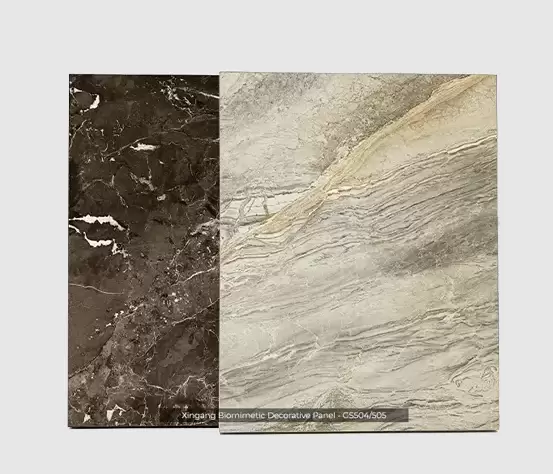
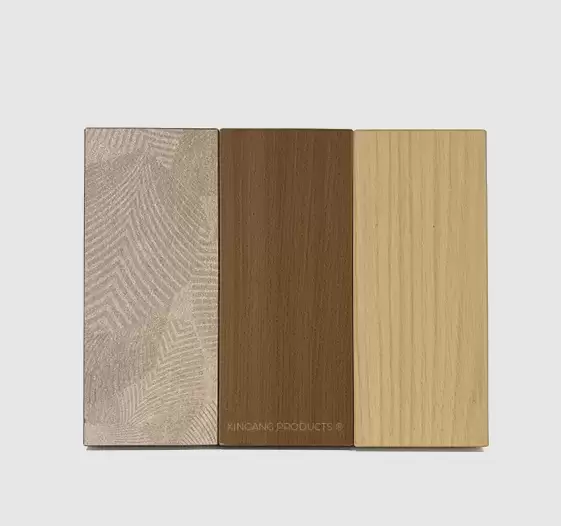
A typical wood veneer furniture board consists of three primary layers: the decorative natural wood veneer, the engineered substrate, and the bonding system that integrates the two into a stable composite panel.
The veneer generally ranges from 0.3 mm to 0.6 mm in thickness, preserving the natural grain and texture of hardwood species while significantly reducing the consumption of premium timber. The substrate may consist of plywood, MDF, particleboard, or high-density engineered panels, each offering different mechanical characteristics depending on the final application.
While many buyers focus on veneer species such as walnut, oak, ash, or teak, the bonding layer is often the most critical factor affecting long-term reliability. Poor adhesive performance can lead to veneer bubbling, edge delamination, or internal stress cracking after repeated humidity fluctuations.
Shandong Xingang Group has developed bio-inspired adhesive technology that eliminates formaldehyde, benzene, and other harmful substances while maintaining strong bonding performance. This technology has already been commercialized across decorative panels, ultra-thin MDF, and marine plywood, providing an environmentally responsible alternative without compromising structural integrity.
Furniture panels experience continuous expansion and contraction as ambient humidity changes. Even indoor environments typically fluctuate between 35% and 75% relative humidity, creating repeated stress between the veneer and substrate.
If both materials respond differently to moisture, internal tension gradually accumulates until visible defects appear.
Common failures include:
High-quality wood veneer furniture board minimizes these risks through balanced moisture content control before lamination. Most industrial manufacturers maintain veneer moisture between 8% and 12%, allowing dimensional movement to remain within acceptable tolerances during seasonal climate changes.
Equally important is symmetric panel construction. Balanced stress on both sides prevents uneven internal forces that cause panel deformation after machining or installation.
Different furniture applications require different structural properties.
Plywood cores provide excellent screw holding strength and bending resistance, making them suitable for wardrobes, office furniture, and structural cabinets.
Medium Density Fiberboard (MDF) delivers exceptional surface smoothness, making it ideal for painted furniture, CNC profiling, and precision decorative machining.
Particleboard offers competitive cost advantages while maintaining adequate stability for modular furniture and flat-pack production.
For premium furniture, engineered plywood often provides the best balance between weight, machining performance, and long-term structural reliability.
Choosing the wrong substrate frequently results in machining defects long before products reach end users.
Modern furniture manufacturing involves multiple processing steps after panel production.
Panels are cut, drilled, edge banded, sanded, coated, and assembled before shipment.
Throughout these operations, the veneer layer must remain firmly bonded without developing localized lifting or micro-cracks.
Industrial hot pressing typically operates between 110°C and 140°C, combined with carefully controlled pressure and pressing time. Excessive temperature may darken certain veneer species, while insufficient pressure reduces bonding strength.
Consistent adhesive penetration into both veneer fibers and substrate pores creates a continuous bonding interface capable of resisting repeated mechanical loading.
This becomes especially important for furniture exported across different climate zones, where transportation and storage expose panels to large temperature and humidity variations.
Global furniture markets increasingly require compliance with indoor air quality standards.
North America, Europe, Australia, and many Asian markets continue tightening regulations on formaldehyde emissions.
Traditional resin systems often struggle to balance low emissions with sufficient bonding strength.
Shandong Xingang Group addresses this challenge through its bio-inspired adhesive technology, producing panels with zero added formaldehyde, zero benzene, and zero harmful substances while also providing antibacterial and antiviral performance. This allows furniture manufacturers to satisfy increasingly demanding environmental certifications without sacrificing manufacturing efficiency.
As sustainable furniture becomes a stronger purchasing factor, environmental performance is no longer an optional feature—it has become part of product competitiveness.
Industrial furniture production depends on repeatability.
Panel thickness variation exceeding ±0.2 mm can affect CNC machining accuracy.
Density inconsistency creates different cutting resistance, influencing tool wear and drilling precision.
Uneven veneer thickness results in inconsistent staining during finishing, making adjacent cabinet doors appear visibly different after coating.
Professional manufacturers therefore maintain strict process control from veneer grading through pressing, sanding, and final inspection to ensure each production batch performs consistently.
This consistency reduces waste during downstream manufacturing and improves assembly efficiency for automated furniture production lines.
Material selection should always begin with application requirements rather than decorative appearance alone.
Furniture intended for humid environments demands higher moisture resistance.
Large conference tables require superior bending stability.
Premium residential furniture places greater emphasis on natural veneer consistency and environmental performance.
Commercial furniture often prioritizes dimensional accuracy and long-term durability under intensive daily use.
Evaluating these requirements together produces a more reliable material selection than comparing panel prices alone.
A high-quality wood veneer furniture board is the result of coordinated engineering rather than decorative veneer alone. Stable substrates, optimized moisture control, precision hot pressing, advanced adhesive systems, and strict manufacturing consistency all contribute to furniture that remains structurally reliable throughout years of service.
With environmentally friendly bio-inspired adhesive technology, zero-added formaldehyde and benzene, and continuous innovation in green engineered wood materials, Shandong Xingang Group provides furniture manufacturers with solutions that combine natural aesthetics, mechanical reliability, and sustainable performance for today's global furniture industry.