10 Jul 2026
Marine Plywood Waterproof: How Advanced Bonding Technology Improves Durability in Harsh Environments
Learn More >


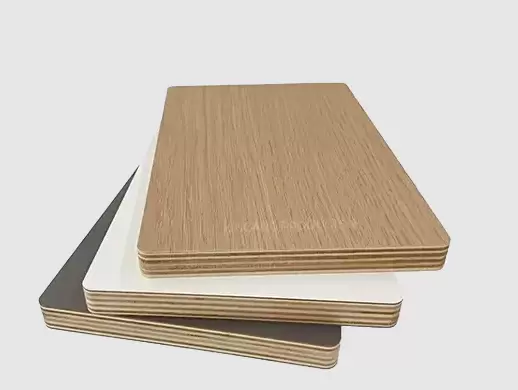
Sapele Plywood offers a practical option for interior projects that require the visual character of hardwood alongside the consistency and processing advantages of engineered panels. Its distinctive grain and warm reddish-brown tones make it suitable for decorative wall panels, furniture surfaces, cabinetry, doors, shelving, and selected commercial interior applications. As material specifications increasingly include indoor air quality, responsible resource use, and long-term durability, selecting the right Sapele Plywood involves evaluating both its physical performance and the environmental evidence supporting the finished product.
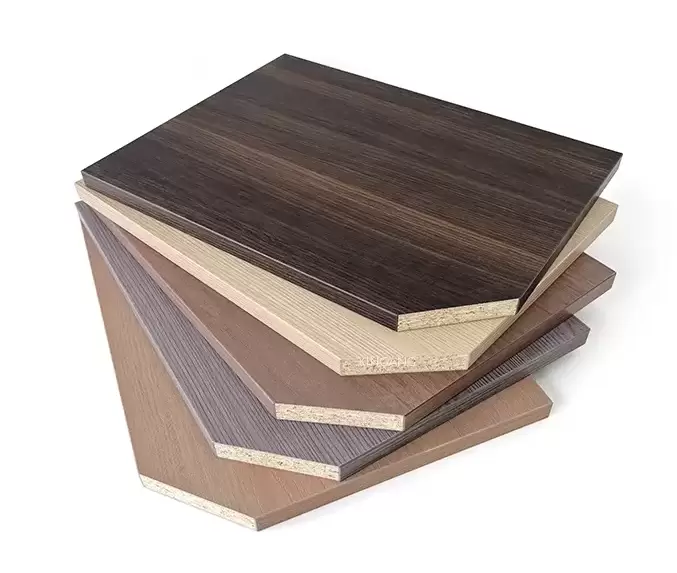
For manufacturers and project teams, sustainability cannot be assessed through a single label or a general statement about environmentally friendly materials. Veneer sourcing, core composition, adhesive chemistry, emissions performance, production yield, service life, and end-of-life considerations all contribute to the material's overall profile. The best solution is one that meets the functional requirements of the project while providing verifiable information about the product's composition and performance.
Shandong Xingang Group Co., Ltd. has focused on environmentally oriented wood materials and engineered panel technologies. Its product development includes bionic adhesive technology, decorative panels, ultra-thin density fiberboard, and bionic marine plywood. The group describes its bionic adhesive as free from formaldehyde, benzene, and harmful substances. For any specific Sapele Plywood application, however, product composition, adhesive use, emissions results, and applicable certifications should be confirmed through product-specific technical documentation.
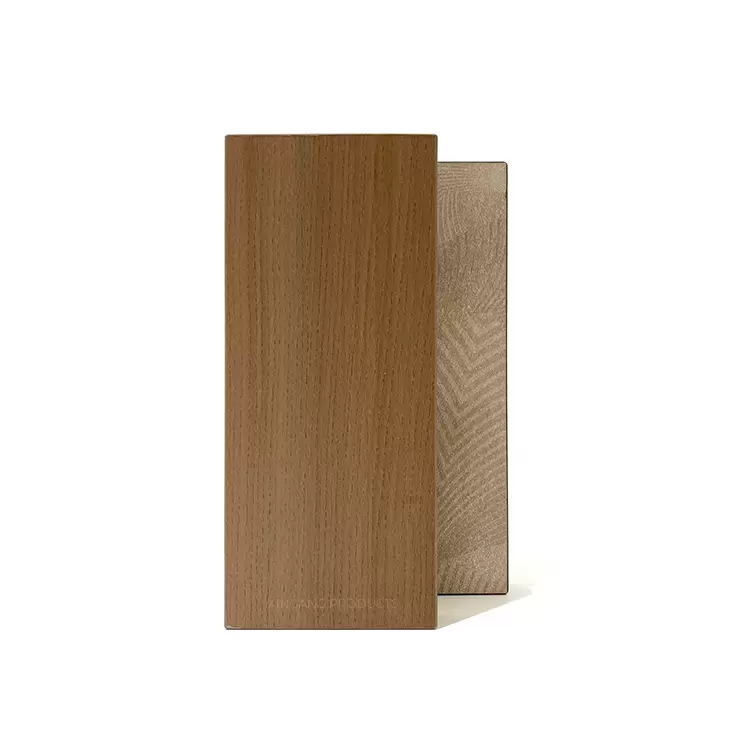
Sapele is a hardwood species associated with a rich color range and distinctive grain patterns. As a face veneer, it can provide a natural wood appearance without requiring the entire panel to be manufactured from solid sapele. The plywood construction combines a decorative surface with an engineered substrate, allowing designers and manufacturers to work with standardized panel dimensions.
This construction is useful when a project needs repeated components with a consistent nominal thickness. Cabinet doors, furniture sides, shelving, wall cladding, and decorative panels can be cut from sheets, helping optimize material use and simplify production planning. Depending on the product specification, plywood may also offer greater dimensional stability than a comparable solid-wood component exposed to the same changing humidity conditions.
Nevertheless, Sapele Plywood is not a universal replacement for solid timber or other panel products. The appropriate choice depends on the load, finish, environmental exposure, fastening method, and expected service life. Structural applications require suitable mechanical properties and verification against the relevant design requirements. Decorative applications may place greater emphasis on veneer appearance, surface preparation, and coating compatibility.
Understanding the distinction between decorative suitability and structural suitability prevents a common specification error: assuming that a premium hardwood face automatically indicates a high-strength or load-rated panel. Face veneer grade and core performance should be evaluated separately.
Engineered wood products can make efficient use of wood resources by combining relatively thin surface veneers with a core designed for the required application. The environmental benefit depends on the source of the wood, manufacturing efficiency, adhesive system, product durability, and the amount of material wasted during processing.
For Sapele Plywood, veneer utilization is one important factor. Cutting plans that maximize usable panel area can reduce offcuts and the need for replacement sheets. Consistent dimensions and flatness can also improve yield by reducing rejected components during CNC machining and assembly. These production efficiencies may reduce material consumption per finished product, although the actual benefit should be measured using project-specific data.
Wood sourcing requires equally careful consideration. Buyers with responsible sourcing requirements should ask about the origin of the timber, supply-chain traceability, and any applicable forestry or chain-of-custody certifications. A product's wood species alone does not establish whether its sourcing is sustainable. Where certification is required, the supplier should provide valid documentation covering the relevant product and supply chain.
Transportation and packaging also contribute to the environmental profile. Packaging that protects panels against moisture and surface damage can prevent avoidable waste, while efficient loading can improve transport utilization. These considerations should complement, rather than replace, the assessment of raw materials, adhesive chemistry, emissions, and product life.
A credible sustainability evaluation therefore uses evidence that relates directly to the supplied product. General corporate environmental commitments may indicate a manufacturer's direction, but they do not independently establish the environmental performance of a particular Sapele Plywood specification.
Adhesive selection is one of the most important factors in evaluating the environmental and technical characteristics of plywood. The adhesive bonds veneer layers together, helping the panel maintain its integrity during handling, machining, and service. At the same time, adhesive formulation can influence emissions, bonding durability, and suitability for different indoor environments.
It is important to distinguish between adhesive composition and finished-panel emissions. A manufacturer may describe an adhesive as free from particular substances, but the final panel's emissions performance depends on the complete formulation, manufacturing process, raw materials, and the test method used. If a project requires compliance with an indoor air-quality standard, the finished panel should be evaluated against that requirement.
Shandong Xingang Group Co., Ltd. has developed bionic adhesive technology that it describes as containing zero formaldehyde, zero benzene, and zero harmful substances. This is a manufacturer-provided description of its technology. Before applying the claim to a specific Sapele Plywood product, it is necessary to confirm that the panel uses the relevant adhesive system and obtain supporting documentation for the finished product.
The term “zero emission” also requires careful interpretation. In technical specifications, claims should identify the substance, test method, detection limit where applicable, and relevant acceptance criteria. A result below a method's detection limit is not necessarily equivalent to proving absolute absence under every possible condition.
For export markets, indoor air-quality requirements may differ by country, product category, and application. Buyers should establish the applicable requirements early and confirm which test reports or declarations are necessary. This helps avoid selecting a material that performs well technically but lacks the documentation needed for a particular market.
A sustainable panel must perform reliably throughout its intended service life. Premature delamination, surface deterioration, warping, or damage caused by unsuitable environmental exposure can lead to replacement and additional material consumption.
Sapele Plywood's moisture behavior depends on the core construction, adhesive system, veneer quality, moisture content, and surrounding conditions. Cross-laminated veneer construction generally helps control movement compared with solid wood, but it does not make plywood immune to moisture. Exposed edges, drilled holes, joints, and damaged finishes can provide routes for moisture to enter the panel.
For ordinary interior furniture, maintaining stable indoor conditions and protecting the panel surface may be sufficient when the product is correctly specified. Kitchens, bathrooms, laundry areas, and other locations with repeated humidity changes require a more careful assessment. The specified bonding classification, edge protection, surface coating, and installation details should match the expected exposure.
Moisture resistance and waterproof performance should not be treated as interchangeable. A panel may meet a particular bonding or moisture-resistance requirement without being suitable for permanent immersion or unrestricted outdoor exposure. If the project involves demanding conditions, request evidence that addresses the actual service environment.
Durability also depends on how the panel is processed. Over-sanding can damage the face veneer, while poorly sealed edges can allow moisture ingress. Incorrect fasteners or unsuitable installation methods can introduce localized stress. A technically appropriate panel can therefore underperform when the finishing and installation process is not aligned with its properties.
The appearance of Sapele Plywood depends on the quality and consistency of the face veneer. Natural differences in grain and color are expected, but the degree of variation should be compatible with the design. For premium furniture or large decorative surfaces, veneer matching may be necessary to achieve a coordinated appearance.
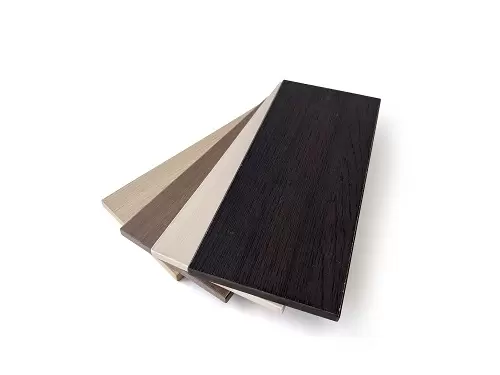
A project should define whether the preferred finish is clear-coated, stained, or opaque. Clear finishes preserve the natural grain and may reveal color variation or repairs. Stains can change the perceived color but may also make differences in veneer absorption more visible. Opaque coatings reduce the importance of grain matching but still require a sound, well-prepared surface.
Surface quality influences material efficiency because defects may become apparent only after cutting or finishing. If a panel contains localized veneer damage or an unsuitable repair, a large component cut from that area may need to be rejected. Effective incoming inspection and cutting optimization can reduce this risk.
For high-volume production, it is useful to assess the usable yield per sheet rather than simply comparing the purchase price. Panel dimensions, defect distribution, cutting patterns, and required component sizes all affect the amount of finished product obtained from each sheet. A consistent panel may justify a higher unit price if it produces less waste and requires fewer corrective operations.
Furniture and cabinetry typically require a balance of appearance, dimensional accuracy, fastening performance, and machining consistency. Specifications should identify the required face grade, thickness tolerance, core construction, and bonding performance. For shelving and load-bearing furniture components, span, support arrangement, and expected loading should also be considered.
Decorative wall panels and interior cladding place greater emphasis on visual continuity, flatness, finish compatibility, and installation tolerances. Large panels can make minor color differences or warping more noticeable, so representative samples and clear appearance standards are important. Where panels are installed close together, batch consistency can be as important as the quality of an individual sheet.
Commercial interiors may impose additional requirements related to fire performance, emissions, cleaning, or durability. These requirements should be addressed using applicable product classifications and test documentation. A general claim that plywood is environmentally friendly does not establish fire compliance, structural suitability, or approval for every interior application.
For every application, the specification should distinguish between required properties and optional preferences. This makes it easier to select an appropriate panel without over-specifying characteristics that do not affect the finished product.
A reliable verification process begins with the exact product designation. Confirm the panel dimensions, thickness, face veneer, core construction, adhesive system, and intended application. Without this information, a test report for a different panel type may not be relevant.
Technical documentation should then be checked against the requirements of the project. Depending on the application, this may include bonding performance, mechanical properties, moisture-related performance, formaldehyde emissions, or other indoor air-quality measurements. Any certification should be reviewed for its scope, validity, issuing organization, and relationship to the supplied product.
Sampling remains essential. A physical sample allows the buyer to assess veneer appearance, surface finish, and machining behavior, while testing provides evidence of properties that cannot be established by visual inspection. Where the project has strict requirements, sample approval and testing should occur before bulk production.
A written specification should record the agreed product construction, acceptance criteria, inspection requirements, and any approved substitutions. This helps maintain consistency across repeat orders and reduces the risk that an apparently similar replacement material will differ in performance.
Material innovation can support environmental objectives when it combines measurable product performance with credible evidence. For engineered panels, improvements in adhesive technology may address emissions-related concerns while maintaining the bonding properties needed for practical use. Manufacturing improvements that reduce waste, improve consistency, or extend product life can also contribute to resource efficiency.
Shandong Xingang Group Co., Ltd. positions its development work around environmentally oriented wood materials and bionic adhesive technology. Its stated direction is to support healthier and more sustainable living spaces through engineered panel products. For Sapele Plywood projects, the most useful next step is to establish which material and adhesive technologies are available for the specific panel construction and to review the corresponding technical evidence.
This approach keeps environmental objectives connected to the realities of manufacturing and application. The aim is not simply to select a product with an attractive environmental message, but to obtain a panel that meets the required appearance, performance, and compliance criteria with transparent supporting documentation.
Sapele Plywood can support modern furniture and interior projects by combining a distinctive hardwood veneer with the practical format of an engineered panel. Its overall value depends on more than appearance: adhesive performance, moisture behavior, core construction, sourcing, machining yield, and product-specific emissions evidence all contribute to a well-informed material decision.
For projects with sustainability targets, environmental claims should be verified against the actual panel being supplied. Clear specifications, relevant test reports, responsible sourcing information, and representative samples help connect material innovation with real performance requirements.
By evaluating environmental characteristics alongside durability and manufacturing efficiency, companies can select Sapele Plywood that meets project needs while supporting more responsible material use.