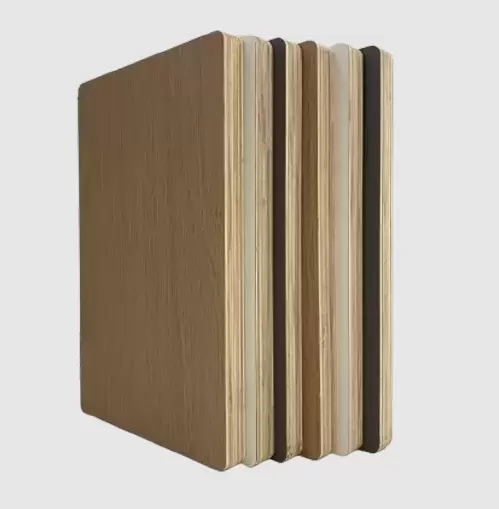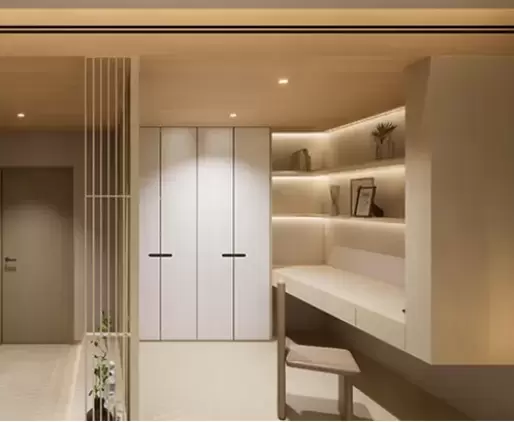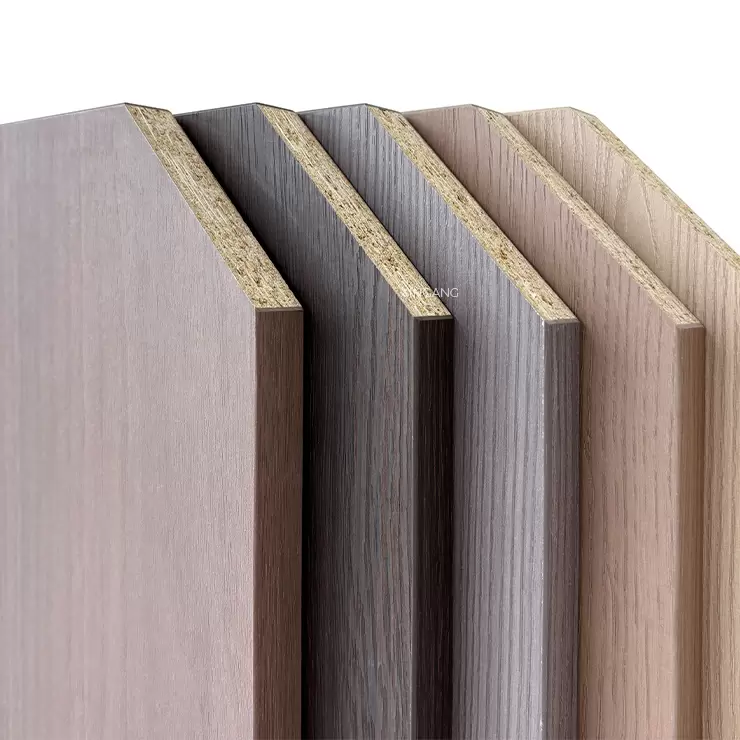
23 Jul 2026
Grey Furniture Board: A Sustainable Material for Modern Furniture Manufacturing
Learn More >


In modern interior materials manufacturing, uv plywood has evolved from a simple coated board into a precision-engineered surface system. Its value is no longer defined only by appearance, but by the stability of coating structure, substrate interaction, and long-term environmental resistance under real-world usage conditions.
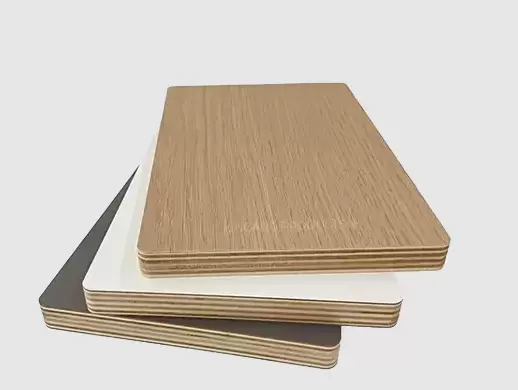
For high-volume production environments such as furniture panels, kitchen cabinetry, architectural wall systems, and commercial interior decoration, uv plywood must consistently meet three engineering requirements:
This article analyzes uv plywood from a technical manufacturing perspective, focusing on material structure, coating chemistry, curing control, and industrial reliability.
UV plywood is a multi-layer engineered product combining wood substrate behavior with polymer surface chemistry.
Typical structure includes:
Unlike conventional lacquer systems relying on solvent evaporation (12–48 hours drying cycles), UV plywood uses photopolymerization curing within seconds, forming a dense cross-linked polymer film.
Key structural parameters:
The coating is not only decorative but also acts as a functional barrier layer, protecting plywood from humidity penetration and mechanical abrasion.
The performance of uv plywood is heavily dependent on substrate uniformity. Even advanced UV coatings cannot compensate for unstable wood structure.
Critical substrate control parameters include:
If density variation exceeds ±10%, UV coating absorption becomes inconsistent, leading to:
Moisture imbalance is even more critical. At >12% moisture content, vapor expansion during UV curing can cause micro-bubbles or pinhole defects. At <8%, excessive resin absorption reduces surface film formation efficiency.
This is why industrial uv plywood production lines require strict pre-conditioning chambers to stabilize board humidity before coating.
The UV coating system determines the functional performance of uv plywood.
Most industrial systems use:
Key performance targets:
A critical engineering balance exists between:
Over-crosslinking leads to brittle surfaces, while under-curing reduces scratch resistance and chemical durability.
UV curing is the core process that defines uv plywood production efficiency and surface quality.
Industrial curing parameters typically include:
The curing system must ensure:
Modern production lines increasingly adopt LED UV systems, offering:
A multi-stage curing design is often used:
This layered curing strategy significantly improves consistency in large-scale production.
UV plywood is widely used in environments where both aesthetics and durability are continuously challenged.
Typical application conditions:
Performance requirements include:
In kitchen and bathroom cabinetry applications, moisture cycling is the most severe stress factor. Poorly cured UV coatings may develop micro-cracks after repeated humidity expansion and contraction cycles.
Large-scale uv plywood manufacturing depends heavily on process stability rather than single-point material quality.
Common production defects include:
Key industrial control methods:
Yield optimization targets in advanced production lines:
Even small improvements in coating consistency translate directly into large cost reductions in raw material consumption and rework rates.
Modern uv plywood is increasingly defined by environmental performance requirements rather than only mechanical properties.
Advanced production systems, such as Xingang Group’s bio-based adhesive technology, enable:
This is achieved through:
These properties are particularly critical in residential, healthcare, and commercial interior environments where indoor air quality is a key design constraint.
UV plywood represents a tightly integrated engineering system where substrate stability, coating chemistry, and UV curing precision collectively determine final product performance.
To achieve industrial-grade reliability, a high-performance uv plywood system must ensure:
In modern decorative material markets, uv plywood is no longer just a surface finish—it is a high-performance engineered material system that directly defines product durability, aesthetic consistency, and long-term application value in demanding interior environments.