09 Jan 2026
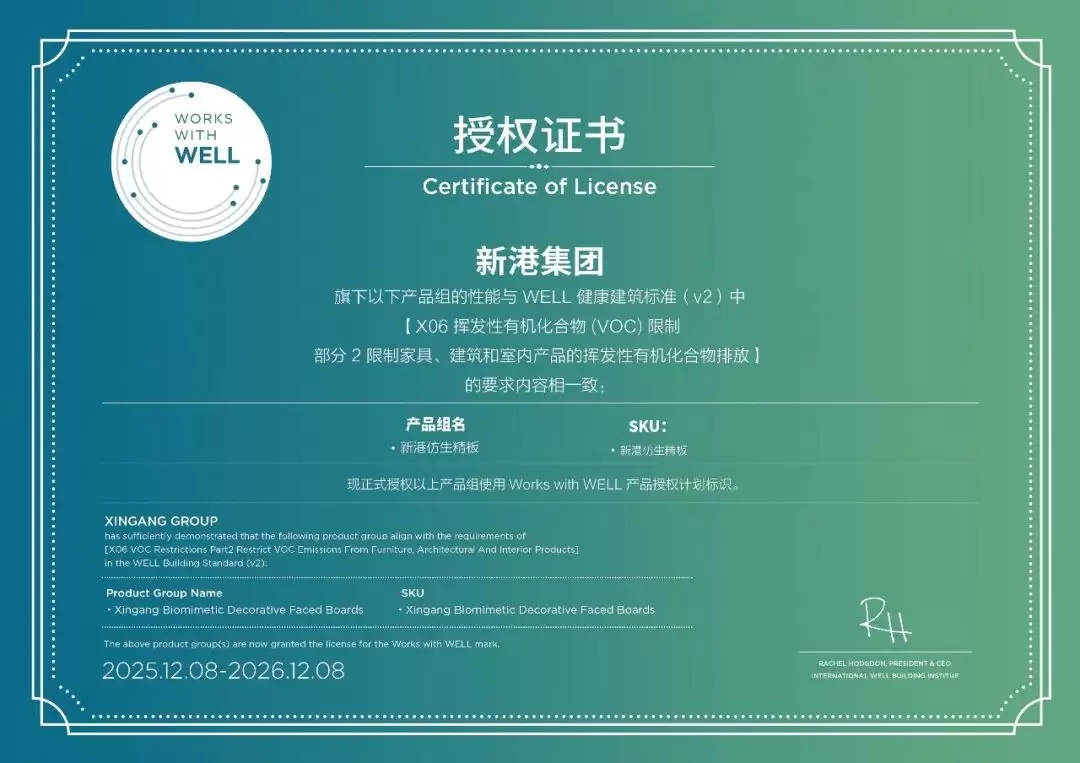
Stunning Milestone: Xinguang Group Secures Dual WELL International Certifications, Unlocking a New Global Identity
Learn More >


In modern interior construction, furniture manufacturing, and commercial panel applications, uv plywood has become a critical material for balancing aesthetics, durability, and production efficiency. However, the performance of UV-coated plywood is not defined only by the wood substrate—it is fundamentally determined by the precision of UV curing technology and coating system engineering.
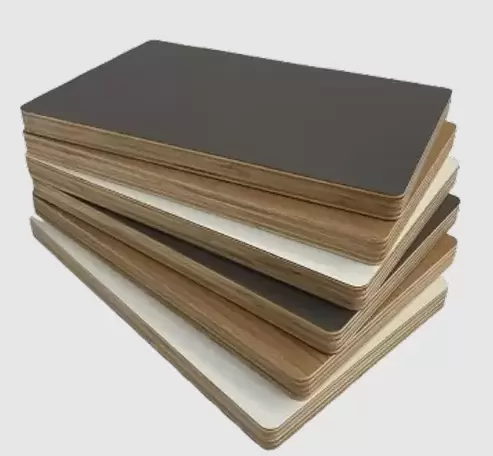
For manufacturers producing large-scale decorative panels, kitchen boards, wall cladding, and engineered furniture substrates, UV plywood must achieve three core performance targets:
This article focuses on the technical structure behind uv plywood, particularly UV coating chemistry, curing parameters, and industrial production control systems.
UV plywood is a multilayer engineered product composed of:
Unlike conventional lacquered plywood, UV plywood relies on instant photopolymerization rather than solvent evaporation.
Key structural performance parameters include:
The absence of solvent drying significantly reduces curing time while improving film density and surface uniformity.
The core of uv plywood production is the UV curing system, which uses ultraviolet light to initiate polymer cross-linking.
Typical industrial UV curing parameters:
The curing process directly determines:
A key technical challenge is balancing curing depth vs. surface over-curing. Insufficient penetration leads to soft layers beneath a hardened surface, while excessive exposure can cause brittleness and micro-cracking.
Modern production lines increasingly use:
These systems stabilize batch consistency, especially for high-volume decorative panel production.
UV plywood is widely used in environments where both aesthetics and mechanical durability matter. Typical applications include:
Performance stress factors include:
To meet these conditions, UV coatings must maintain:
This is where substrate quality becomes equally important as coating technology.
Even the most advanced UV coating system cannot compensate for unstable plywood substrates.
Key substrate parameters affecting uv plywood performance:
If plywood density variation exceeds ±10%, UV coating absorption becomes uneven, leading to:
This is particularly critical in thin decorative panels and large-format sheets used in modular furniture systems.
Modern uv plywood is no longer evaluated only by mechanical properties but also by environmental compliance.
With increasing global demand for low-emission building materials, leading manufacturers are shifting toward:
In advanced material systems such as Xingang Group’s bio-inspired adhesive technology, UV plywood benefits from:
These properties are particularly important for residential and healthcare environments where long-term exposure safety is critical.
UV plywood production is highly dependent on continuous coating line stability.
Typical production line constraints:
Key efficiency drivers include:
Even minor fluctuations in viscosity (±5–10 mPa·s) can significantly affect coating leveling and final gloss uniformity.
UV plywood represents a convergence of material engineering, surface chemistry, and high-speed industrial curing technology. Its performance is defined not only by aesthetic output but by precise control over coating structure, substrate stability, and UV curing dynamics.
A high-performance uv plywood system must ensure:
In competitive furniture and interior material markets, UV plywood is no longer a simple decorative board—it is a technically engineered surface system that directly impacts product value and brand positioning.