09 Apr 2026
Technical Guide to Laminated Marine Plywood for Industrial and Offshore Projects
Learn More >


The global furniture industry is undergoing a structural shift toward integrated, large-scale panel systems. At the center of this transformation is the wide furniture board, which enables manufacturers to produce seamless, high-efficiency interior systems with reduced assembly complexity.
Unlike traditional segmented board layouts, wide-format panels significantly reduce joint density, improving both structural performance and visual consistency.
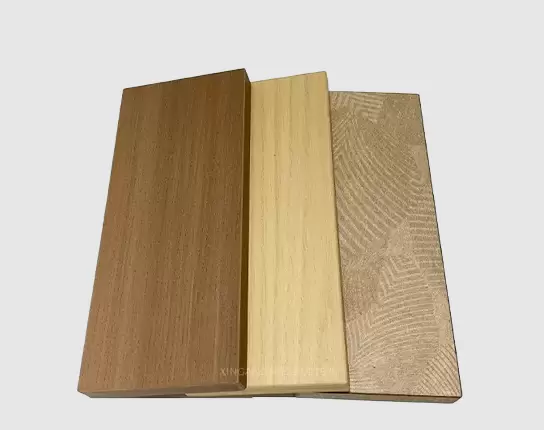
Wide furniture boards are engineered for high-efficiency cutting and layout optimization.
Typical production parameters include:
In industrial cabinet production, wider boards reduce cutting waste by 8%–15% compared with standard narrow boards due to improved nesting efficiency.
This directly impacts material utilization rate, which is a key cost driver in mass furniture manufacturing.
Structural performance is essential when wide furniture boards are used in load-bearing furniture systems.
Key mechanical properties include:
These parameters ensure that wide panels maintain structural integrity even in large cabinet systems where shelving spans exceed 1 meter.
One of the key challenges in wide-format boards is dimensional stability under humidity variation.
Advanced manufacturing systems control:
This is particularly important for kitchen and bathroom furniture systems, where humidity fluctuations are frequent and severe.
Wide furniture boards are often paired with decorative surfaces such as:
Surface bonding performance requirements:
Uniform pressure distribution during lamination (typically 20–30 kg/cm²) is critical to avoid bubbling or delamination over large surface areas.
With increasing global regulatory pressure, emission control has become a key purchasing factor.
Modern wide furniture boards adopt low-emission adhesive systems designed to meet:
Shandong Xingang Group integrates bio-based adhesive technology to further reduce environmental impact while maintaining mechanical strength consistency.
This aligns with global trends in sustainable construction and green building certification systems such as LEED and BREEAM.
Wide furniture boards are increasingly used in:
Their key advantage lies in reducing assembly complexity while maintaining design consistency across large spatial environments.
The wide furniture board is redefining how furniture systems are designed and manufactured at scale. Its value is not only in size but in how it improves production efficiency, structural stability, and installation simplicity.
As interior architecture continues to evolve toward seamless and modular systems, wide-format panels are becoming a foundational material in modern furniture engineering.