10 Jul 2026
Marine Plywood Waterproof vs Traditional Plywood: Why Industrial Users Prefer Higher Stability
Learn More >


The furniture industry has changed significantly over the past decade. Manufacturers are no longer competing solely on design or production capacity. Material performance has become one of the key factors that determines product quality, customer satisfaction, and brand competitiveness. As consumers demand healthier homes, longer-lasting furniture, and more sustainable products, selecting the right panel material has become a strategic decision rather than a routine purchasing task.
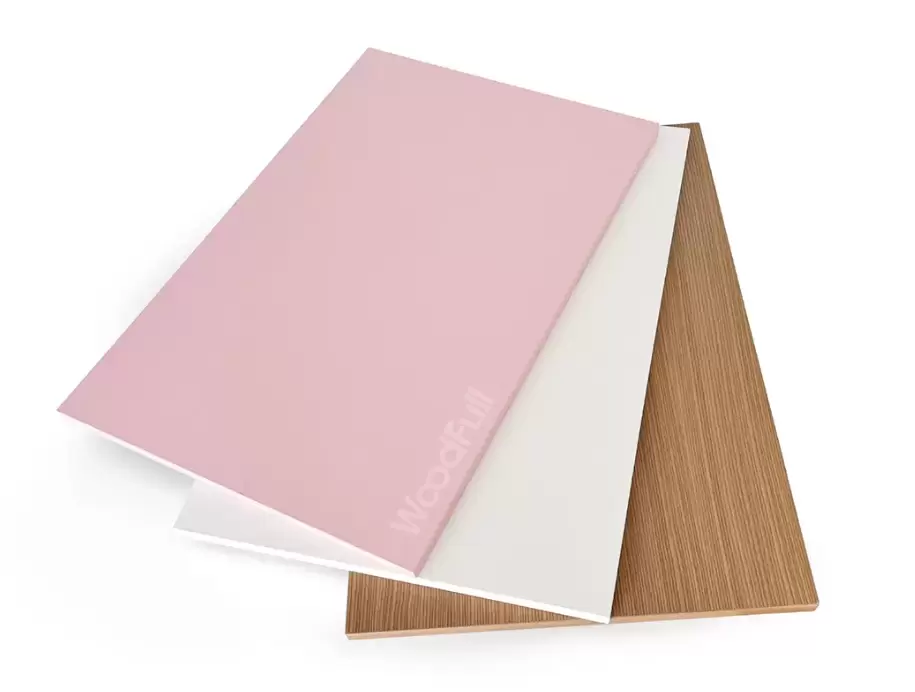
Among the many decorative panel options available today, the dark oak furniture board has become increasingly popular for residential furniture, commercial interiors, customized cabinetry, and hospitality projects. However, many manufacturers still compare engineered decorative boards with traditional solid wood panels when developing new products. Although both materials can achieve an attractive wood appearance, they differ significantly in structural stability, environmental performance, production efficiency, and long-term operating costs.
Understanding these differences helps manufacturers choose the most suitable material for specific applications instead of relying solely on initial material price.
Traditional solid wood has long been regarded as a premium furniture material because every piece features unique grain patterns and natural textures. High-end furniture brands continue to use solid oak for luxury products where handcrafted aesthetics remain a major selling point.
However, natural timber also introduces challenges that become increasingly difficult in modern mass production.
Wood is a hygroscopic material, meaning it continuously absorbs and releases moisture from the surrounding environment. Seasonal humidity changes cause expansion and contraction, which may lead to warping, cracking, twisting, or joint separation over time. These characteristics require careful material selection, controlled storage conditions, and precise manufacturing processes.
Natural wood also exhibits variations in color, density, grain direction, and mechanical properties. While these variations contribute to its uniqueness, they make large-scale production more complicated because maintaining consistency across thousands of furniture components becomes difficult.
For manufacturers focused on standardized production and global supply chains, these natural variations often increase production costs and reduce manufacturing efficiency.
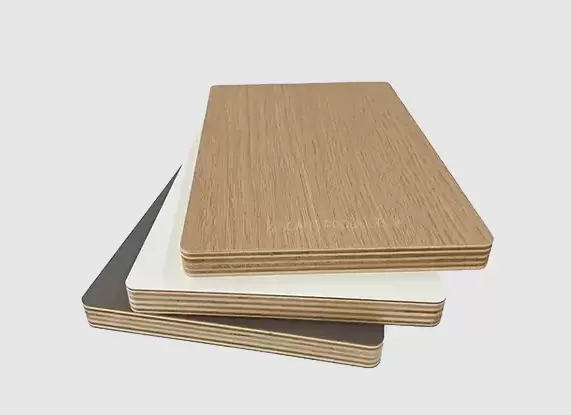
Unlike solid timber, a dark oak furniture board combines decorative surface technology with engineered wood substrates such as MDF, plywood, or particleboard. This layered construction is specifically designed to improve dimensional stability while preserving the visual appearance of natural oak.
Because the internal structure is manufactured under controlled conditions, engineered boards experience significantly less expansion and contraction during seasonal humidity changes. Furniture doors remain properly aligned, cabinet panels stay flat, and shelving systems maintain their original dimensions throughout years of use.
This stability becomes especially valuable for large wardrobes, floor-to-ceiling cabinets, office furniture, and modular storage systems where even slight deformation can affect installation accuracy and customer satisfaction.
For customized furniture manufacturers using CNC production equipment, stable panel dimensions also improve machining precision and reduce assembly adjustments during installation.
Manufacturing efficiency depends not only on equipment but also on material consistency.
Solid wood requires careful grain matching, defect removal, moisture control, and additional finishing before assembly. Natural knots, resin pockets, and grain irregularities increase waste while extending processing time.
In contrast, engineered dark oak furniture boards provide uniform density and consistent thickness throughout every panel. CNC cutting, drilling, grooving, and edge banding can therefore be performed with predictable accuracy and repeatability.
The decorative surface is already finished during production, eliminating many post-processing operations required for natural timber. As a result, manufacturers benefit from shorter production cycles, improved material utilization, and more consistent finished products.
For factories producing large quantities of furniture every month, these manufacturing efficiencies directly contribute to lower production costs and faster delivery schedules.
Indoor environmental quality is now one of the most important factors influencing furniture purchasing decisions.
Many traditional wood-based panels rely on adhesives containing formaldehyde or other volatile organic compounds. Although emissions have decreased considerably over the years, international regulations continue to introduce stricter environmental requirements.
Shandong Xingang Group has addressed this challenge by developing its innovative Bionic Adhesive Technology, which achieves zero formaldehyde, zero benzene, and zero harmful substances. Rather than treating environmental protection as an optional feature, the company integrates this technology into its decorative boards, ultra-thin density boards, and marine plywood products.
This innovation enables furniture manufacturers to produce healthier interior products while improving compliance with increasingly demanding international environmental standards.
For residential furniture, children's rooms, schools, healthcare facilities, and hospitality projects, environmentally responsible materials have become a significant competitive advantage rather than simply a regulatory requirement.
Furniture materials are expected to provide more than visual appeal.
Consumers increasingly expect furniture to contribute to healthier indoor environments while maintaining attractive designs and long service life.
Xingang's decorative boards incorporate antibacterial and antiviral properties, adding functional value that traditional decorative panels cannot easily provide. These characteristics support furniture applications in educational institutions, medical facilities, hotels, office buildings, and residential environments where hygiene continues to receive greater attention.
By integrating multiple performance characteristics into a single material, manufacturers can simplify product development while creating stronger differentiation in competitive markets.
Comparing only the purchase price of raw materials rarely provides an accurate assessment of overall manufacturing costs.
A lower-priced panel that experiences deformation, inconsistent machining, or premature surface deterioration may generate significantly higher expenses through production losses, warranty claims, product returns, and reduced customer satisfaction.
A premium dark oak furniture board often delivers greater long-term value because it minimizes material waste, improves manufacturing efficiency, reduces installation adjustments, and extends furniture service life.
For commercial furniture installed in hotels, offices, retail stores, and public buildings, durability also reduces replacement frequency and maintenance costs over many years of operation.
When lifecycle costs are considered instead of initial procurement expenses, engineered decorative boards frequently provide the more economical solution.
Even the highest-quality decorative panel cannot achieve its full potential without consistent manufacturing quality.
Reliable suppliers invest in raw material selection, adhesive research, production technology, quality control, and continuous product development rather than focusing solely on decorative appearance.
Shandong Xingang Group has dedicated years to developing environmentally friendly engineered wood materials for the global furniture industry. Through continuous innovation in decorative boards, ultra-thin MDF, marine plywood, and sustainable adhesive technology, the company provides customers with stable, high-performance panel solutions suitable for a wide range of furniture applications.
Its commitment to green materials, advanced manufacturing, and long-term product innovation enables furniture manufacturers to improve product quality while supporting healthier and more sustainable living environments.
Comparing a dark oak furniture board with traditional wood panels is no longer simply a choice between engineered materials and natural timber. It is a decision that influences manufacturing efficiency, environmental compliance, product durability, and long-term business competitiveness.
While solid wood continues to serve premium handcrafted furniture, engineered dark oak furniture boards offer significant advantages in dimensional stability, production consistency, environmental performance, and lifecycle value. Combined with Shandong Xingang Group's Bionic Adhesive Technology, featuring zero formaldehyde, zero benzene, zero harmful substances, together with antibacterial and antiviral performance, these advanced decorative boards provide a practical solution for modern furniture manufacturing.
As the global furniture industry continues moving toward sustainable development and healthier indoor environments, manufacturers that adopt high-performance engineered materials will be better positioned to meet changing market expectations while delivering products that combine aesthetics, functionality, and long-term reliability.