01 Apr 2026
Melamine Particle Board: Performance Engineering for High-Durability Interior Applications
Learn More >


The quality of a color MDF board is determined by more than its final color. Substrate preparation, fiber distribution, adhesive performance, hot pressing, surface treatment, and finishing control all contribute to the finished panel's appearance and functional properties. For manufacturers serving furniture, cabinetry, and interior decoration markets, a stable production process is essential for maintaining consistent quality across different orders and production batches.
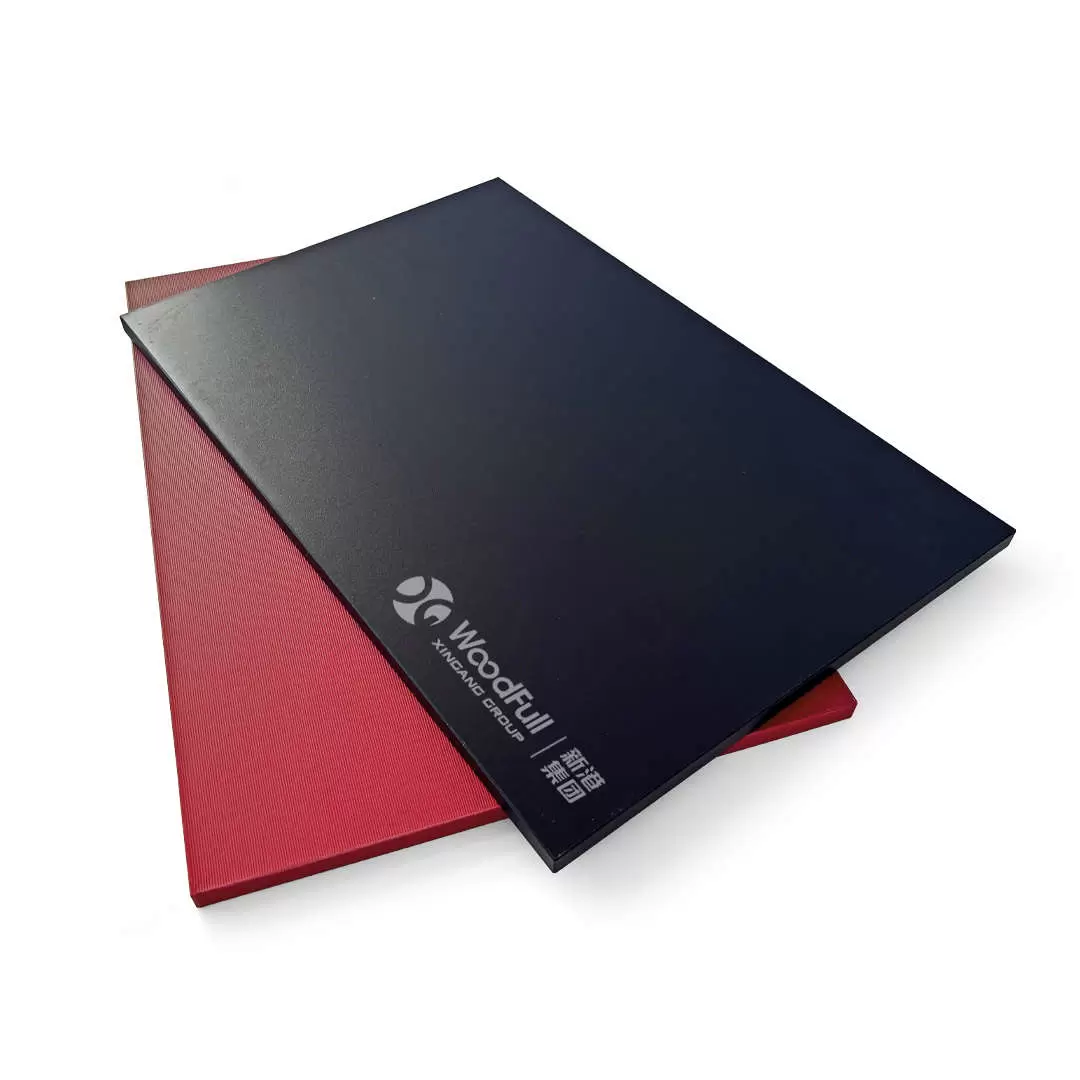
Understanding how color MDF board is manufactured helps buyers evaluate suppliers more effectively. It also provides a clearer basis for identifying potential quality risks before panels enter downstream cutting, drilling, lamination, or furniture assembly operations.
MDF production begins with wood fiber preparation. The quality and consistency of the fibers influence the internal structure of the finished panel. Fiber dimensions, moisture content, and distribution must be controlled to support uniform board formation.
After fiber preparation, adhesive is introduced to bind the fibers together. The adhesive system influences internal bonding, dimensional stability, and emissions performance. Its compatibility with the manufacturing process is particularly important because variations in adhesive distribution can lead to inconsistent panel properties.
The forming process then distributes the treated fibers into a mat with the required weight and dimensions. Uniform mat formation is important for controlling density distribution and final thickness. Uneven fiber distribution may contribute to differences in mechanical performance across the panel.
For color MDF board production, a stable substrate provides the foundation for subsequent surface processing. Even a visually attractive finish cannot fully compensate for poor internal bonding or inconsistent board structure.
Hot pressing consolidates the fiber mat into a rigid panel under controlled temperature and pressure. During this stage, heat activates the adhesive system, while pressure establishes the required board thickness and density.
The pressing parameters must be matched to fiber characteristics, adhesive formulation, panel thickness, and production speed. Excessive or insufficient processing can affect internal bonding, surface quality, and dimensional stability.
Density is another important production variable. The overall density of an MDF panel affects its weight, stiffness, machining behavior, and fastener performance. However, the density profile through the board thickness is also relevant. A uniform and appropriate density structure supports more predictable cutting and surface treatment.
After pressing, panels generally undergo conditioning and further processing to stabilize their properties and prepare them for finishing. Sanding may be used to improve surface flatness and create a consistent foundation for decorative treatment.
The decorative process determines the visible appearance of color MDF board. Depending on the product construction, the color may be achieved through surface coating, decorative facing, or other specialized finishing methods.
Each approach has different requirements.
A coated surface requires appropriate preparation, coating compatibility, and controlled application conditions. Film thickness, curing conditions, and surface cleanliness can affect gloss, adhesion, and visual consistency.
A decorative facing requires reliable bonding between the facing material and the MDF substrate. Adhesive compatibility, pressing conditions, and surface preparation influence whether the finished surface remains stable during storage, machining, and use.
Color control is especially important in large-volume production. Pigment formulation, coating conditions, material batches, and curing processes can all contribute to color variation. Manufacturers should establish reference samples and inspection procedures to maintain consistency.
The selected finish should also reflect the intended application. A matte surface, for example, has different visual and maintenance characteristics from a high-gloss finish. Surface hardness, scratch resistance, stain resistance, and cleaning compatibility should be assessed according to the final environment.
A color MDF board may look acceptable at a distance but still contain defects that become visible during furniture production or installation. Common issues include scratches, bubbles, pinholes, uneven gloss, color variation, edge damage, and surface contamination.
These defects can originate at different stages. Substrate irregularities may affect coating uniformity, while dust or contamination can interfere with surface adhesion. Improper handling and packaging may also cause scratches after production.
A practical inspection system should include visual checks under controlled lighting, dimensional measurements, thickness consistency, surface appearance, and relevant bonding tests. Where the product requires specific durability characteristics, additional testing should be conducted according to the intended application.
Mechanical testing of the MDF substrate may include internal bond strength, bending properties, and screw withdrawal performance. For moisture-sensitive applications, thickness swelling and water absorption testing may also be relevant.
Surface testing should be selected according to the finish and market requirements. Abrasion, scratch, stain, and adhesion tests can provide useful information, but the applicable test method and acceptance criteria should be agreed upon before production.
Adhesive technology influences both the structural performance and environmental profile of wood-based panels. The formulation, application method, curing behavior, and compatibility with fiber materials all affect manufacturing stability.
Shandong Xingang Group Co., Ltd. has developed Xingang biomimetic adhesive, which the company describes as containing zero formaldehyde, zero benzene, and zero harmful substances. The adhesive has been successfully applied at scale in Xingang biomimetic decorative boards, ultra-thin MDF, and biomimetic marine plywood.
This development reflects the company's focus on environmentally oriented wood-based materials. For color MDF board production, however, the suitability of a particular adhesive must be evaluated in relation to the actual substrate, decorative process, and required finished-product performance.
Environmental claims should also be supported by product-specific documentation. Buyers should request relevant emissions test reports and verify whether the tested product corresponds to the exact panel construction being purchased.
The value of a color MDF board becomes clear when it enters downstream production. A panel with consistent thickness and density is easier to process through CNC routing, drilling, edge machining, and furniture assembly.
Surface durability is equally important. If a decorative finish is easily scratched or poorly bonded, damage may occur during cutting, packaging, transportation, or installation. Protective films and appropriate handling procedures can help reduce these risks.
For customized furniture projects, sample production is an effective way to evaluate the complete process. A trial panel can be cut, drilled, edge-finished, assembled, and inspected before a larger order is released.
A dependable supplier should be able to explain the panel structure, production process, quality inspection methods, and product-specific technical specifications. Buyers should confirm the available dimensions, thickness range, color options, finish types, production tolerances, and packaging standards.
It is also important to understand how the manufacturer controls batch consistency. Approved samples, production records, inspection reports, and clear acceptance criteria can reduce disputes when orders are delivered over multiple shipments.
Color MDF board manufacturing requires coordinated control of substrate formation, adhesive performance, pressing, decorative treatment, and final inspection. When these stages are managed as one integrated process, the resulting panels are better positioned to meet the appearance and processing requirements of modern furniture and interior applications.