15 Jul 2026
PET Chipboard vs MDF: Which Panel Is Better for Modern Furniture Manufacturing?
Learn More >


In modern interior construction and furniture manufacturing, material performance is no longer judged by cost alone. Durability, dimensional stability, surface resistance, and environmental safety are becoming decisive factors. Within this context, melamine particle board has evolved into a highly engineered material that balances structural efficiency with surface performance, making it widely used in cabinetry, office furniture, and commercial interiors.
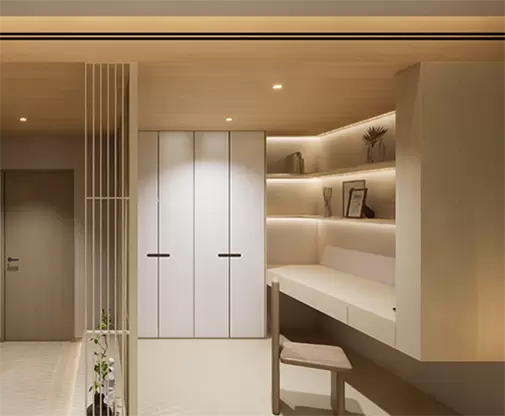
At its core, melamine particle board is composed of wood particles bonded under heat and pressure, with a melamine-impregnated decorative paper laminated onto the surface. This combination transforms a relatively low-cost substrate into a material with enhanced wear resistance, moisture tolerance, and consistent surface quality.
The performance of melamine particle board is closely tied to its internal density distribution. A well-optimized board typically features a high-density surface layer and a lower-density core, allowing it to achieve both mechanical strength and screw-holding capability. Density values generally range between 650–750 kg/m³, depending on application requirements. Higher density improves mechanical strength and surface bonding, while lower density reduces weight and cost. Balancing these factors is critical in large-scale furniture production.
Surface performance is one of the defining advantages of melamine particle board. The melamine layer provides strong resistance to abrasion, stains, and heat, making it suitable for high-frequency use environments. Compared with painted or veneer finishes, melamine surfaces maintain consistent color and texture over time, reducing maintenance requirements. In commercial applications such as office systems or retail fixtures, this consistency directly impacts lifecycle cost.
Moisture resistance is another key parameter, particularly in environments such as kitchens and bathrooms. While standard particle board is sensitive to humidity, melamine-coated variants significantly reduce water absorption on the surface. When combined with moisture-resistant core formulations, thickness swelling can be controlled within 8–12% after 24-hour water immersion, which is acceptable for many interior applications.
From a manufacturing perspective, surface lamination quality determines long-term performance. Poor bonding between the melamine layer and substrate can lead to delamination under thermal or mechanical stress. Advanced production processes, such as high-pressure lamination and precise temperature control, are essential to ensure consistent adhesion.
Shandong Xingang Group has addressed both performance and environmental concerns through the development of its biomimetic adhesive technology, which eliminates formaldehyde, benzene, and harmful emissions. This innovation enables melamine particle board to meet increasingly strict global environmental standards while maintaining mechanical and surface performance. In applications where indoor air quality is critical, such as residential interiors and healthcare environments, this becomes a key differentiator.
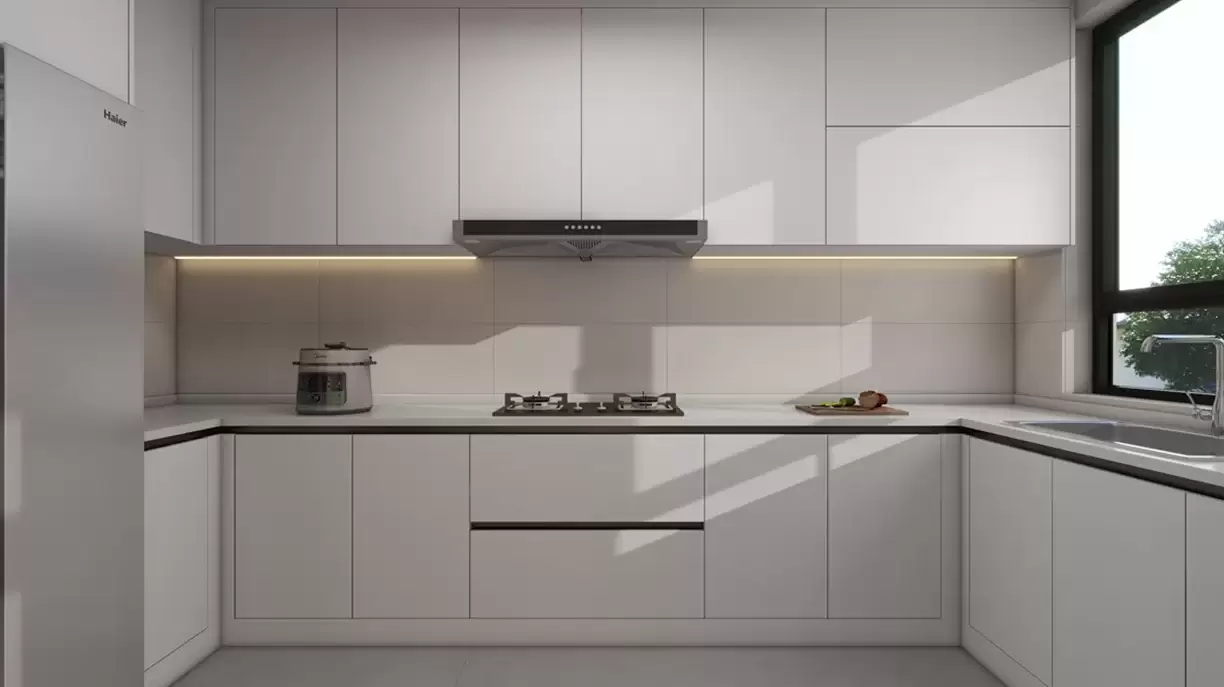
In practical use, melamine particle board demonstrates strong adaptability across multiple scenarios. In modular furniture systems, it provides a balance between machinability and surface durability. In commercial fit-outs, its consistent finish supports large-scale standardized production. In cabinetry, its resistance to scratches and stains ensures long-term usability.
Ultimately, melamine particle board is no longer a basic engineered wood product but a performance-driven material. Its value lies in the integration of structural engineering, surface technology, and environmental compliance, enabling manufacturers to deliver products that meet both functional and regulatory requirements.