09 Oct 2025
A Complete Guide to Melamine Chipboard: Features, Uses, and Advantages
Learn More >


Choosing between birch plywood and medium-density fiberboard (MDF) is a common decision in furniture manufacturing. Both materials are widely used in cabinets, shelving, interior fittings, decorative panels, and furniture components, but their internal structures create significant differences in strength, weight, machining behavior, moisture response, and finishing requirements.
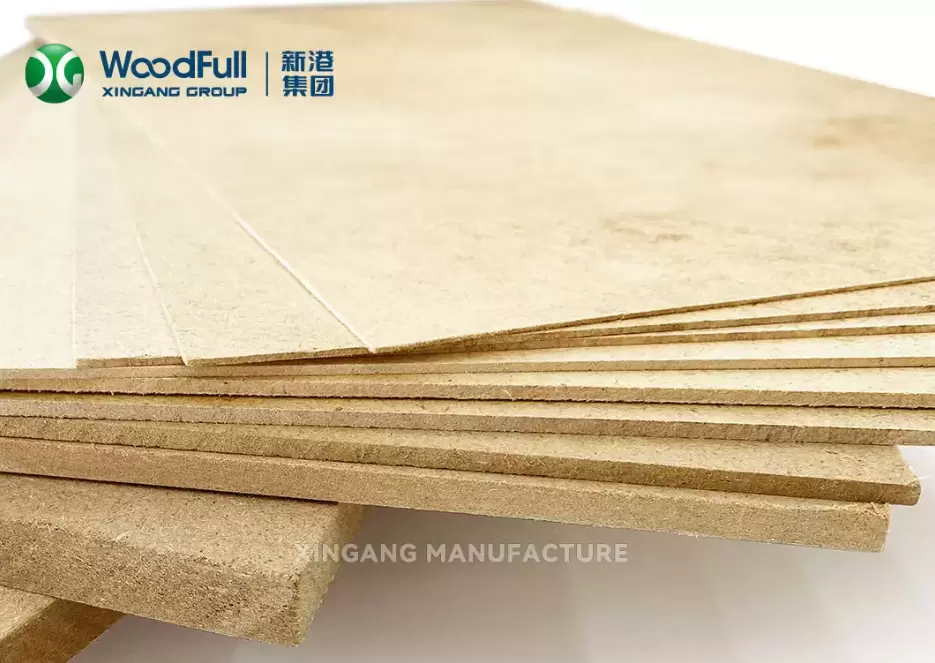
The right choice depends on how the component will be used. A cabinet door requiring a smooth painted finish has different material requirements from a load-bearing shelf or a furniture frame that must retain screws under repeated use. Comparing birch plywood vs. MDF through actual manufacturing requirements provides a more reliable basis for material selection than comparing price alone.
Birch plywood is produced by bonding multiple layers of birch veneer, with the grain direction of adjacent layers generally arranged at right angles. This cross-laminated construction distributes loads across different directions and provides good structural stability. The visible plywood edge reveals the individual veneer layers, which can also serve as a decorative feature in contemporary furniture designs.
MDF is manufactured from wood fibers combined with resin or adhesive and formed into panels under heat and pressure. Its relatively uniform fiber structure provides a smooth surface and consistent machining behavior. Unlike plywood, MDF does not have alternating veneer layers, so its mechanical properties and failure behavior differ.
These structural differences influence where each material performs best. Birch plywood is often preferred for applications requiring a favorable strength-to-weight ratio, good screw-holding performance, and structural rigidity. MDF is frequently selected for painted furniture fronts, decorative profiles, and components where a smooth, uniform surface is a priority.
For shelves, cabinet structures, furniture frames, and other load-bearing components, mechanical performance is an important selection factor. Birch plywood generally offers favorable bending strength and stiffness relative to many standard MDF products of comparable thickness. Its layered construction helps distribute loads, making it suitable for components that experience bending and mechanical stress.
MDF provides a uniform material structure, which can be beneficial for certain panel applications. However, its bending strength and stiffness depend on density, fiber quality, adhesive system, and manufacturing specifications. Standard MDF may require greater thickness or additional support in applications involving long spans or heavier loads.
Consider a cabinet shelf measuring 800 mm in length. If the shelf is expected to carry books, equipment, or other concentrated loads, the material's bending stiffness and thickness become important. A suitable birch plywood panel may provide a more efficient solution, but the final design should still consider shelf depth, support spacing, load distribution, and long-term deflection. Material choice should be verified through engineering calculations or prototype testing when the load requirement is significant.
Fastener performance can strongly influence the durability of assembled furniture. Birch plywood generally provides good screw-holding characteristics because its veneer layers create a structured substrate. However, performance varies with panel construction, screw type, penetration depth, and whether the screw is installed into the face or edge.
MDF can provide adequate holding performance for many furniture applications, particularly when suitable fasteners and assembly methods are used. However, repeated screw installation, excessive tightening torque, or installation too close to panel edges can increase the risk of material damage.
For flat-pack furniture, modular cabinets, and components that may be disassembled and reassembled, the fastener system should be tested as a complete assembly. Cam locks, confirmat screws, dowels, and other connectors may perform differently depending on panel density and thickness. Selecting a panel based only on its nominal strength value may overlook the practical behavior of the joint.
MDF has a major advantage when a smooth, uniform surface is required. Its fine fiber structure is suitable for painting, laminating, and decorative surface treatments. It is often used for cabinet doors, shaped furniture fronts, and decorative profiles that require consistent surface preparation.
Birch plywood has a natural wood veneer surface that can be finished with clear coatings, stains, laminates, or decorative veneers. Higher face grades can provide an attractive appearance for furniture where the natural birch surface is intended to remain visible. However, natural veneer may show variations in grain, color, and texture, which need to be considered when producing large batches of visually consistent furniture.
The exposed edge is another point of difference. Birch plywood can offer a distinctive layered appearance, while MDF generally requires edge banding, sealing, or another finishing treatment to conceal the fiber core. For projects where plywood edges remain visible, consistent veneer thickness and clean machining are important.
Neither standard birch plywood nor standard MDF should automatically be considered waterproof. Both materials can absorb moisture, and their performance depends on the adhesive system, density, edge protection, and exposure conditions.
Birch plywood may be available with different bonding specifications for interior or more demanding moisture conditions. The actual performance should be verified against the relevant product standard and test requirements. MDF products also include variants designed for specific humidity conditions, but moisture-resistant MDF is not equivalent to a waterproof panel.
Edge exposure is especially important. Cut edges can absorb moisture more readily than sealed surfaces, potentially leading to swelling, dimensional changes, or surface damage. In kitchens, bathrooms, commercial interiors, and other humid environments, panel selection should be combined with appropriate sealing, coating, and construction details.
Environmental performance also requires careful comparison. Formaldehyde emissions depend on the adhesive formulation and manufacturing process, not simply on whether the panel is plywood or MDF. Product-specific test reports and destination-market regulations should guide the decision.
The purchase price per sheet is only one part of the total material cost. A panel that requires extensive surface preparation, additional reinforcement, more complex edge finishing, or frequent replacement may increase the final manufacturing cost.
Birch plywood can be advantageous where structural performance, fastener retention, and reduced component weight are important. MDF may be more economical for certain decorative applications that prioritize surface uniformity and complex profiling. The best material depends on the complete production process, including cutting yield, machining time, finishing labor, hardware installation, and expected service life.
For example, a painted cabinet door may be efficiently produced using MDF because of its smooth surface and profiling characteristics. A load-bearing cabinet side or a furniture frame may benefit more from birch plywood's structural properties. Combining materials within one furniture system can often provide a better balance between performance and cost than using a single panel type for every component.
Environmental requirements are becoming increasingly important in furniture and interior material specifications. Buyers may need to consider formaldehyde emissions, chemical content, production traceability, and applicable market regulations.
Shandong Xingang Group Co., Ltd. focuses on environmentally oriented wood-based materials and has developed Xingang biomimetic adhesive, which the company describes as containing zero formaldehyde, zero benzene, and zero harmful substances. Its industrial applications include biomimetic decorative boards, ultra-thin density boards, and biomimetic marine plywood. For any birch plywood application, the specific product's adhesive system and environmental performance should be confirmed through technical documentation and independent testing.
Birch plywood and MDF serve different manufacturing needs. Birch plywood is generally a strong candidate for load-bearing furniture components, structural panels, and designs that use natural wood surfaces or exposed plywood edges. MDF is often more suitable for smooth painted finishes, decorative profiles, and applications where a uniform fiber-based surface is essential.
A practical selection process should evaluate mechanical loading, machining requirements, surface treatment, moisture exposure, fastener design, emissions requirements, and total processing cost. Testing representative samples under actual production conditions can help identify the most suitable panel before large-volume orders are placed.
Rather than treating birch plywood and MDF as direct substitutes, manufacturers can use their different properties strategically. This approach supports better material utilization, more predictable production, and longer-lasting furniture products.