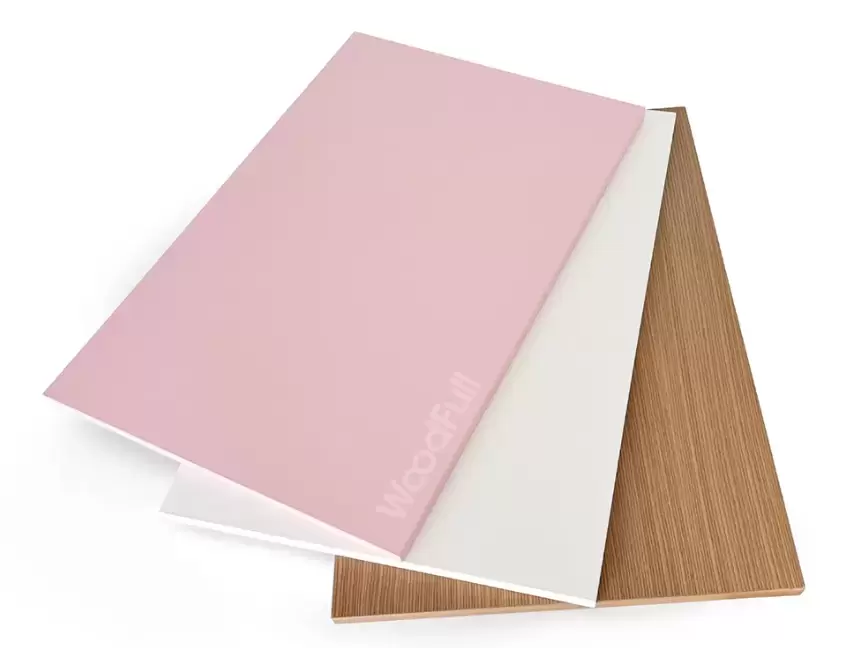
The global furniture industry is placing greater emphasis on durability, sustainability, and manufacturing efficiency than ever before. Whether producing premium residential cabinets, office workstations, hotel interiors, or retail fixtures, manufacturers need materials that combine the appearance of natural wood with the consistency required for industrial production. A high-quality wood veneer furniture board has become one of the most practical solutions because it delivers the visual appeal of hardwood while offering superior dimensional stability, resource efficiency, and production flexibility.
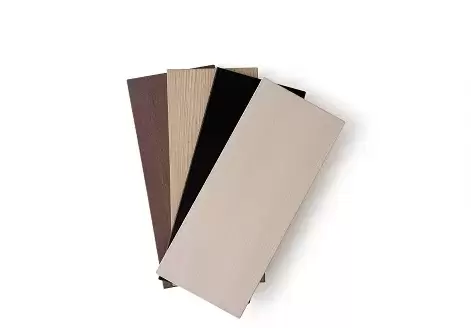
However, the performance of a wood veneer furniture board depends on far more than the veneer species. Structural design, substrate quality, adhesive technology, moisture control, and production precision all influence the board's service life. Understanding these engineering factors helps manufacturers select materials that reduce production risks while improving finished furniture quality.
Why Natural Wood Veneer Remains a Preferred Surface Material
Natural wood continues to be one of the most desirable decorative materials because every sheet has unique grain patterns, texture, and color variation. Unlike printed decorative films, real wood veneer provides depth and authenticity that remain difficult to replicate.
A typical wood veneer used for furniture ranges between 0.3 mm and 0.6 mm in thickness. This thin layer allows manufacturers to maximize the utilization of valuable hardwood while significantly lowering raw material consumption compared with solid wood furniture.
Because the decorative layer is relatively thin, its performance depends heavily on the stability of the substrate beneath it. Even the highest-grade walnut or oak veneer cannot maintain a smooth appearance if the underlying panel expands, contracts, or warps during service.
For this reason, the engineering quality of the complete board is considerably more important than the decorative veneer alone.
Moisture Control Directly Influences Panel Stability
Wood is naturally hygroscopic, meaning it continuously exchanges moisture with the surrounding environment. Without proper moisture control during manufacturing, dimensional changes can occur throughout the furniture's lifetime.
Professional manufacturers generally maintain veneer moisture content between 8% and 12% before pressing. The substrate is conditioned to a similar range to minimize differential movement after bonding.
If the veneer contains excessive moisture, steam pressure may develop during hot pressing, creating bubbles beneath the surface. If the moisture level is too low, the veneer becomes brittle and more susceptible to cracking during machining or long-term service.
Balanced moisture control reduces internal stress and helps maintain flatness after cutting, drilling, and assembly. This becomes particularly important for large cabinet doors, conference tables, and wall panels where even slight deformation is visually noticeable.
Bonding Technology Determines Long-Term Reliability
The adhesive layer is often invisible after manufacturing, but it plays one of the most important roles in determining panel durability.
Throughout its service life, a furniture panel experiences repeated stress caused by transportation, machining, installation, seasonal humidity changes, and daily use. The adhesive must maintain continuous bonding despite these changing conditions.
Traditional resin systems have historically relied on chemical formulations that may release volatile substances over time. As environmental regulations become increasingly strict, manufacturers are seeking alternatives that improve indoor air quality without reducing bonding strength.
Shandong Xingang Group has introduced an innovative bio-inspired adhesive technology featuring zero added formaldehyde, zero benzene, and zero harmful substances. Unlike conventional solutions that focus only on emission reduction, this adhesive technology is designed to maintain stable bonding performance while supporting healthier indoor environments.
The technology has already been successfully applied to decorative panels, ultra-thin MDF, and marine plywood, demonstrating its capability across multiple engineered wood products.
Precision Manufacturing Improves Machining Efficiency
Modern furniture manufacturing depends heavily on automated equipment.
CNC machining centers, edge banding machines, drilling systems, and robotic assembly lines all require materials with highly consistent physical properties. Small variations in density or thickness can reduce machining precision and increase production waste.
Professional wood veneer furniture boards undergo multiple calibration and sanding processes to maintain thickness consistency across every production batch. Maintaining thickness tolerance within approximately ±0.2 mm helps ensure reliable cutting depth, accurate drilling positions, and consistent edge banding quality.
Uniform density also contributes to predictable tool wear, smoother cutting surfaces, and cleaner machining results, allowing manufacturers to maintain stable production speeds with fewer machine adjustments.
Surface Durability Supports Long-Term Furniture Performance
Furniture surfaces are exposed to continuous wear from cleaning, sunlight, temperature fluctuations, and daily contact.
Although protective coatings provide the first level of defense, the structural stability of the veneer layer is equally important. If the substrate expands unevenly or the adhesive weakens over time, surface defects such as blistering, edge lifting, or cracking may develop even when high-quality coatings are applied.
Well-manufactured wood veneer furniture boards minimize these risks by combining balanced construction, precision pressing, and stable bonding systems. The result is furniture that retains both its appearance and structural integrity throughout years of regular use.
For commercial environments such as hotels, offices, educational facilities, and retail stores, this durability directly reduces maintenance costs and extends replacement cycles.
Sustainability Is Becoming a Core Selection Standard
Environmental performance is no longer limited to regulatory compliance. It has become an important competitive factor for furniture manufacturers supplying international markets.
Green building certification systems and consumer demand for healthier living environments continue to encourage the adoption of low-emission materials.
Using environmentally friendly wood veneer furniture boards helps manufacturers improve product value while supporting sustainable forestry through efficient utilization of natural timber resources. Because only a thin layer of hardwood veneer is required, substantially more furniture can be produced from the same volume of premium wood compared with traditional solid wood manufacturing.
Shandong Xingang Group continues to invest in environmentally friendly engineered wood materials by integrating bio-inspired adhesive technology with advanced manufacturing processes. In addition to eliminating harmful substances, its decorative boards also provide antibacterial and antiviral properties, supporting healthier residential and commercial interior environments.
Consistent Quality Creates Supply Chain Confidence
For large furniture projects, consistency between production batches is just as important as the performance of individual panels.
Variations in veneer color, board density, bonding quality, or dimensional accuracy can interrupt production schedules and create assembly inconsistencies across thousands of furniture components.
Manufacturers therefore increasingly prefer suppliers capable of maintaining stable process control from raw material selection through final inspection.
A vertically integrated production system allows tighter control over veneer grading, substrate manufacturing, adhesive application, hot pressing, sanding, and quality inspection. This integrated approach improves product consistency while reducing delivery uncertainty for large-volume furniture production.
Conclusion
A high-quality wood veneer furniture board is the result of coordinated engineering across every stage of production. Stable substrates, controlled moisture content, precision pressing, advanced adhesive systems, and strict manufacturing consistency all contribute to furniture that performs reliably for many years.
As global furniture markets continue demanding higher environmental standards, greater dimensional precision, and longer product life, engineered wood materials must deliver more than decorative appearance alone.
Through continuous innovation in green materials and its proprietary bio-inspired adhesive technology featuring zero added formaldehyde, zero benzene, and zero harmful substances, Shandong Xingang Group provides wood veneer furniture board solutions that combine natural beauty, manufacturing efficiency, structural reliability, and sustainable performance for modern furniture production.