25 Mar 2026
Waterproof Plywood vs Regular Plywood: What You Need to Know
Learn More >


Bendable MDF board has become an important material for modern furniture manufacturing, particularly where curved surfaces, rounded cabinet profiles, and seamless interior details are required. Compared with conventional MDF, flexible MDF is designed to accommodate controlled bending, allowing manufacturers to create complex shapes without relying entirely on expensive solid wood machining or complicated segmented assemblies.
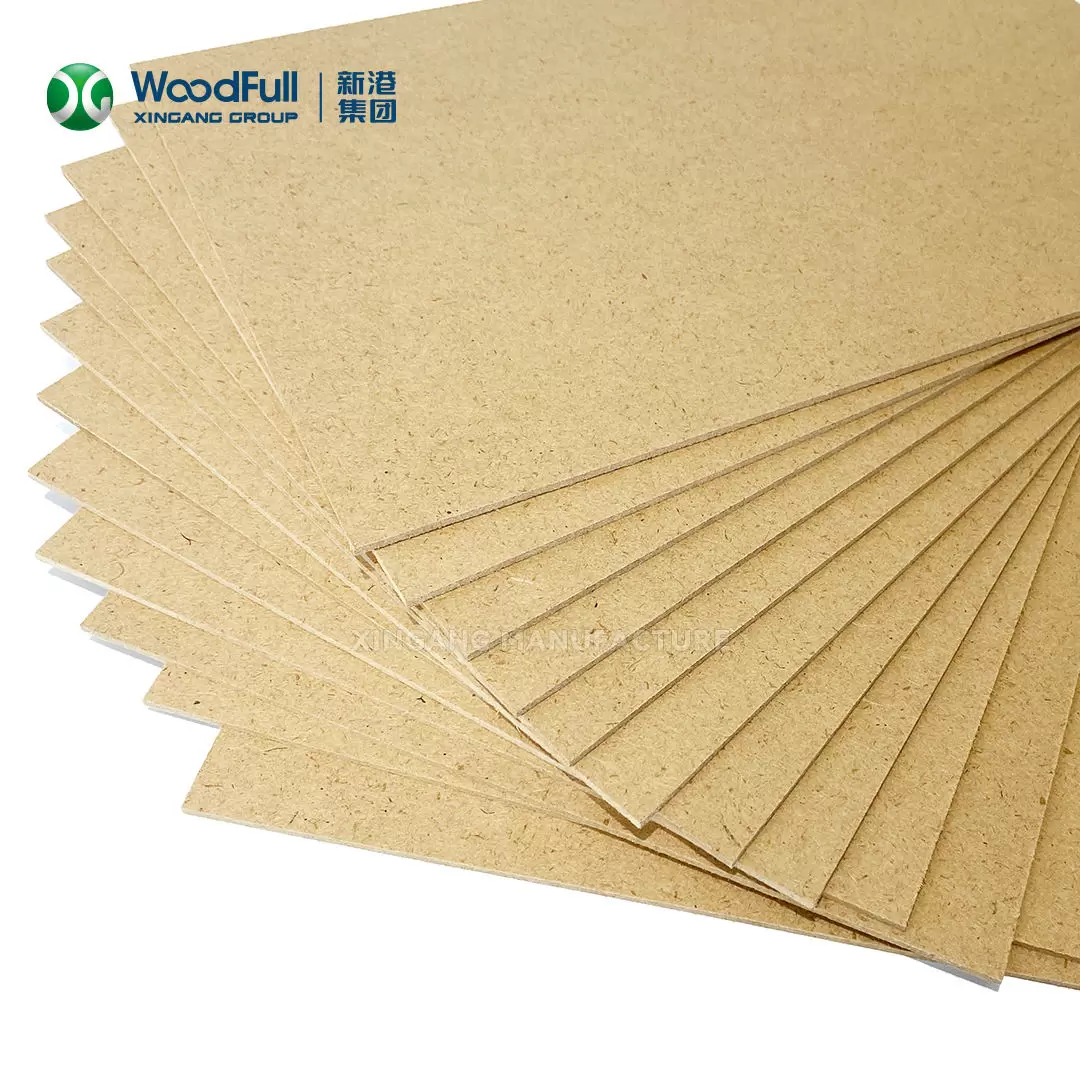
However, successful curved furniture production depends on matching the panel's thickness and bending radius to the intended design. An unsuitable specification can result in surface cracking, spring-back, uneven curvature, or bonding problems during lamination. Understanding the relationship between thickness, flexibility, forming methods, and structural reinforcement is essential for achieving repeatable manufacturing results.
Panel thickness directly influences bending resistance. A thinner bendable MDF board generally requires less force to form around a curved surface, while a thicker panel provides greater structural rigidity but is more difficult to bend.
For example, a 3 mm flexible MDF panel may be suitable for tight-radius decorative applications, while 6 mm or 9 mm panels may be more appropriate for larger curves or projects involving moderate forming requirements. These are indicative product categories rather than universal bending specifications; actual performance must be verified against the manufacturer's technical data.
In furniture manufacturing, the selection process should begin with the finished component's geometry. A narrow curved cabinet side panel may require a different thickness from a large-radius reception desk front. The panel must also accommodate the selected surface finish, since veneer, paint, and decorative laminates can influence the final bending behavior.
For thicker finished components, manufacturers can laminate multiple layers of thin flexible MDF. For instance, two 3 mm panels can be bonded over a curved mold to create a nominal 6 mm structure. This method provides greater control over the final shape and can reduce the need to bend a single thick board.
The minimum bending radius describes the tightest curvature a panel can achieve without unacceptable damage. It is closely related to panel thickness and material flexibility.
A simplified mechanical relationship shows that bending strain increases as panel thickness increases and bending radius decreases. This explains why a thin flexible panel can follow a tighter curve than a thicker rigid panel.
However, MDF is a fiber-based composite rather than a homogeneous plastic sheet. Its actual bending performance is affected by fiber orientation, internal bonding, density profile, moisture content, and adhesive properties. Consequently, a theoretical bending calculation cannot replace physical forming tests.
For a curved cabinet front with a 300 mm radius, the selected panel should be tested on a matching mold before production. For a tighter 100 mm radius, a thinner panel or multilayer forming approach may be necessary. The acceptable radius should always be established through manufacturer specifications and sample validation.
It is also important to distinguish between the inner radius and outer radius of the finished component. Drawings should clearly identify the reference surface to prevent differences between the material supplier and furniture manufacturer.
Bendable MDF is commonly available in different bending orientations. Longitudinal flexible panels bend along their length, whereas transverse flexible panels bend across their width.
This distinction affects panel layout, cutting plans, material utilization, and installation. If the bending direction does not match the required curve, the panel may resist forming or develop localized stress.
For example, a curved wall panel extending horizontally around a room may require a different flexible orientation from a vertical decorative column. The correct orientation should be confirmed before cutting because rotating a panel can fundamentally change its bending behavior.
For projects involving multiple curved components, the supplier should receive the cutting dimensions, bending direction, and finished shape requirements. This allows the material specification to be matched to the actual manufacturing workflow.
There are two common approaches to producing curved MDF structures: bending a single flexible panel or laminating several thin panels together over a mold.
Single-layer bending is suitable for applications where the required radius falls within the panel's tested capability. It can reduce material consumption and simplify production, particularly for decorative skins and curved furniture surfaces.
Multi-layer lamination provides greater flexibility in achieving thicker finished structures. Several thin panels are coated with a suitable adhesive and pressed against a curved mold until the bonding system reaches the required strength.
The process requires careful control of adhesive application, mold geometry, pressing pressure, and curing conditions. Uneven adhesive distribution can produce voids or weak bonding, while insufficient pressure may prevent the layers from following the mold accurately.
The finished component should be checked for spring-back after demolding. Spring-back occurs when stored elastic stress causes the panel to partially return toward its original shape. Its magnitude depends on material properties, adhesive performance, layer thickness, and forming conditions.
For large production runs, a stable mold and repeatable pressing process are essential for maintaining consistent curvature across batches.
The finishing process must be considered during material selection rather than added as a final step. Different surface materials have different flexibility limits and bonding requirements.
Wood veneer provides a natural appearance and is widely used in premium furniture. However, veneer grain direction and thickness affect its ability to follow curved surfaces. Veneer cracks may occur when the bend radius is too small or the adhesive system does not provide sufficient flexibility.
Painted finishes offer greater freedom in color and texture. The MDF surface should be properly sanded, sealed, and primed to reduce uneven absorption. Curved edges and transitions require particular attention because surface defects can become more visible under directional lighting.
Decorative laminates can provide abrasion resistance and consistent patterns, but their flexibility must match the curvature of the underlying panel. Standard rigid laminates may crack or separate when applied to tight curves.
The complete assembly should therefore be tested using the selected MDF, adhesive, surface material, and forming method.
Curved MDF components must maintain their shape during storage, transportation, and installation. Moisture changes can affect fiberboard dimensions and bonding performance, particularly when the material is exposed to high humidity.
Panel moisture content should be compatible with the production environment and the adhesive system. Large differences between the moisture conditions of the panel and the surrounding environment may cause dimensional changes or surface deformation.
For kitchen furniture, commercial interiors, and other moisture-sensitive applications, moisture-resistant board specifications should be evaluated. Edge sealing and protective finishing can further reduce moisture absorption, although they do not make standard MDF waterproof.
Environmental performance also matters in enclosed indoor spaces. Formaldehyde emission requirements should be confirmed according to the destination market. Manufacturers should provide relevant test reports rather than relying exclusively on general environmental claims.
A reliable bendable MDF board supplier should be able to provide consistent thickness, stable bending performance, and clear product specifications. Important evaluation criteria include density, thickness tolerance, internal bond strength, moisture content, surface quality, and bending orientation.
For customized projects, sample testing is particularly valuable. The sample should be formed using the intended radius, adhesive, mold, and finishing material. This helps identify problems before expensive molds and large production quantities are committed.
Shandong Xingang Group Co., Ltd. focuses on environmentally oriented wood-based materials and the development of new adhesive technologies. Its Xingang bionic adhesive has been developed with a focus on eliminating formaldehyde, benzene, and other harmful substances, with applications in decorative boards, ultra-thin density boards, and bionic marine plywood.
For bendable MDF applications, specific product construction and technical properties should be verified according to the intended use. Material flexibility, internal bonding, dimensional stability, and environmental test results should form part of the product approval process.
Selecting bendable MDF board requires balancing panel thickness, minimum bending radius, orientation, surface finishing, and structural requirements. Thin panels are generally more suitable for tight curves, while multilayer lamination can produce thicker and more rigid curved components.
The most reliable approach is to validate the complete material and forming system through physical samples before mass production. By confirming bending performance, adhesive compatibility, dimensional stability, and finishing requirements early, manufacturers can reduce processing defects and achieve more consistent curved furniture components.