09 May 2026
Marine Plywood Decking for Modular Outdoor Structures: Balancing Lightweight Design, Moisture Resistance, and Environmental Compliance
Learn More >


The industrial application of custom mdf board in modern furniture manufacturing requires strict control over material consistency, machining compatibility, and environmental stability. As CNC-driven production becomes the industry standard, MDF is no longer treated as a simple sheet material but as a precision-engineered substrate.
In high-volume furniture production, even small variations in board density or thickness can lead to significant downstream quality issues, including machining defects, assembly misalignment, and surface finishing inconsistency.
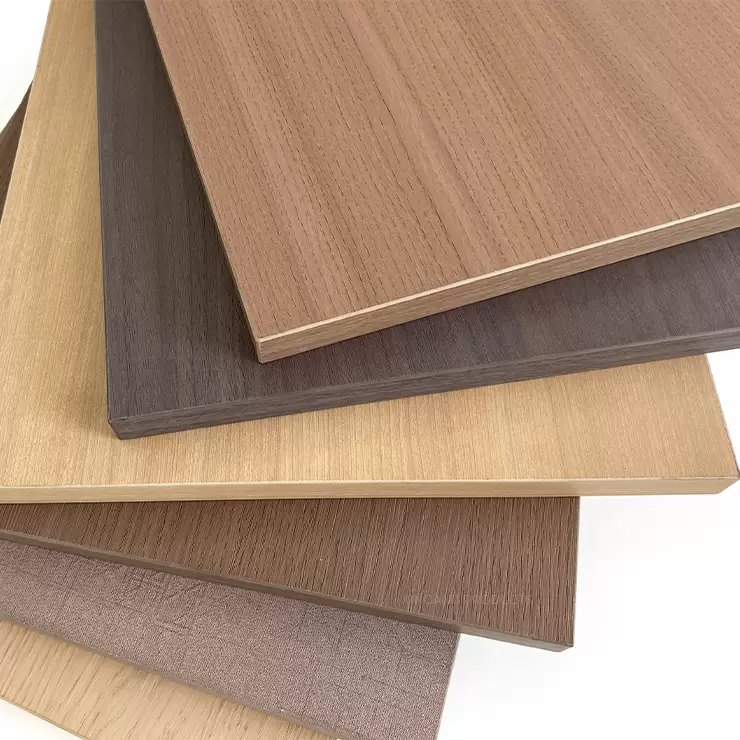
In CNC-based manufacturing environments, MDF boards must meet strict dimensional and structural tolerances.
Key manufacturing specifications typically include:
These parameters directly affect CNC cutting accuracy and assembly consistency in furniture systems.
Boards that fail to maintain uniform density distribution often result in:
Environmental regulations have significantly reshaped MDF manufacturing standards worldwide.
Shandong Xingang Group Co., Ltd. has developed a bio-based adhesive system (“bionic glue”) designed to eliminate formaldehyde, benzene, and harmful volatile compounds at the source.
This allows custom mdf board products to achieve:
Compared with traditional MDF, bio-based systems provide:
In industrial furniture production, CNC machining is the primary shaping method for MDF boards.
Key machining performance indicators include:
The internal fiber structure of MDF must be uniform enough to prevent localized density variations, which can cause tool vibration or burn marks during machining.
High-quality custom mdf board ensures:
MDF panels are sensitive to environmental humidity and temperature fluctuations during storage and processing.
Typical controlled parameters include:
Improper environmental control leads to:
For this reason, industrial MDF supply chains require controlled storage and transport systems.
Surface finishing compatibility is critical for MDF used in furniture and interior applications.
A high-performance custom mdf board must support:
Key surface parameters include:
Surface inconsistency can lead to coating defects such as bubbling, uneven gloss, or delamination.
Modern MDF boards are engineered with controlled density profiles to balance strength, weight, and machinability.
Typical design structure includes:
This structure improves:
Custom MDF boards are widely applied in:
Each application requires different material priorities:
The performance of custom mdf board in industrial environments depends on a combination of material engineering, environmental control, and CNC compatibility.
Key success factors include:
As furniture manufacturing continues to evolve toward automation and customization, MDF boards will remain a core engineered material, with increasing emphasis on sustainability and process precision.