10 Jun 2026
Manufacturing Process Control in Wide Furniture Board Production: From Raw Material to High-Precision Panel
Learn More >


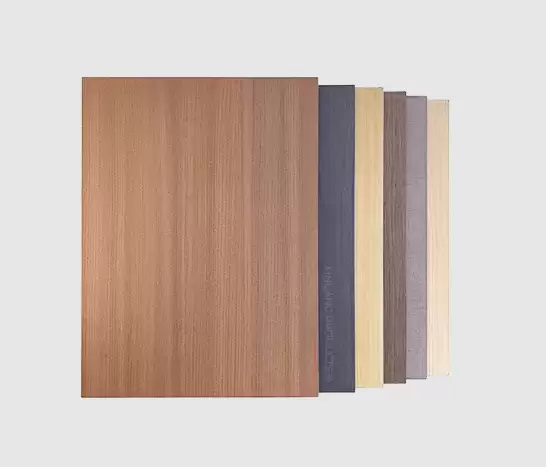
Furniture manufacturers today face increasing pressure to balance aesthetics, durability, environmental compliance, and production efficiency. While solid wood furniture still maintains a premium image in some markets, engineered dark oak furniture board is rapidly becoming the preferred choice for many large-scale residential and commercial applications.
The shift is largely driven by practical manufacturing and performance considerations rather than appearance alone.
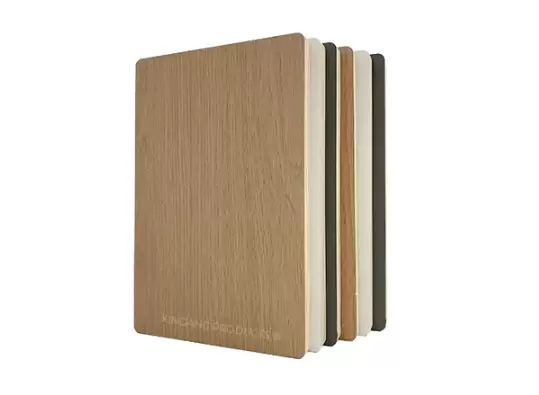
Modern engineered boards now provide realistic wood textures, improved dimensional stability, lower environmental impact, and better large-scale production consistency compared with traditional solid wood materials.
As global interior projects increasingly prioritize sustainability and cost efficiency, the comparison between dark oak furniture board and solid wood has become more important than ever.
Solid oak furniture provides authentic natural grain and strong traditional appeal. However, natural wood also introduces several engineering challenges.
Because wood continuously reacts to humidity and temperature changes, solid wood furniture may experience:
These problems become more severe in large furniture panels or regions with unstable climate conditions.
Solid wood manufacturing also creates material utilization challenges because large quantities of timber are lost during cutting and defect removal processes.
In mass production environments, maintaining dimensional consistency with solid wood is significantly more difficult.
Modern furniture boards use engineered multi-layer or fiber-based structures designed to improve dimensional stability.
Compared with solid wood, high-quality dark oak furniture boards provide:
These advantages are especially important in:
Large furniture panels made from engineered boards maintain alignment more effectively during long-term use.
Traditional furniture adhesives have historically created concerns related to formaldehyde emissions and indoor air quality.
Modern consumers increasingly prefer environmentally friendly furniture materials that support healthier indoor environments.
Shandong Xingang Group developed biomimetic adhesive technology that achieves:
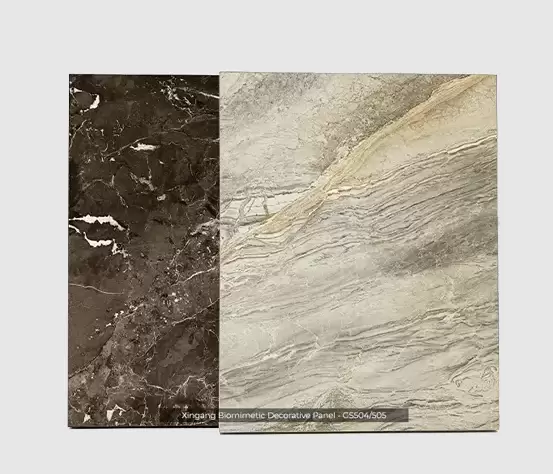
The company applies this technology to decorative panels, ultra-thin MDF boards, and marine plywood products.
Environmentally friendly furniture boards are becoming increasingly important in global markets where green building regulations and indoor air quality standards continue tightening.
In commercial environments, furniture surfaces must withstand long-term daily wear.
Engineered dark oak furniture boards often provide stronger resistance to:
Surface laminates and decorative coatings can also improve color consistency across large production batches.
Solid wood furniture may develop uneven color variation or visible aging patterns over time, especially under sunlight exposure.
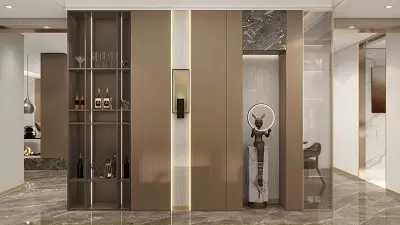
For hotels, offices, retail stores, and apartment projects, surface consistency is often a major purchasing consideration.
Furniture factories increasingly rely on automated CNC processing systems and modular assembly production lines.
Engineered furniture boards offer more stable machining performance because of their uniform internal structure.
This improves:
Solid wood materials often require additional manual processing because of natural grain variation and structural inconsistency.
For large-volume furniture manufacturing, engineered boards help reduce:
Sustainable manufacturing has become a major trend across the furniture industry.
Engineered furniture boards improve wood resource utilization while supporting environmentally friendly production processes.
Compared with solid wood products requiring large quantities of natural timber, engineered boards help optimize raw material efficiency and reduce forest resource pressure.
Combined with low-emission adhesive systems, sustainable furniture boards are becoming increasingly attractive for green building and environmentally certified interior projects.
The comparison between dark oak furniture board and solid wood is no longer simply about appearance. Modern furniture manufacturing now prioritizes long-term stability, environmental performance, production efficiency, and lifecycle durability.
High-quality engineered dark oak furniture boards provide advantages in:
As global furniture industries continue moving toward sustainable and industrialized manufacturing, environmentally friendly engineered furniture boards will play an increasingly important role in modern interior applications.