26 Feb 2026
Shandong Xingang Group to Showcase Eco-Friendly Wood Materials at WORLDBEX 2026, Manila
Learn More >


Formaldehyde emissions remain a major concern in the engineered wood industry, particularly in particle board used for furniture, interior decoration, cabinetry, and residential construction. A modern particle board manufacturing plant must balance mechanical performance, production efficiency, adhesive costs, and increasingly stringent environmental requirements. Conventional resin systems can deliver reliable bonding strength and established manufacturing processes, but they may also introduce formaldehyde-related emissions that require careful control.
As international markets place greater emphasis on indoor air quality and low-emission building materials, manufacturers are exploring alternative adhesive technologies and more comprehensive emission management strategies. Reducing formaldehyde is no longer simply a matter of adjusting resin dosage. It requires reconsidering adhesive chemistry, raw material characteristics, pressing conditions, and finished-board verification.
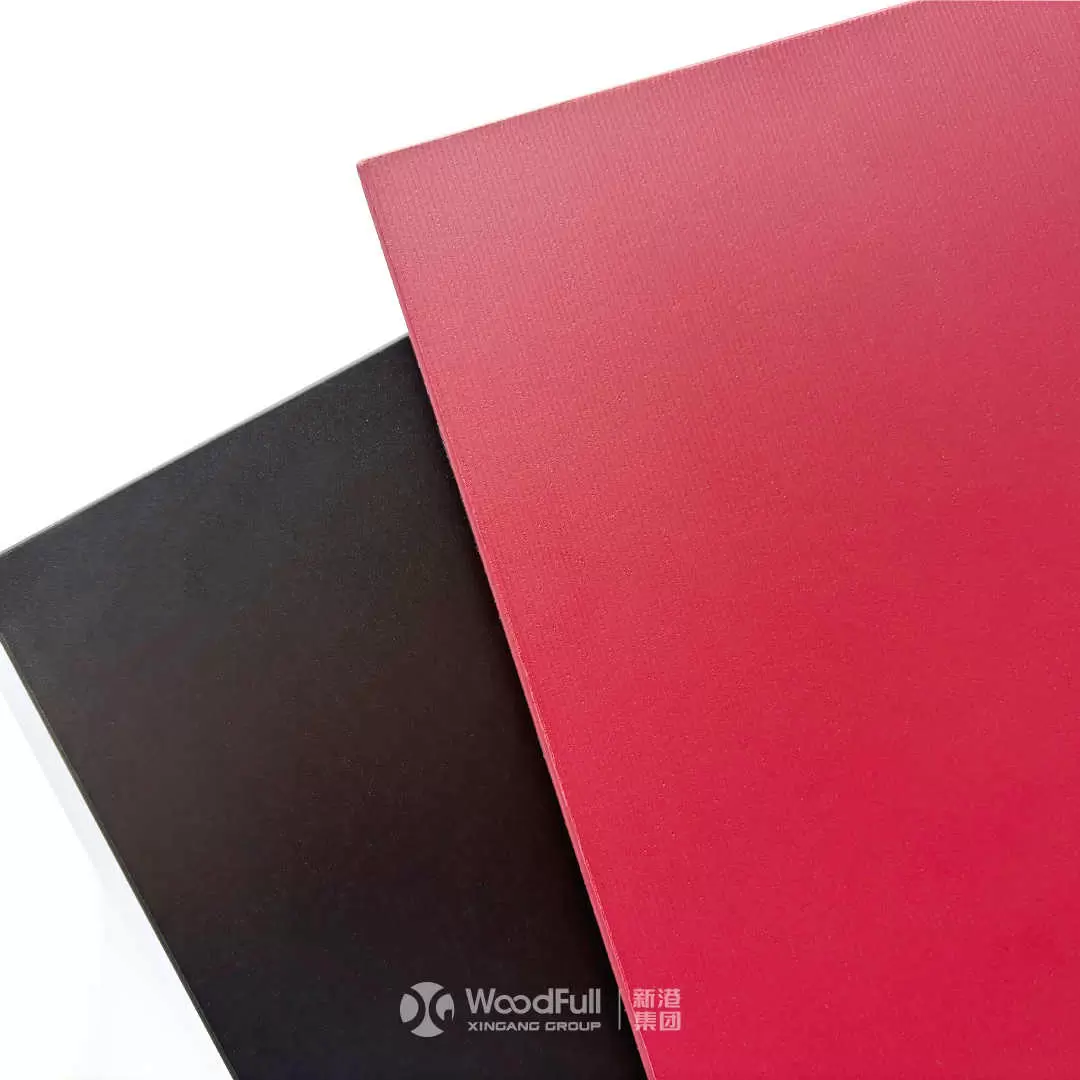
Particle board is manufactured by bonding wood particles under heat and pressure. The adhesive system plays a central role in determining the board's internal bond strength, dimensional stability, moisture resistance, and manufacturing efficiency.
Urea-formaldehyde resin has traditionally been widely used because of its relatively low cost, fast curing characteristics, and suitability for interior-grade panels. However, residual formaldehyde and chemical reactions within the cured adhesive can contribute to emissions from finished boards.
Other conventional resin systems, including melamine-urea-formaldehyde and phenol-formaldehyde, offer different performance characteristics and application conditions, but their suitability depends on the intended product and environmental requirements.
Formaldehyde emissions can also be influenced by factors beyond adhesive selection. Wood species, recycled material content, particle moisture, resin application, board density, curing conditions, and post-production storage may all affect the final emission profile.
For this reason, a particle board manufacturing plant seeking lower emissions should evaluate the entire production system instead of relying exclusively on a lower-formaldehyde resin formulation.
The adhesive system is one of the most effective starting points for reducing formaldehyde emissions.
Conventional UF resin provides efficient bonding for many interior applications, but manufacturers targeting stricter emission requirements may need alternative formulations or modified resin systems. MUF resin can improve certain moisture-related performance characteristics, while other technologies may be developed to reduce or eliminate formaldehyde-based bonding chemistry.
Formaldehyde-free adhesive technologies represent a more fundamental change. Instead of simply reducing the formaldehyde content of conventional resin, these systems aim to establish alternative bonding mechanisms between wood particles.
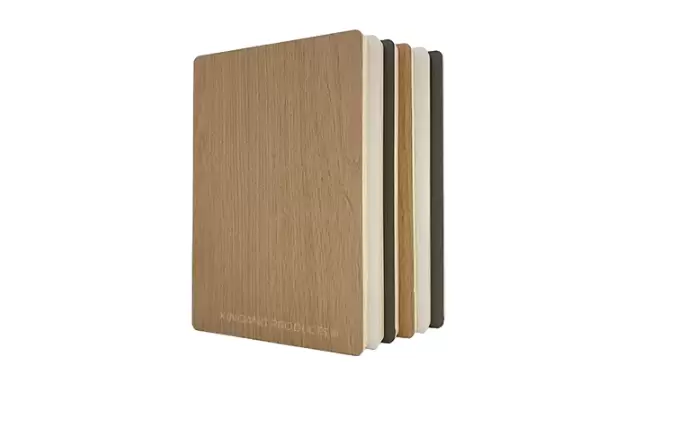
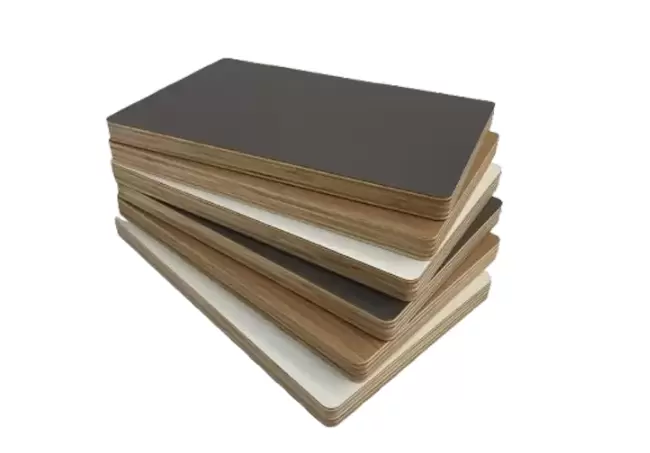
Shandong Xingang Group Co., Ltd. has developed Xingang Biomimetic Adhesive, which is positioned as zero-formaldehyde, zero-benzene, and zero-harmful-substance adhesive technology. The company has successfully applied this technology at scale in biomimetic decorative boards, ultra-thin density boards, and biomimetic marine plywood.
For particle board manufacturers, this type of innovation provides a potential direction for developing environmentally oriented engineered wood products. However, industrial adoption must be supported by technical validation, including adhesive compatibility, curing behavior, bonding strength, moisture resistance, and production-line adaptability.
Changing the adhesive system alone does not guarantee consistent low-emission performance. Production parameters must also be controlled to ensure that the selected adhesive performs reliably.
Particle moisture management
Wood particles entering the blending stage must have moisture content appropriate to the adhesive formulation and pressing process. Excessive moisture can interfere with adhesive distribution and increase the energy required for drying. It may also affect internal steam pressure during hot pressing. Insufficient moisture can influence resin spreading and curing behavior.
Consistent moisture control helps maintain stable bonding conditions and reduces batch-to-batch variations.
Resin application and blending uniformity
The adhesive application rate must be optimized according to particle size, surface area, board density, and target mechanical properties. Excessive resin consumption increases material costs and may introduce unnecessary chemical loading, while insufficient application can weaken internal bonding.
Blender design, spray nozzle condition, mixing intensity, and particle distribution all affect application uniformity. Manufacturers should evaluate resin consumption together with internal bond strength and emission test results rather than optimizing adhesive dosage independently.
Hot pressing and curing control
Hot pressing determines how effectively the adhesive develops its bonding properties. Temperature, pressure, pressing time, and board thickness must be coordinated with the adhesive's curing characteristics.
Incomplete curing may compromise mechanical properties and affect residual chemical characteristics. Excessive temperatures or inappropriate processing conditions may also cause board discoloration, degradation, or other defects.
When introducing a new adhesive, manufacturers should establish a dedicated pressing schedule through pilot production and laboratory testing rather than directly transferring the settings used for conventional UF resin.
Environmental claims must be supported by standardized testing. Terms such as low-formaldehyde and formaldehyde-free should not be treated as interchangeable because they describe different technical and regulatory expectations.
Depending on the destination market, relevant evaluation methods may include EN 717-1 for chamber testing, ASTM E1333 for large-chamber formaldehyde emissions, and ASTM D6007 for small-chamber testing. Other market-specific requirements may apply.
For example, the United States regulates formaldehyde emissions from composite wood products under TSCA Title VI, while European markets apply relevant requirements under applicable EU regulations and standards. Manufacturers should verify the latest requirements for the intended product category and market.
In addition to emission testing, finished particle board must maintain the mechanical properties required for its application. Internal bond strength, bending strength, thickness swelling, moisture resistance, and dimensional stability should all be assessed.
A practical validation program should compare conventional and alternative adhesive systems using the same wood material, board density, thickness, and target application wherever possible. This helps isolate the actual impact of adhesive changes.
A lower-emission adhesive should not be evaluated solely by its purchase price per kilogram. Its total production cost depends on resin consumption, curing speed, energy requirements, press cycle time, rejected board rate, and finished-product performance.
For example, an alternative adhesive with a higher unit cost may still be economically attractive if it reduces the need for additional emission-control measures, improves product positioning, or supports access to markets with stricter environmental requirements. Conversely, if the new formulation requires substantially longer pressing cycles, the resulting reduction in production capacity must be included in the cost assessment.
Manufacturers should therefore compare cost per cubic meter of qualified finished board rather than cost per unit of adhesive. This provides a more realistic basis for evaluating technology transitions.
The future of particle board manufacturing will increasingly depend on material innovation that combines environmental performance with industrial reliability.
Shandong Xingang Group is committed to developing environmentally oriented wood materials and promoting the application of its biomimetic adhesive technology. Its product portfolio includes biomimetic decorative boards, ultra-thin density boards, and biomimetic marine plywood.
The company's approach emphasizes reducing dependence on conventional harmful chemical components while maintaining the functional properties required for engineered wood products. Its development direction also includes antibacterial and antiviral material applications, supporting the broader goal of healthier interior environments.
For manufacturers considering alternative bonding technologies, collaboration with material developers can help evaluate formulation compatibility, production parameters, and application-specific performance requirements.
Reducing formaldehyde emissions in a particle board manufacturing plant requires coordinated improvements in adhesive chemistry, particle preparation, resin application, hot pressing, and finished-board testing. Conventional process adjustments can help manage emissions, but alternative adhesive technologies offer opportunities for more fundamental changes in product formulation.
By combining verified environmental performance with reliable mechanical properties and economically viable production conditions, manufacturers can develop particle boards that better meet evolving market expectations. Innovative technologies such as Xingang Biomimetic Adhesive illustrate how material science can contribute to the transition toward healthier and more sustainable engineered wood products.