22 Oct 2025
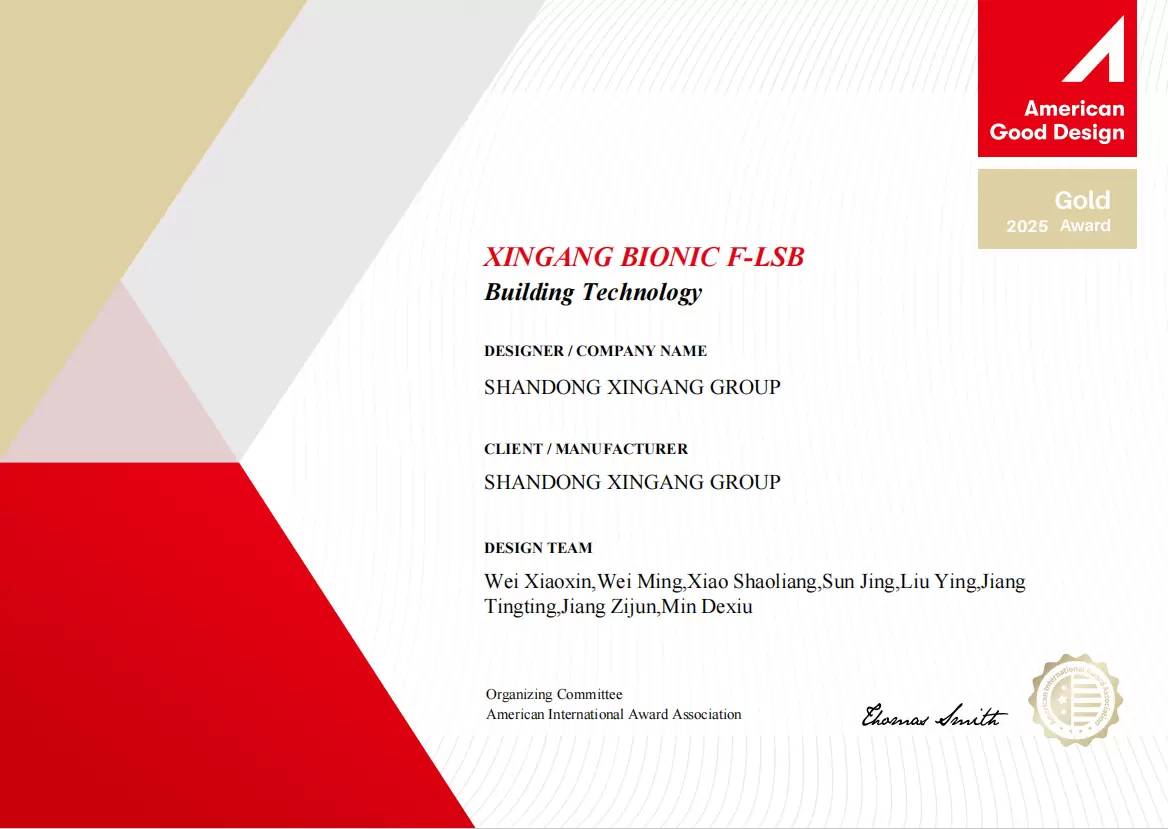
Shandong Xingang Group Wins the 2025 American Good Design Gold Award for XINGANG BIONIC F-LSB Building Technology
Learn More >


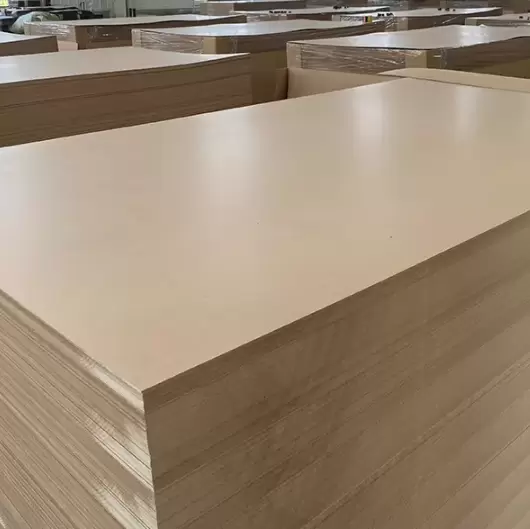
MDF board has become a core material in furniture, interior decoration, cabinetry, wall panels, doors, flooring components, and other engineered-wood applications because its homogeneous structure provides a more predictable alternative to natural wood. Unlike solid wood, MDF is manufactured by refining wood fibers and bonding them under controlled pressure and temperature, allowing manufacturers to engineer density, thickness, surface quality, dimensional stability, and machinability according to the intended application.
For modern panel manufacturing, however, choosing an MDF board is no longer simply a matter of selecting a thickness and density. Formaldehyde emissions, bonding technology, moisture resistance, internal bond strength, screw holding, surface quality, machining performance, and long-term dimensional stability all influence the actual value of the finished panel. These parameters become particularly important when MDF is used in enclosed furniture, children's products, decorative wall systems, or other applications where indoor environmental quality is a major consideration.
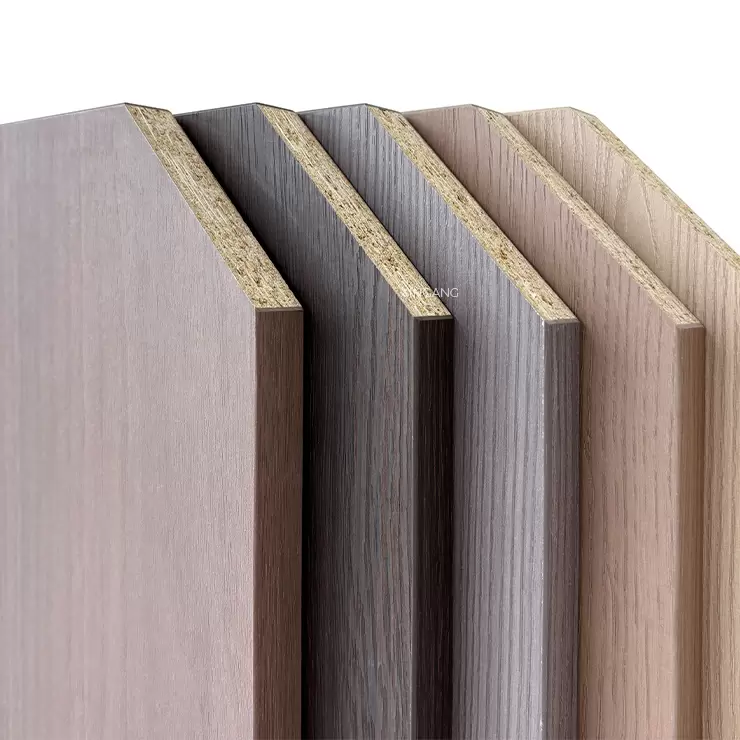
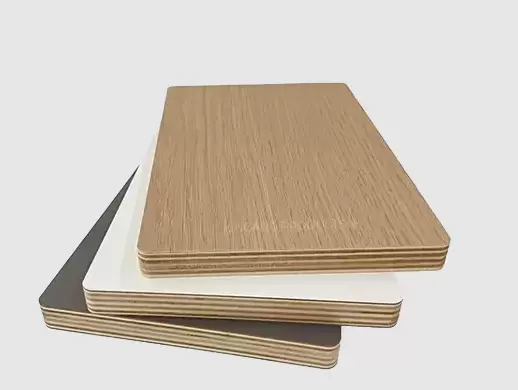
Shandong Xingang Group Co., Ltd. focuses on environmentally friendly wood-based materials and has developed Xingang Bionic Adhesive, a bonding technology positioned around zero formaldehyde, zero benzene, and zero harmful substances. Its industrial applications include decorative panels, ultra-thin density boards, and bionic marine plywood, supporting a material strategy that combines environmental performance with functional requirements.
The basic structure of MDF board consists of refined wood fibers combined with adhesive and formed into a uniform panel under heat and pressure. Because the fibers are distributed relatively evenly compared with conventional particleboard, MDF provides a consistent surface and relatively predictable cutting behavior.
This homogeneous structure is particularly valuable for CNC routing, drilling, profiling, edge shaping, and decorative machining. When the board density is sufficiently uniform, cutting resistance is more stable and the probability of localized edge defects can be reduced.
For furniture manufacturing, this consistency can influence production yield. A panel that machines predictably allows cutting parameters, tool selection, and finishing processes to be standardized more effectively.
MDF board density affects weight, strength, screw holding, machining behavior, and dimensional stability. A higher-density panel can provide stronger mechanical performance, but greater density may also increase panel weight and cutting resistance.
A lower-density panel can reduce weight and machining energy, but it may not provide sufficient screw-holding performance or structural stability for demanding applications.
Therefore, density should be evaluated together with panel thickness and end-use requirements rather than treated as an independent indicator.
For example, decorative wall panels may prioritize low weight and surface quality, while furniture components may require stronger screw retention and better edge machining performance.
Thickness tolerance becomes increasingly important when MDF board is processed using automated equipment.
If a nominal 18 mm board has significant thickness variation across the production batch, CNC machining depth, edge-banding settings, hinge drilling, and panel assembly can become less consistent.
For large-scale furniture production, thickness stability helps maintain predictable dimensions across hundreds or thousands of panels.
The same principle applies to ultra-thin MDF board, where a smaller absolute thickness means that even relatively small dimensional deviations can represent a significant percentage of the total thickness.
MDF board is frequently selected because its smooth and homogeneous surface is suitable for painting, laminating, veneering, printing, and decorative finishing.
Surface uniformity influences coating consumption and final appearance. A more consistent surface can reduce the need for excessive sanding or corrective preparation before finishing.
For decorative MDF applications, surface quality should therefore be assessed not only visually but also according to how consistently the panel performs during subsequent coating, lamination, or printing processes.
A panel intended for high-gloss finishing has substantially different surface requirements from one covered with a thick decorative laminate.
Adhesive chemistry is one of the most important factors influencing the environmental profile of MDF board.
Traditional wood-based panels may use resin systems that can release formaldehyde over time. The actual emission level depends on adhesive formulation, raw materials, production conditions, panel structure, and environmental factors such as temperature and humidity.
For interior applications, low-emission or formaldehyde-free bonding technologies can become a major differentiating factor.
Shandong Xingang Group's Xingang Bionic Adhesive is developed around a zero-formaldehyde, zero-benzene, and zero-harmful-substance positioning, providing an alternative approach to bonding wood-based materials where environmental performance is a primary requirement.
The adhesive does not simply determine environmental performance. It also contributes to the mechanical integrity of the MDF board.
Bonding strength affects internal bond strength, edge integrity, dimensional stability, and resistance to environmental changes.
An adhesive system therefore needs to provide sufficient bonding performance while meeting the required environmental target.
For this reason, an MDF board should be evaluated as a complete material system consisting of wood fibers, adhesive, moisture content, pressing conditions, density profile, and finishing characteristics.
Standard MDF board is primarily intended for controlled indoor environments. Exposure to high humidity or direct moisture can cause swelling and dimensional changes.
When MDF is used in kitchens, bathrooms, marine-related interiors, or humid climates, moisture resistance becomes a more important selection criterion.
The key question is not simply whether a board is labeled as moisture-resistant. Performance should be evaluated through appropriate water absorption, thickness swelling, and dimensional stability data.
A panel exposed to repeated humidity cycles may behave differently from one exposed to a single short-duration moisture event.
MDF board is widely used for CNC cutting because its uniform structure allows complex profiles to be produced with relatively predictable results.
However, the board's density profile and adhesive composition influence tool wear and cutting quality.
If the surface and core have substantially different machining behavior, edge quality may vary between cutting zones.
For high-volume production, tool life becomes an important operating cost. A board that produces cleaner edges and more consistent cutting forces can reduce tool replacement frequency and improve production stability.
Ultra-thin MDF board presents a different manufacturing challenge.
As thickness decreases, maintaining dimensional consistency, structural integrity, surface flatness, and handling strength becomes more difficult.
Applications may include decorative surfaces, furniture components, backing materials, and lightweight interior structures.
Shandong Xingang Group has developed large-scale applications for ultra-thin density boards, demonstrating the potential of engineered wood materials for applications where reduced thickness and material efficiency are important.
For global furniture and interior markets, environmental performance is increasingly part of material qualification.
Customers may evaluate emissions, raw-material traceability, adhesive chemistry, recyclability, and manufacturing practices alongside traditional mechanical properties.
This changes the way MDF board should be specified. A technically acceptable panel with unclear environmental characteristics may create additional qualification work downstream.
A material with clearly defined environmental properties can make product development and market positioning easier, particularly for interior applications where indoor air quality is important.
The performance of MDF board is determined by much more than its thickness and appearance. Density, thickness tolerance, surface quality, internal bonding, machining behavior, moisture resistance, adhesive chemistry, and environmental emissions all influence whether the material is appropriate for a specific application.
For furniture, decorative panels, interior systems, and other wood-based products, selecting an MDF board should begin with the finished-product requirements and then work backward to the appropriate material structure and bonding technology.
With its focus on environmentally friendly wood-based materials and Xingang Bionic Adhesive technology, Shandong Xingang Group is developing MDF-related solutions around both functional performance and environmental requirements. This approach provides manufacturers with a pathway toward panels that are not only easier to process but also better aligned with the growing demand for healthier and more sustainable interior materials.