14 Aug 2026
Thin MDF Board for CNC Cutting: Precision, Surface Quality, and Yield
Learn More >


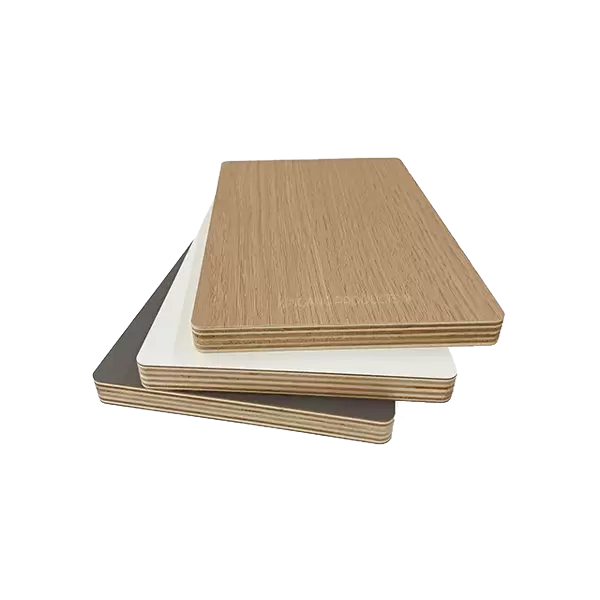
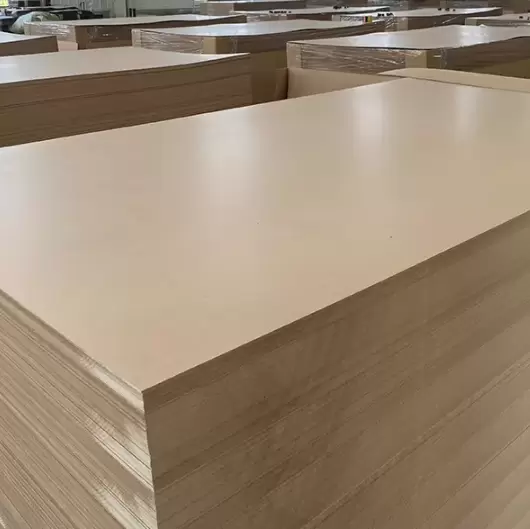
For modern furniture manufacturing, Melamine Particle Board is valued because it combines the structural function of a wood-based panel with a factory-applied decorative surface. This construction reduces finishing operations and supports efficient production of cabinets, wardrobes, shelving, office furniture, kitchen units, and interior components.
Yet the performance of Melamine Particle Board depends heavily on where and how the panel is used. Moisture exposure, continuous loading, temperature changes, edge processing, hardware installation, and surface wear can all influence service life. Selecting a board based only on appearance or nominal thickness can therefore create problems after installation.
A more reliable approach is to evaluate the three performance dimensions that matter most in real applications: moisture behavior, mechanical strength, and long-term surface durability.
One of the most common misunderstandings about melamine-faced panels is that the decorative surface makes the entire board waterproof.
The melamine surface provides an effective finished layer, but the particle board core remains a wood-based material. Moisture can reach the core through exposed edges, drilled holes, joints, damaged areas, sink cutouts, hinge recesses, and improperly sealed connections.
This is why moisture performance should be evaluated at the panel level rather than by looking only at the face surface.
For kitchen cabinets, for example, the most vulnerable areas are often around sinks, plumbing openings, cabinet bases, and exposed edges. In these areas, water exposure may occur repeatedly rather than as a single short-term event.
The technical property to examine is commonly thickness swelling after water exposure, together with the relevant moisture-resistance classification or test standard. A lower swelling value generally indicates better dimensional stability under the specified test conditions, although the actual suitability still depends on the intended application.
Particle board can change dimension when exposed to moisture. If swelling occurs near an edge connection, the resulting deformation may affect door alignment, drawer movement, joint strength, and surface appearance.
Consider a cabinet component with an unprotected cut edge. Repeated moisture exposure can cause localized swelling that is much more significant than what would be observed on the intact melamine surface.
This is why moisture-resistant board selection and edge protection should be considered together.
For demanding applications, manufacturers may use appropriate edge-banding systems, sealants, construction details, and installation practices to reduce water penetration. The board itself should still be selected according to the expected environmental conditions.
When buyers ask whether a Melamine Particle Board is "strong enough," the answer depends on what type of load the panel will experience.
A shelf mainly requires stiffness and resistance to bending. A cabinet side panel may need good screw-holding performance. A component containing cam connectors depends on local core integrity. A large structural panel may require a combination of bending strength, stiffness, and internal bond strength.
Several technical properties should therefore be reviewed together.
MOR, or modulus of rupture, indicates the bending stress a board can withstand under the specified test conditions.
MOE, or modulus of elasticity, indicates stiffness. For long shelves, MOE is particularly useful because a panel can remain structurally intact while still deflecting enough to become unacceptable in appearance or function.
Internal bond strength measures the resistance of the board to internal separation and provides insight into the integrity of the bonded particle structure.
Screw withdrawal resistance is important for furniture assembly because hinges, handles, drawer systems, connectors, and other hardware transfer localized forces into the board.
A supplier that provides these parameters gives manufacturers a much better basis for material selection than a simple "high strength" description.
Increasing thickness generally improves bending stiffness, but thickness alone should not be used to determine whether a shelf or panel will perform adequately.
A 16 mm shelf with short support spacing can behave differently from an 18 mm shelf spanning a much greater distance. Load distribution, panel width, support locations, hardware, and construction geometry all influence the result.
This is particularly relevant for open shelving and storage furniture. If a shelf carries a continuous load over a long span, excessive deflection can become the limiting factor.
For engineering-oriented procurement, board thickness should therefore be evaluated together with the expected span and load rather than treated as an isolated specification.
The melamine layer provides the visible finish and protects the underlying board during normal use. However, different furniture environments produce different types of surface stress.
Kitchen cabinets may experience oil, steam, food stains, cleaning agents, and frequent wiping. Office desks may experience abrasion from equipment and repeated contact with accessories. Retail furniture can be exposed to constant handling by customers.
Surface performance should therefore be assessed through relevant indicators such as scratch resistance, abrasion resistance, stain resistance, surface hardness, and resistance to common chemicals.
Color consistency is another practical concern. Large furniture projects often require multiple boards to be assembled side by side. Even relatively small variations in decorative paper color, gloss level, or texture can become visible across large surfaces.
The face of a Melamine Particle Board may look excellent, but the finished furniture can still have poor durability if edge processing is inadequate.
Sawing and CNC routing expose the particle board core. Edge banding then becomes the primary barrier protecting the core from impact and moisture.
For this reason, panel processing should be tested using the actual production equipment. Excessive chipping, poor edge adhesion, or inconsistent panel thickness can affect the appearance and service life of the finished furniture.
A technically suitable board should support stable processing with the selected blade, router, drill, and edge-banding system.
Environmental claims have become increasingly important in furniture supply chains, especially for residential interiors, children's furniture, hospitality projects, and green-building applications.
A manufacturer should request formaldehyde emission documentation and identify the relevant testing methodology and certification requirements for the target market.
Shandong Xingang Group's environmental-material strategy centers on its Xingang bionic adhesive, which the company describes as containing 0 formaldehyde, 0 benzene, and 0 harmful substances. The technology has been applied at scale in decorative panels, ultra-thin density boards, and bionic marine plywood.
For finished Melamine Particle Board, procurement decisions should still be based on documentation for the actual finished product, including the core board and surface construction, rather than assuming that the performance of one material component automatically represents the entire panel.
The correct comparison is not simply "standard versus premium." It should be "which specification matches the environment?"
A dry bedroom wardrobe may not require the same moisture performance as a kitchen cabinet located beside a sink. Likewise, an office storage unit in a climate-controlled building has different requirements from furniture used in a coastal or high-humidity environment.
For each project, manufacturers should define:
Expected relative humidity
Potential direct or indirect water exposure
Load and support conditions
Required panel thickness
Surface wear level
Edge treatment
Hardware type
Expected service life
Applicable environmental standards
This application-based method prevents both under-specification and unnecessary material costs.
A technically good Melamine Particle Board should not only pass laboratory tests. It should also remain consistent during repeated production batches.
For furniture manufacturers, batch-to-batch consistency influences CNC settings, cutting yield, edge-banding parameters, drilling accuracy, assembly tolerances, and finished appearance.
A supplier's quality-control system should therefore be evaluated alongside product specifications. Thickness variation, panel flatness, surface defects, decorative paper consistency, and core uniformity all deserve attention.
The performance of Melamine Particle Board is determined by the complete panel system and its operating environment. Moisture resistance protects dimensional stability, mechanical properties determine structural behavior, and surface durability affects the furniture's appearance and service life.
For demanding furniture applications, the most effective procurement strategy is to define the operating conditions first and then select the board specification. By comparing thickness, MOR, MOE, internal bond strength, thickness swelling, surface durability, emission performance, and machining consistency, manufacturers can make a more predictable material decision and reduce problems during both production and installation.