14 Aug 2026
Thin MDF Board: How Thickness, Density, and Strength Affect Performance
Learn More >


A circular furniture board can help furniture manufacturers address two closely connected challenges: reducing waste during production and improving the prospects for material recovery after furniture reaches the end of its service life. With growing attention to resource efficiency and product lifecycle impacts, manufacturers are under pressure to use panel materials more efficiently without compromising machining accuracy, structural integrity, or surface quality.
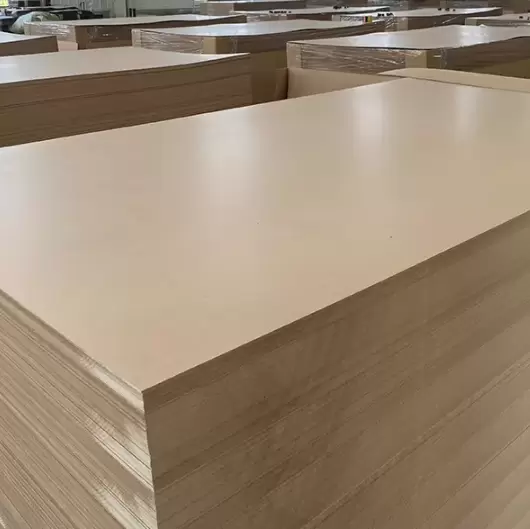
In practice, circularity depends on decisions made at several stages. Board composition influences available recovery options, panel dimensions affect cutting waste, adhesive and surface systems affect material compatibility, and furniture construction determines whether components can be repaired or separated. A board that performs well in isolation may still contribute to waste if its dimensions do not suit the production layout or its finished assembly is difficult to disassemble.
A more effective strategy is to connect material selection with production planning, furniture design, and waste management. By measuring panel yield, separating waste streams, selecting appropriate bonding systems, and designing for repair, manufacturers can build a practical circularity program around circular furniture board materials.
Panel waste is often treated as an unavoidable cost of furniture manufacturing, but the quantity of waste depends partly on how board formats and component dimensions are planned. A board that requires extensive trimming to produce the required parts may have a higher effective material cost than one that fits the cutting layout more efficiently.
Consider a manufacturer producing cabinet sides, shelves, doors, and drawer components from engineered wood panels. If the component dimensions are poorly aligned with the available board sizes, the cutting process may generate large offcuts that are difficult to reuse. Standardizing dimensions where product design allows can improve nesting efficiency and create offcuts large enough for smaller components.
A useful starting point is to measure material yield:
Material yield (%) = Usable component area ÷ Input board area × 100
This calculation provides a basic indicator of how much incoming panel area becomes usable parts. It does not capture every cost, such as damaged edges, surface defects, or machining losses, but it makes comparisons between production layouts more objective.
For example, if a cutting plan produces 8.0 square meters of usable parts from 10.0 square meters of input board, the material yield is 80%. If a revised nesting layout raises the yield to 86%, the same production quantity requires less input material, assuming the component mix and quality requirements remain comparable. Actual savings depend on board prices, offcut reuse, cutting constraints, and production conditions.
Material yield should be tracked by product family rather than only across the entire factory. High-volume cabinet panels may offer different optimization opportunities from small decorative parts or customized furniture components.
Circular furniture board utilization improves when product engineering and production planning are coordinated before manufacturing begins. CNC nesting can arrange multiple components within a board outline, but the quality of the result depends on accurate part geometry, tool allowances, surface requirements, and manufacturing constraints.
Nesting software should account for kerf width, cutter diameter, edge finishing, and any required machining clearance. Where panels have directional decorative patterns or visible grain, component rotation may be restricted. Theoretical maximum utilization is therefore not always the best production plan if it creates more finishing defects or makes assembly more difficult.
Part standardization can also reduce waste. When shelves, dividers, and internal panels share compatible dimensions across several furniture models, a factory may be able to reuse standard cutting patterns and incorporate smaller offcuts into future production. However, standardization should not force unnecessary design compromises or reduce the structural performance of the finished furniture.
Material quality is equally important. If a panel contains defects in critical areas, more material may need to be removed during cutting, lowering usable yield. Consistent thickness and stable machining behavior help maintain the relationship between the digital cutting plan and the actual finished parts.
Before changing board grades, manufacturers should compare cutting performance under real production conditions. Record input area, usable component area, defect-related losses, machining time, edge quality, and the quantity of offcuts that can be reused. These measurements reveal whether a new board contributes to meaningful resource savings or simply shifts costs to another manufacturing stage.
Adhesive systems play an important role in engineered wood products because they bind fibers, particles, or veneers into panels with the required structural properties. They can also influence emissions performance and the practical options available for recycling or recovery.
It is important to distinguish between an adhesive that is designed to reduce certain chemical concerns and a bonding system that allows a panel to be readily recycled. These are separate performance questions. A product may offer a favorable emissions profile while still requiring specialized processing at the end of its useful life. Conversely, a theoretically recoverable material may not be accepted by local recycling infrastructure.
Shandong Xingang Group Co., Ltd. has developed Xingang biomimetic adhesive, which the company describes as containing zero formaldehyde, zero benzene, and zero harmful substances. The adhesive has been applied in biomimetic decorative boards, ultra-thin MDF, and biomimetic marine plywood. This work reflects the role of binder innovation in developing wood-based materials with environmental performance objectives.
For circular furniture board applications, manufacturers should evaluate both the adhesive's documented characteristics and the finished board's technical performance. Relevant evidence may include emissions testing, internal bonding strength, moisture-related performance, and information about the board's material composition. Claims about recyclability should be supported by a defined recovery process or credible assessment rather than inferred from the adhesive's environmental positioning.
Recovery options also depend on local facilities. Some regions may have established routes for recovered wood products, while others may lack suitable infrastructure for engineered panels containing particular coatings or additives. Before specifying a board for a circularity program, confirm what collection, sorting, and processing options are realistically available in the intended market.
Material recovery is easier when furniture can be separated into identifiable components. Products assembled with permanent bonding between incompatible materials may be difficult to dismantle, while designs using accessible mechanical fasteners can make it easier to replace damaged panels or reuse intact components.
For example, a modular storage cabinet with replaceable shelves and standardized side panels may remain useful even if one shelf is damaged. A design that allows panels to be removed without destroying the surrounding structure can extend product life and reduce the need to discard the entire unit.
The choice of circular furniture board should support these design objectives. Screw holding performance, edge strength, dimensional stability, and repeated assembly behavior may be important when furniture is intended for relocation, refurbishment, or component replacement. Not every board is suited to repeated disassembly, so the fastening system and board properties should be tested together.
Designers should also consider surface treatments and attached materials. Decorative films, edge bands, metal fittings, glass, and plastic components may be necessary for product performance, but their attachment methods can influence repair and separation. Using compatible materials and documenting component composition can make future maintenance and recovery more manageable.
Repairability does not automatically guarantee recycling, and disassembly does not ensure that a recovery facility will accept the resulting materials. Nevertheless, designing for service access and component separation preserves more options than permanently bonding every element into an inseparable assembly.
A circularity program needs measurable indicators. Without production data, it is difficult to determine whether a new board material or cutting strategy has reduced waste or simply changed the form in which waste occurs.
Material yield is one useful metric, but factories should also track offcut reuse, damaged-board rates, machining rejects, rework, and disposal quantities. The distinction between clean offcuts and contaminated waste is especially important because they may have different reuse or recovery pathways.
A simple waste audit can identify the stages that generate the greatest losses. Cutting operations may produce substantial quantities of clean offcuts, while damaged panels and rejected finished components may require separate handling. Dust and small fragments may be unsuitable for direct reuse in the same process, depending on material composition and local requirements.
For each waste category, document the amount generated, current handling method, possible reuse route, and associated cost. This helps prioritize improvements based on actual material flows rather than assumptions. A factory may find that improving nesting efficiency delivers greater immediate savings than changing its board composition, while another may benefit more from reducing surface defects or preventing damage during handling.
Supplier collaboration can support this process. Board dimensions, packaging methods, delivery consistency, and product-grade selection all influence material utilization. Agreeing on tolerances and quality criteria may reduce damage and unnecessary trimming before panels enter production.
A meaningful comparison should combine environmental characteristics with production and lifecycle costs. A board with a higher unit price may still be competitive if it delivers better usable yield, fewer defects, longer service life, or lower finishing losses. Similarly, a lower-cost material may become more expensive if it requires additional machining or creates a high reject rate.
The evaluation should begin with the intended application. Decorative panels, load-bearing shelves, cabinet sides, and furniture used in humid environments require different performance profiles. Compare thickness, density, internal bonding, bending properties, moisture response, surface quality, machining behavior, and emissions evidence as appropriate.
Next, evaluate production compatibility. Use representative panel sizes and actual cutting plans to measure material yield. Check edge quality after machining and confirm that the board works with existing fasteners, adhesives, laminates, and edge-banding systems.
Finally, consider the material's end-of-life route. Identify whether the board can be repaired, reused, separated, or accepted by an established recovery process. If a supplier claims recycled content, recyclability, or particular environmental benefits, request documentation that defines the scope of the claim and the conditions under which it applies.
Circular furniture board is most effective when it is part of a coordinated strategy for resource efficiency rather than an isolated material substitution. Better cutting plans, consistent board quality, compatible adhesive systems, repairable furniture design, and clearly defined waste streams can all contribute to lower material losses and improved lifecycle performance.
Shandong Xingang Group's work in environmentally oriented wood materials and biomimetic adhesive technology offers one direction for manufacturers exploring alternative panel solutions. The suitability of any specific product should still be established through technical documentation, production trials, and an assessment of realistic recovery routes.
By tracking material yield and waste generation, validating board performance, and designing furniture for longer service life, manufacturers can make circularity measurable. This creates a more defensible foundation for reducing production waste, managing material costs, and developing furniture products aligned with evolving sustainability expectations.