22 Sep 2026
Oak Block Furniture Board: How Core Construction Affects Furniture Performance
Learn More >


The global furniture and interior decoration industry is undergoing a significant transformation. Environmental regulations are becoming stricter, consumers are paying closer attention to indoor air quality, and manufacturers are under increasing pressure to deliver products that combine sustainability with long-term performance. Against this backdrop, PET Chipboard has emerged as a practical solution that balances environmental responsibility, mechanical strength, and manufacturing efficiency.
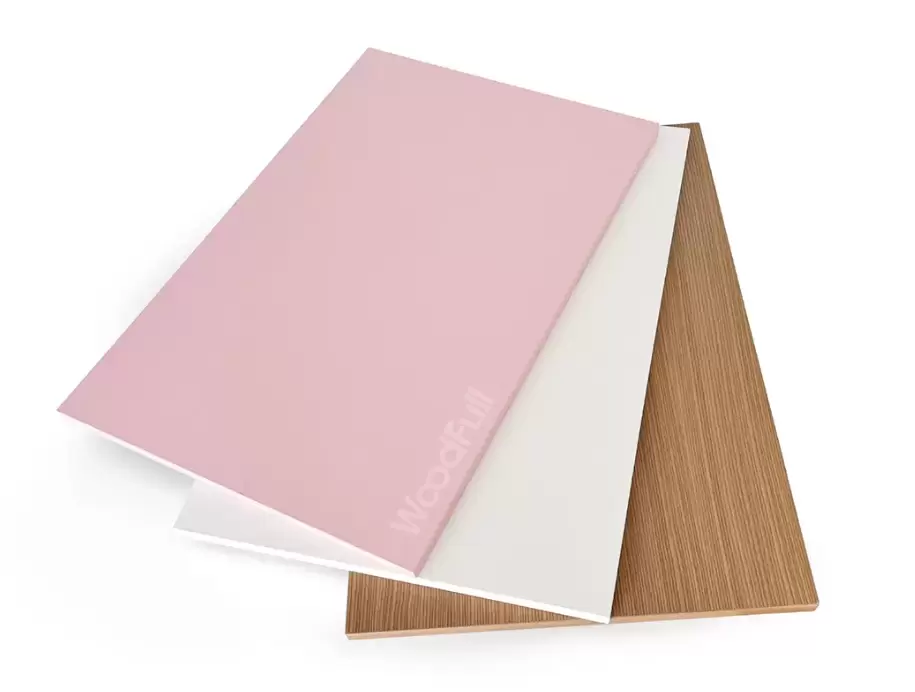
Unlike traditional wood-based panels that rely on conventional adhesives or surface materials, PET Chipboard integrates an engineered wood core with a PET decorative surface, creating a panel that offers improved durability, moisture resistance, and design flexibility. When combined with environmentally friendly adhesive technology, it can also meet increasingly demanding standards for low-emission interior products.
For furniture manufacturers, cabinet producers, interior contractors, and building material distributors, understanding the technical characteristics of PET Chipboard is essential for selecting materials that deliver consistent quality while supporting sustainable production.
PET Chipboard is a composite panel consisting of a particleboard substrate laminated with a Polyethylene Terephthalate (PET) decorative surface. The particleboard core provides structural strength and dimensional stability, while the PET layer enhances appearance, wear resistance, and surface protection.
Compared with traditional paper laminate or PVC-coated boards, PET surfaces provide a smoother finish, improved scratch resistance, and better long-term color stability.
The overall performance of the finished panel depends on three critical elements:
Each factor directly influences the board's durability, processing performance, and service life.
Furniture manufacturers increasingly require decorative panels that can maintain their appearance throughout years of daily use. Kitchen cabinets, wardrobes, office furniture, and commercial interiors are all exposed to repeated contact, cleaning, and environmental changes.
PET film offers several technical advantages.
Its smooth and dense surface makes daily cleaning easier while reducing dirt accumulation. Compared with conventional decorative films, PET demonstrates better resistance to scratches generated by routine household or commercial use.
Another important advantage is thermal stability. High-quality PET surfaces maintain dimensional stability during temperature fluctuations, reducing the likelihood of surface deformation or delamination.
Color consistency is another benefit. PET decorative films exhibit excellent color retention under indoor lighting conditions, helping manufacturers maintain consistent appearance across production batches.
These characteristics make PET Chipboard particularly suitable for premium furniture applications where appearance and durability are equally important.
Indoor environmental quality has become one of the most influential purchasing considerations in modern building materials.
Traditional composite panels may release volatile organic compounds (VOCs) originating from adhesive systems or decorative materials. As environmental regulations become stricter worldwide, manufacturers increasingly seek panel materials that support healthier indoor environments.
Shandong Xingang Group has invested extensively in environmentally friendly material technologies. Its proprietary biomimetic adhesive technology is characterized by:
This adhesive technology has already been successfully applied to decorative boards, ultra-thin fiberboards, and marine plywood, demonstrating its capability in industrial-scale production.
When incorporated into PET Chipboard manufacturing, environmentally friendly adhesive systems help reduce emissions while maintaining strong bonding performance. This enables furniture manufacturers to produce panels that better satisfy environmental certification requirements and growing consumer expectations.
A decorative surface alone cannot determine product quality. The structural performance of the particleboard core remains equally important.
A well-manufactured PET Chipboard should provide:
Excellent screw holding capability for repeated furniture assembly.
Stable internal bonding strength to prevent layer separation during machining.
Uniform density distribution to support CNC processing and edge machining.
Good dimensional stability under varying humidity conditions.
These characteristics directly affect production efficiency and the long-term reliability of finished furniture.
For modular furniture systems that require repeated assembly and transportation, consistent core density helps reduce edge damage and improves fastening performance.
Large furniture manufacturers typically require thousands of panels with identical appearance and mechanical performance.
Achieving this consistency depends on strict manufacturing control throughout production.
Raw wood particles must be carefully screened to achieve uniform size distribution.
Pressing temperature and pressure must remain stable to ensure consistent board density.
PET lamination requires precise control of bonding parameters to avoid surface bubbles, wrinkles, or weak adhesion.
Advanced production lines equipped with automated quality inspection can significantly reduce dimensional variation and improve production yield.
Consistent manufacturing also minimizes downstream processing issues during cutting, drilling, edge banding, and assembly.
The versatility of PET Chipboard makes it suitable for a wide range of interior products.
Kitchen cabinets benefit from the material's smooth surface and resistance to frequent cleaning.
Bedroom wardrobes require durable decorative finishes capable of maintaining appearance over years of use.
Office furniture demands panels that resist scratches caused by daily operation while maintaining a professional appearance.
Retail fixtures require decorative materials that combine visual appeal with durability under heavy customer traffic.
Educational and healthcare furniture increasingly favors environmentally friendly panel materials that contribute to healthier indoor environments.
Because PET Chipboard combines structural strength with decorative performance, manufacturers can often use one material platform across multiple product lines, simplifying procurement and inventory management.
Compared with conventional decorative particleboard, PET Chipboard offers several practical advantages.
The PET surface provides better scratch resistance and higher surface smoothness.
Environmental performance can be significantly improved when paired with advanced biomimetic adhesive technology.
The material demonstrates excellent compatibility with modern automated furniture manufacturing processes, including CNC machining and edge banding.
Its stable appearance also supports premium furniture designs featuring matte finishes and contemporary color palettes.
These advantages explain why PET Chipboard has become increasingly popular in residential, commercial, and hospitality projects.
Selecting a PET Chipboard supplier involves more than comparing prices.
Manufacturers should evaluate production capability, quality management systems, raw material consistency, and environmental technology.
A supplier capable of integrating advanced decorative surface technology with environmentally friendly adhesive systems can provide higher long-term product value.
Shandong Xingang Group has focused on environmentally friendly wood-based materials for many years, continuously investing in green manufacturing technologies. Through its proprietary biomimetic adhesive technology and commitment to sustainable innovation, the company supports furniture manufacturers seeking safer, healthier, and more sustainable panel solutions.
PET Chipboard has evolved from a decorative panel into a comprehensive material solution that addresses modern requirements for sustainability, durability, and manufacturing efficiency.
Its PET surface improves scratch resistance, appearance, and cleanability, while high-quality particleboard cores provide reliable structural performance. When combined with zero-formaldehyde biomimetic adhesive technology, PET Chipboard also supports healthier indoor environments and increasingly stringent environmental standards.
As global demand for sustainable furniture materials continues to grow, PET Chipboard is positioned to become one of the most important engineered wood products for the next generation of interior applications.