12 Nov 2025
Top Innovations Transforming Modern Particle Board Production Lines
Learn More >


Oak block furniture board is often selected when a furniture project needs a balance of natural wood appearance, structural rigidity, machining performance, and a more engineered level of dimensional consistency than solid oak alone can provide. The key point, however, is that the performance of an oak block furniture board is determined by more than the oak surface. Core construction, wood moisture content, strip geometry, bonding quality, panel thickness, and surface configuration all influence how the board behaves after cutting, machining, assembly, and long-term use.
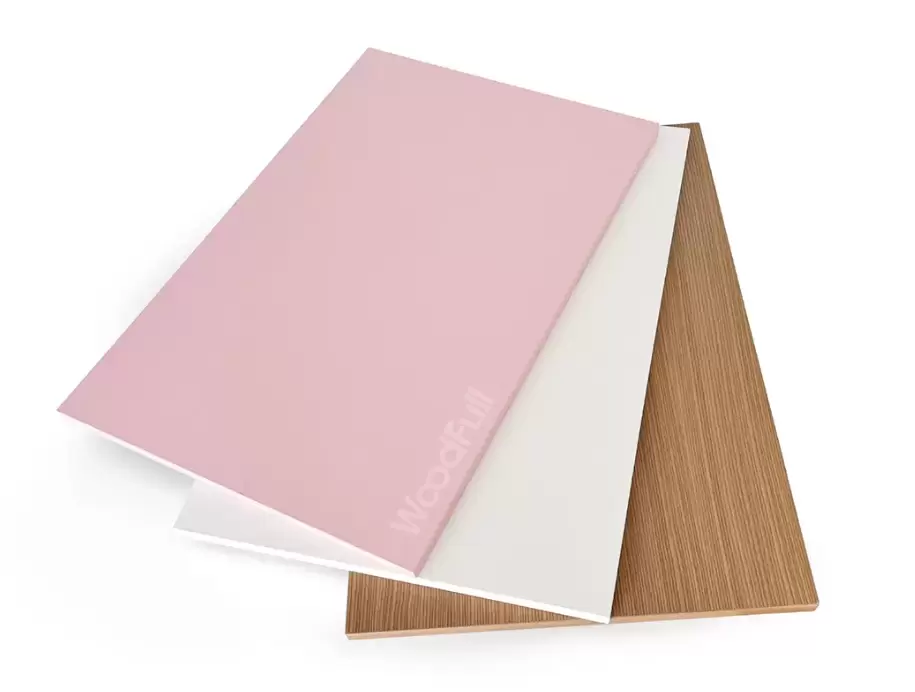
For furniture manufacturers working with wardrobes, cabinets, shelving, tables, doors, wall units, and other case goods, the practical question is not simply whether the board contains oak. It is whether the complete panel structure can maintain dimensional stability, provide reliable screw holding, support repeated machining, and deliver a consistent surface after finishing. Blockboard products generally use solid wood strips arranged edge-to-edge between veneer or surface layers, with the core construction playing a major role in panel stability and fastening performance.
The basic construction of a block furniture board consists of narrow solid-wood strips assembled into a core and combined with face and back layers. This construction differs from MDF, particleboard, and conventional plywood because the central material contains longitudinal solid-wood elements rather than a homogeneous fiber or particle matrix.
For furniture applications, this creates several engineering consequences. Fasteners can interact directly with solid wood fibers in the core, which is useful for hinges, drawer hardware, shelf supports, connecting screws, and other mechanical fittings. At the same time, the face layers help distribute stresses and reduce the dimensional movement that would occur if a thick solid-wood panel were used without engineered stabilization.
The quality of those individual strips therefore becomes a critical manufacturing variable. Variations in strip width, moisture content, grain direction, knots, cracks, or internal defects can produce differences in local stiffness and movement. Current blockboard specifications commonly identify core strip quality, moisture control, bonding, and panel flatness as key quality factors.
For an oak block furniture board, the construction should therefore be evaluated as a system rather than by the oak species alone.
Oak is a dense hardwood with a distinctive grain and strong visual identity, but using oak throughout the entire panel is not always the most efficient engineering solution. Depending on the board design, oak may be used as a decorative face, structural strip material, or part of a multilayer construction.
A lighter wood core can reduce panel weight while the oak surface provides the desired appearance. A denser core can increase local screw-holding capability and resistance to mechanical loading but may increase weight and machining forces.
This distinction becomes important when producing large furniture components. A 2440 × 1220 mm panel used for a wardrobe side, long shelf, table component, or cabinet door can become difficult to handle if density increases significantly. Published blockboard specifications commonly show density ranges around 420–600 kg/m³ depending on core species and construction, illustrating why material selection should be connected to the intended application rather than treated as a simple “harder is better” decision.
For example, a large wardrobe panel may prioritize weight control and dimensional stability, while a table component with concentrated fasteners may require greater local strength. The same oak block furniture board specification does not necessarily suit both applications.
Wood movement begins with moisture exchange. When a wood-based panel enters a new environment, the wood continuously responds to relative humidity and temperature. If the core is manufactured with excessive or inconsistent moisture content, the board may continue to shrink or expand after installation.
This can result in bowing, edge movement, surface telegraphing, veneer separation, or changes in the dimensions of machined components. For furniture manufacturing, these problems are especially visible after CNC cutting because a small dimensional change in the raw panel can become an alignment problem in the finished product.
Export-oriented blockboard specifications commonly control core moisture in approximately the 8–12% range, although the correct target depends on wood species, manufacturing conditions, and destination environment.
The important issue is not simply reaching a target number once. Moisture variation within a batch and between the core and surface layers also matters. If the different layers enter pressing with significantly different moisture conditions, internal stresses can develop as the panel equilibrates.
For oak block furniture board destined for overseas furniture production, moisture control should therefore be linked to the destination climate, storage conditions, transportation method, and final installation environment.
Core strip width is another parameter that deserves attention.
Narrower strips create more joints within the core and can help distribute local movement. Wider strips may reduce assembly complexity and material processing costs, but larger individual wood sections can produce more visible dimensional movement under changing humidity.
Some furniture-grade blockboard specifications use core strips in approximately the 20–40 mm range, although the appropriate width depends on the board structure and application.
For an oak block furniture board with a thin decorative surface, strip width becomes especially relevant because movement or unevenness within the core can eventually telegraph through the face. This is particularly problematic for high-gloss finishes, thin veneers, painted furniture, and large flat doors where even small surface irregularities can become visually obvious.
A consistent strip structure is therefore more valuable than simply specifying a nominal strip width without controlling manufacturing tolerances.
The board must maintain structural integrity through multiple interfaces: between core strips, between the core and cross-band layers, and between the surface layer and substrate.
An insufficient or inconsistent adhesive application can create localized weak points. Excess adhesive, on the other hand, does not automatically mean stronger bonding and may interfere with pressing conditions, moisture migration, or surface quality.
Blockboard manufacturing commonly combines controlled adhesive application with pressure and temperature during pressing. Quality control typically focuses on bonding strength, surface flatness, moisture content, and internal integrity.
For furniture components that will be repeatedly loaded or mechanically assembled, bonding quality becomes particularly important around machined areas. Cutting a panel exposes its internal construction, and poorly bonded zones can become visible during routing, drilling, grooving, or edge processing.
Thickness should be determined by the structural role of the board rather than by using one thickness across an entire furniture program.
An 18 mm panel is widely used for cabinet carcasses, shelving, doors, and general furniture components, while thicker boards can be appropriate for long spans, heavy shelves, table structures, and components requiring additional machining depth. Commercial blockboard specifications commonly include 15 mm, 18 mm, 25 mm, and other customized thicknesses.
The relationship between thickness and span is particularly important for long shelves. Increasing thickness increases bending stiffness substantially, while simply selecting a denser material may add weight without solving the geometry of the component.
For CNC furniture production, thickness tolerance also matters. If the nominal thickness is 18 mm but the actual panel varies significantly across the sheet, groove depth, connector positioning, edge-banding, and assembly tolerances can all be affected.
An oak block furniture board may ultimately receive natural veneer, melamine, HPL, paint, UV coating, or another decorative finish. The substrate must therefore provide the correct surface condition for the selected finishing process.
Uneven sanding, core movement, adhesive defects, or face-layer thickness variation can appear after coating even when the raw panel initially looks acceptable.
For example, a painted cabinet door requires a different level of surface consistency from an internal shelf covered with an opaque laminate. A furniture program should therefore specify surface grade according to the final finish rather than applying one cosmetic standard to every component.
The material is particularly relevant when the application requires a combination of natural wood character, manageable weight, screw-holding performance, machining capability, and panel stability.
Wardrobe carcasses can benefit from the solid-wood core structure around hinges and connectors. Long shelves can benefit from the stiffness of the engineered panel construction. Table components can use thicker configurations where greater bending resistance is required. Decorative doors can combine an oak appearance with a more controlled engineered substrate.
The exact construction should still be matched to load, span, humidity, machining pattern, surface finish, and fastening requirements.
Shandong Xingang Group Co., Ltd. focuses on environmentally oriented wood-material technologies and has developed Xingang Biomimetic Adhesive for applications including decorative boards, ultra-thin density boards, and biomimetic marine plywood.
The company's stated adhesive technology is designed around zero formaldehyde, zero benzene, and zero harmful substances, with the broader objective of developing healthier and more sustainable wood-based materials. For furniture applications, this approach can be incorporated into the material-selection discussion alongside core construction, bonding performance, moisture control, and surface requirements.
For an oak block furniture board, the adhesive system should not be evaluated independently from the panel. Bond-line performance, emission requirements, processing conditions, and long-term dimensional behavior need to be considered together.
A reliable oak block furniture board specification should go beyond “oak board” and define the parameters that actually determine manufacturing performance. These can include panel thickness and tolerance, core species, strip dimensions, moisture range, face and back construction, adhesive system, bonding requirements, surface grade, density, flatness, emission requirements, and applicable certification.
This approach reduces the risk of receiving visually similar boards with materially different processing behavior.
For furniture manufacturers, the value of an oak block furniture board is ultimately determined by what happens after the panel leaves the factory: whether it remains stable during transportation, machines consistently, holds hardware securely, accepts its intended finish, and maintains dimensional performance in the finished furniture. Controlling the core structure, moisture, bonding system, and surface construction provides a more reliable path to consistent furniture production.