09 Jan 2026
Stunning Milestone: Xinguang Group Secures Dual WELL International Certifications, Unlocking a New Global Identity
Learn More >


Sapele Plywood combines the distinctive reddish-brown appearance of sapele wood with the structural versatility of engineered plywood. It can be considered for furniture panels, cabinet components, decorative wall surfaces, doors, shelving, and other interior applications where appearance, dimensional stability, and machining performance all matter. However, selecting the right Sapele Plywood requires more than evaluating the color of the face veneer. Veneer quality, core construction, bonding performance, thickness tolerance, surface preparation, and finishing compatibility all influence the finished product.
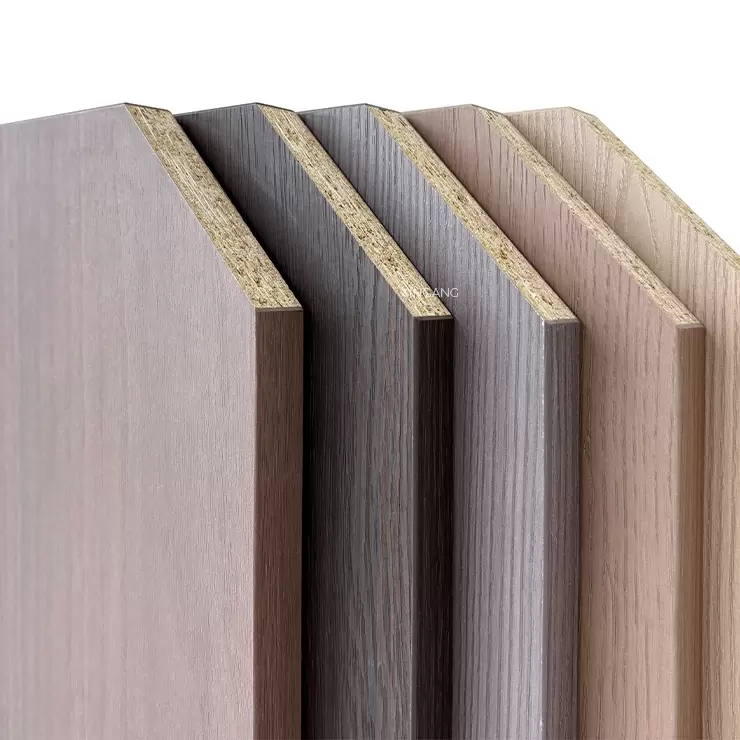
For manufacturers and distributors, the key is to match panel specifications to the actual application. A decorative cabinet door has different requirements from a load-bearing shelf, while a panel intended for a premium stained finish may need tighter controls on veneer matching and surface defects than one that will be covered with laminate. Understanding these differences helps prevent unnecessary material costs, machining problems, and inconsistent finished products.
Shandong Xingang Group Co., Ltd. focuses on environmentally oriented wood materials and engineered panel technologies. Its product development includes bionic adhesive technology and products such as decorative panels, ultra-thin density fiberboard, and bionic marine plywood. This background provides a relevant context for discussing material innovation and panel manufacturing, although the exact specifications and certifications of any Sapele Plywood product should always be confirmed against its own technical documentation.
Sapele is an African hardwood commonly valued for its reddish-brown color, interlocking grain, and decorative appearance. When used as a plywood face veneer, it can provide a distinctive wood surface while the engineered core contributes to panel stability and efficient material use. The final performance depends on how these materials are combined.
The face veneer is the most visible quality factor. Buyers should assess color consistency, grain appearance, veneer matching, surface smoothness, and the presence of knots, splits, patches, or other repairs. Natural wood variation is expected, but the acceptable level depends on the product grade and intended finish. A clear-coated furniture panel, for example, exposes more of the veneer’s natural variation than a panel that will receive an opaque coating.
The core structure is equally important. Depending on the manufacturer and product specification, the core may use hardwood veneers or another suitable engineered wood construction. Core species, veneer thickness, layer arrangement, and manufacturing consistency affect screw-holding behavior, edge quality, flatness, and the panel’s response to changes in moisture. A visually attractive face cannot compensate for an unstable or poorly bonded core.
Bonding quality determines whether the veneer layers remain securely connected under the intended service conditions. Adhesive type, spread rate, assembly conditions, pressing parameters, and curing control all influence bond performance. For applications involving elevated humidity or more demanding exposure, the required bonding classification should be identified before ordering rather than inferred from the panel’s appearance.
The appropriate face grade depends on how visible the panel will be and how it will be finished. For premium furniture and decorative interiors, veneer consistency may be a major priority. For concealed components or panels that will be covered, structural performance and cost efficiency may matter more than uninterrupted grain appearance.
Sapele veneer can display variation in grain direction and color because it is a natural material. Even panels manufactured from the same species may not look identical, especially when the veneer comes from different logs or production batches. If a project requires a coordinated appearance across multiple cabinet doors or wall panels, the specification should define acceptable color variation and veneer matching expectations.
Veneer matching also affects the visual result. Book matching can create a mirrored pattern, while slip matching produces a more continuous grain direction. Random matching may be acceptable for less formal applications but can result in greater visual variation. These are not simply decorative choices: they affect veneer utilization, panel appearance, and the consistency of the finished installation.
Surface defects should be evaluated against the agreed grade. Small patches may be acceptable in some commercial applications but may remain visible under transparent stains. Sanding quality is another consideration. Over-sanding can reduce the effective face veneer thickness or create uneven surfaces, while insufficient sanding may leave marks that become more apparent after coating. A sample finished with the intended stain or clear coat provides a more realistic basis for approval than an unfinished panel alone.
Panel thickness should be selected according to the component’s dimensions, support spacing, loading, and connection method. Common nominal plywood thicknesses in the market include 6, 9, 12, 15, 18, and 25 mm, although availability and actual tolerances vary by manufacturer and product. These figures are examples of common market sizes, not a specification for every Sapele Plywood range.
For cabinet sides, drawer components, shelving, and furniture carcasses, thickness affects stiffness, edge detailing, hardware installation, and the appearance of the finished assembly. A shelf spanning a longer distance may require a thicker panel, closer support spacing, or a different structural design. Simply increasing thickness is not always the most efficient solution; panel span, load distribution, and edge support should be considered together.
Thickness tolerance is particularly important when panels are processed by CNC equipment or assembled with precision hardware. Variation can affect groove depth, edge-banding alignment, connector engagement, and the fit of adjoining parts. A specification should therefore state the nominal thickness and acceptable tolerance, along with panel dimensions and squareness requirements where these are critical.
Flatness and dimensional stability also influence processing yield. Warped panels may be difficult to clamp securely, while uneven thickness can cause inconsistent machining depth. For large decorative panels, flatness problems may remain visible after installation or create uneven joints. These risks can be reduced through appropriate core construction, controlled moisture content, suitable storage, and verification of panel geometry before processing.
Wood-based panels respond to changes in ambient humidity because wood fibers exchange moisture with the surrounding environment. Sapele Plywood is no exception. Although cross-laminated veneer construction generally improves dimensional stability compared with solid wood of similar dimensions, it does not eliminate moisture-related movement or guarantee that panels will remain flat under every condition.
Moisture content at delivery, the humidity of the destination environment, and the way panels are stored before processing all affect results. If panels are moved from a humid warehouse into a dry, air-conditioned workshop and processed immediately, they may continue to equilibrate after cutting. This can contribute to dimensional changes, edge exposure, or fit problems during assembly.
For furniture manufacturing, panels should be stored flat on a level support, protected from direct water exposure, and allowed to acclimatize to the working environment where appropriate. Storage conditions should avoid concentrated loads, uneven support, and prolonged exposure to moisture. If panels are stacked vertically or supported unevenly for extended periods, distortion may occur even when the original product quality is acceptable.
Moisture requirements should be specified in relation to the intended application and destination market. A panel intended for ordinary indoor furniture does not automatically qualify for bathrooms, kitchens with repeated water exposure, or exterior installations. Those applications require additional assessment of adhesive durability, edge protection, finishing systems, and the severity of the exposure.
Plywood performance depends on the integrity of the bond between veneer layers. Adhesive selection should reflect the intended service environment, relevant product standards, and required durability. Interior applications and panels intended for humid or more demanding conditions may require different bonding systems.
The adhesive category alone does not establish the final performance of the finished panel. Manufacturing conditions, veneer moisture, adhesive application, assembly time, pressing temperature and pressure, and curing all contribute to bond quality. Inadequate control can result in weak bonding or localized delamination, which may not be immediately visible on the face surface.
When comparing Sapele Plywood suppliers, request the applicable bonding classification and supporting test documentation. Where a project specifies a recognized plywood standard, the supplier should identify the relevant standard and the exact product scope covered by the documentation. Claims such as “waterproof plywood” should be clarified because resistance to a specified moisture exposure does not mean that every panel surface, edge, joint, or cutout can withstand indefinite immersion.
Adhesive chemistry may also matter for indoor air-quality requirements. Shandong Xingang Group Co., Ltd. describes its bionic adhesive technology as free from formaldehyde, benzene, and harmful substances. Such statements should be distinguished from independently verified emissions performance for a particular Sapele Plywood product. If low-emission materials are required, request product-specific test reports, the applicable test method, and evidence showing that the tested panel construction corresponds to the material being supplied.
Sapele Plywood should be assessed not only by its appearance before processing but also by how it performs during cutting, drilling, routing, sanding, and finishing. These operations can reveal weaknesses that are not obvious during a visual inspection of a full panel.
Tool condition, cutting parameters, veneer grain direction, and core consistency influence the quality of the cut edge. Poorly supported veneer may chip during machining, while internal gaps can become visible when a panel is routed or cut into narrow strips. For CNC production, a representative trial should confirm the cutting strategy and the finished edge quality before the full batch is processed.
Screw and hardware performance depend on panel construction, screw type, edge distance, pilot-hole size, and installation torque. Plywood can provide useful fastening performance, but screw-holding capacity should not be assumed to be identical across all core types and thicknesses. Where hardware loads are high or repeated assembly is expected, the connection design should be tested using the actual panel and fastener combination.
Finishing compatibility also deserves attention. A transparent coating emphasizes veneer color and grain, while stains may produce uneven results if the veneer absorbs color inconsistently. Sanding should be controlled to avoid damaging a thin face veneer. Before committing to a large production run, manufacturers should test the intended primer, stain, coating, or adhesive on a representative sample.
Edges require particular consideration. Exposed plywood edges reveal the layered core, which may be acceptable in some contemporary designs but undesirable in premium furniture. Edge banding, solid-wood lipping, or a compatible coating can improve appearance and help limit moisture entry. The appropriate solution depends on the design and the expected environment.
A useful specification translates design expectations into measurable requirements. It should identify the intended application, panel dimensions, nominal thickness and tolerance, face veneer grade, core construction, bonding requirements, moisture-related requirements, and acceptable surface defects. Where the panel will be stained or clear-coated, the specification should also describe the expected appearance and whether color or grain matching is required.
Sampling should reproduce the proposed commercial construction as closely as possible. A sample made with a different core, veneer grade, or adhesive system cannot reliably demonstrate the performance of the bulk-order product. For repeat purchases, the approved sample and written specification should be retained as references for subsequent batches.
Incoming inspection should focus on characteristics that affect the intended use. For decorative panels, this may include veneer appearance, sanding quality, surface defects, dimensions, and flatness. For machined components, thickness consistency, core integrity, and edge quality may deserve greater attention. Any required mechanical, bonding, or emissions tests should be documented separately from visual inspection.
Choosing Sapele Plywood for furniture and interior applications requires a balanced assessment of appearance, core construction, bonding quality, moisture behavior, dimensional accuracy, and finishing compatibility. The most suitable panel is not necessarily the one with the most attractive face or the lowest unit price; it is the one whose documented properties align with the design, manufacturing process, and service environment.
By defining requirements before ordering, reviewing a representative sample, and verifying the finished panel against a clear specification, manufacturers can reduce machining waste, improve visual consistency, and avoid preventable assembly problems. For projects that also prioritize environmental performance, product-specific emissions documentation and transparent material information should form part of the same evaluation.