12 Nov 2025
Sustainable Particle Board Production: Turning Wood Waste into High-Value Products
Learn More >


In industrial panel manufacturing, uv plywood production is increasingly defined by process control rather than material selection alone. As demand grows for high-gloss decorative panels, furniture-grade surfaces, and architectural wall systems, manufacturers face a common challenge: maintaining consistent UV coating quality across large-scale continuous production.
The performance of uv plywood is directly linked to coating stability, curing precision, and line-level process synchronization. Small deviations in any stage can result in visible surface defects, yield loss, or downstream assembly issues.
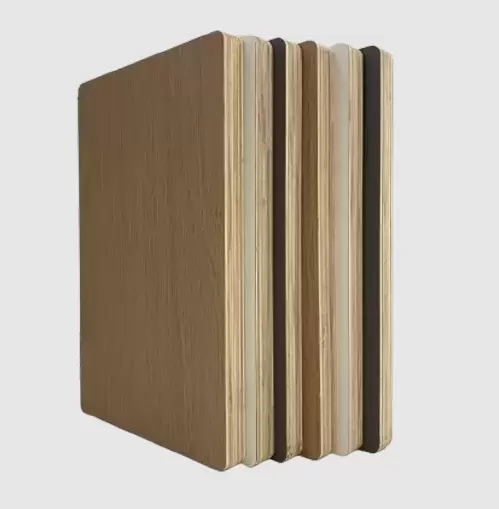
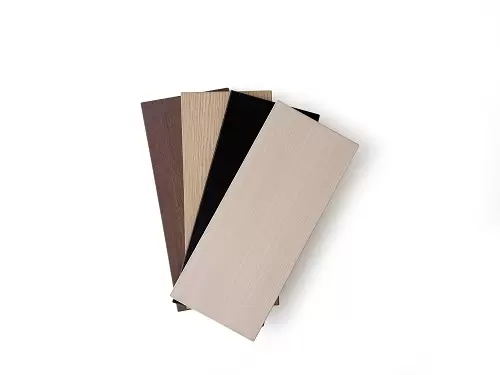
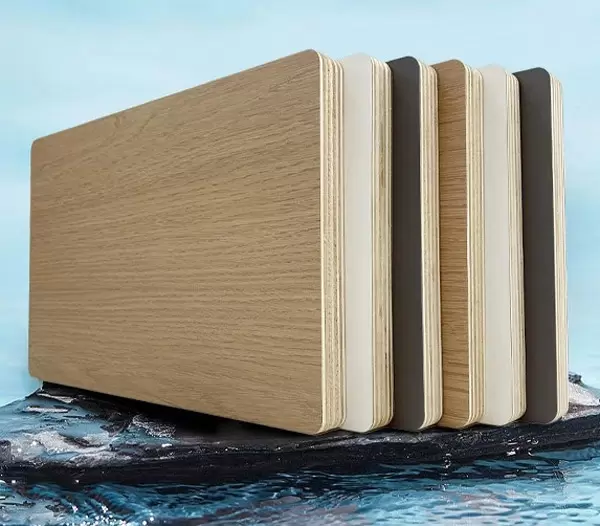
This article explores UV plywood from a production system perspective, focusing on coating uniformity, curing control, defect reduction, and industrial scalability.
The UV coating system in plywood production typically includes:
Each layer plays a distinct role in final surface performance.
Typical coating parameters:
The goal is not simply achieving coverage, but ensuring film thickness consistency across wide-format boards (1220×2440 mm or larger).
In uv plywood production, coating uniformity determines up to 70% of final yield quality.
Common defects caused by instability include:
Key control variables:
Pressure deviation above ±0.05 MPa can lead to visible thickness variation.
Temperature variation of 5°C can shift viscosity by 8–12%, directly affecting leveling behavior.
Warping greater than 1.5 mm/m reduces coating contact consistency.
Advanced production lines use:
These systems significantly reduce human-dependent variability.
UV curing is the most energy-sensitive stage in uv plywood production.
Key curing parameters:
If curing is underpowered:
If over-cured:
Modern production systems increasingly adopt:
These improvements reduce energy consumption by up to 30–40% while improving consistency.
As production lines increase speed beyond 20–35 m/min, defect detection becomes critical.
Common UV plywood defects:
Industrial control methods:
Defect reduction is not only quality-related—it directly impacts raw material cost efficiency.
Even with perfect coating systems, uv plywood quality collapses if substrate preparation is unstable.
Key substrate control requirements:
If sanding is inconsistent:
This makes substrate preparation one of the most critical pre-coating steps.
Scaling uv plywood production requires moving from batch quality control to continuous process stability.
Key scalability constraints:
High-end production lines achieve:
This level of stability is essential for export-grade plywood markets.
UV plywood production is fundamentally a precision-controlled industrial system where coating uniformity, curing energy stability, and substrate preparation determine final product value.
To achieve consistent high-grade output, manufacturers must ensure:
In modern furniture, construction, and interior applications, uv plywood is no longer just a decorative surface—it is a high-precision engineered material whose value is defined inside the production line, not after it.