06 Nov 2025
Maintenance and Care Tips for Long-Lasting Melamine Particle Board Furniture
Learn More >


Bintangor plywood has long been one of the most widely used plywood products in Southeast Asia, the Middle East, Europe, and Africa. Its popularity is not simply the result of competitive pricing. More importantly, bintangor plywood offers a balanced combination of surface quality, machining performance, dimensional stability, and versatility, making it suitable for furniture manufacturing, interior decoration, door production, and packaging applications.
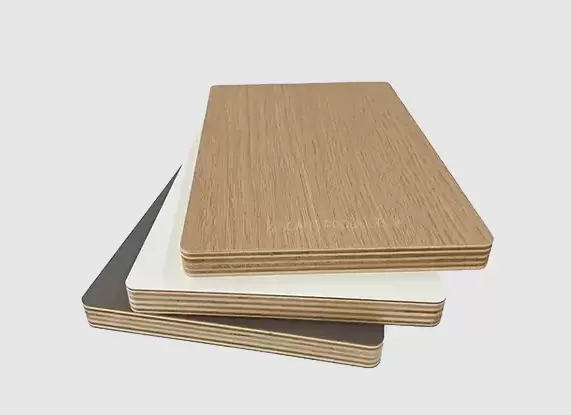
As construction and furniture markets increasingly demand environmentally friendly and high-performance materials, manufacturers are paying closer attention to plywood that can deliver both aesthetic appeal and structural reliability. Bintangor plywood has evolved from a traditional commodity panel into a material that can meet modern production requirements while maintaining cost efficiency.
Bintangor plywood is a hardwood plywood that uses Bintangor veneer as its face and back layers. The core may consist of poplar, eucalyptus, hardwood, or mixed species depending on the application and performance requirements.
The face veneer is usually characterized by a smooth texture and relatively uniform grain pattern. Its light reddish-brown appearance makes it attractive for applications where aesthetics matter but premium hardwood species are unnecessary.
Common specifications include:
The flexibility in core materials and adhesives allows manufacturers to tailor the product for different climates, budgets, and performance expectations.
For furniture and decorative applications, surface consistency is often one of the most important purchasing factors.
A high-quality bintangor plywood panel should exhibit:
Uniform veneer color.
Minimal knots and patches.
Smooth sanding quality.
Strong bonding between veneer and core.
Low risk of delamination.
These features reduce the amount of finishing work required during furniture production and help manufacturers achieve more stable painting, laminating, or veneering results.
In cabinet manufacturing, for example, inconsistent surfaces can lead to visible defects after coating. In contrast, well-manufactured bintangor plywood provides a stable substrate that supports a wide variety of decorative finishes.
This explains why many furniture factories continue to use bintangor plywood as a cost-effective alternative to more expensive hardwood plywood.
Appearance alone is not enough.
The internal structure of plywood determines whether it can withstand long-term use under changing environmental conditions.
High-quality bintangor plywood uses carefully selected core veneers and advanced bonding technology to ensure:
Low deformation rates.
Good screw-holding capacity.
Stable thickness tolerance.
Resistance to cracking.
Improved moisture resistance.
These characteristics are particularly important for furniture exported to regions with significant humidity fluctuations.
If the internal bonding strength is insufficient, plywood may warp or delaminate over time. Manufacturers therefore increasingly prioritize plywood suppliers with strict quality control and advanced adhesive technologies.
Global markets are paying greater attention to environmental standards.
Formaldehyde emissions have become an important consideration, especially for furniture and interior applications.
Traditional adhesives often release formaldehyde and volatile organic compounds, creating health and environmental concerns. As regulations become stricter, plywood manufacturers are investing in safer and more sustainable bonding technologies.
Shandong Xingang Group has been actively developing environmentally friendly wood materials for years.
Its biomimetic adhesive technology achieves:
Zero formaldehyde.
Zero benzene.
Zero harmful substance emissions.
The adhesive has been successfully applied to decorative panels, ultra-thin fiberboards, and marine plywood products, enabling plywood solutions that are not only environmentally friendly but also antibacterial and highly durable.
This technological advancement aligns with the growing demand for green building materials worldwide.
Modern bintangor plywood is no longer limited to basic furniture production.
Its applications now include:
Interior wall panels.
Cabinet manufacturing.
Doors and partitions.
Packaging boxes.
Store fixtures.
Decorative panels.
Commercial furniture.
The ability to combine attractive appearance with reasonable cost makes it particularly appealing in projects where aesthetics and budget must be balanced.
As customization trends continue to grow, manufacturers also value the material's machinability. Bintangor plywood can be easily cut, drilled, shaped, and laminated using conventional woodworking equipment, allowing greater design flexibility.
Bintangor plywood remains a highly competitive material because it delivers a practical balance between appearance, structural stability, and cost efficiency.
Its smooth surface, good machinability, and versatile specifications make it suitable for a wide range of furniture and interior applications. At the same time, advances in environmentally friendly adhesives are helping manufacturers meet increasingly stringent sustainability requirements.
For companies seeking reliable, aesthetically pleasing, and eco-friendly wood materials, bintangor plywood continues to be a smart and future-oriented choice.